
practice
Glitter Jar: How to Make One Safely, and How to Use It
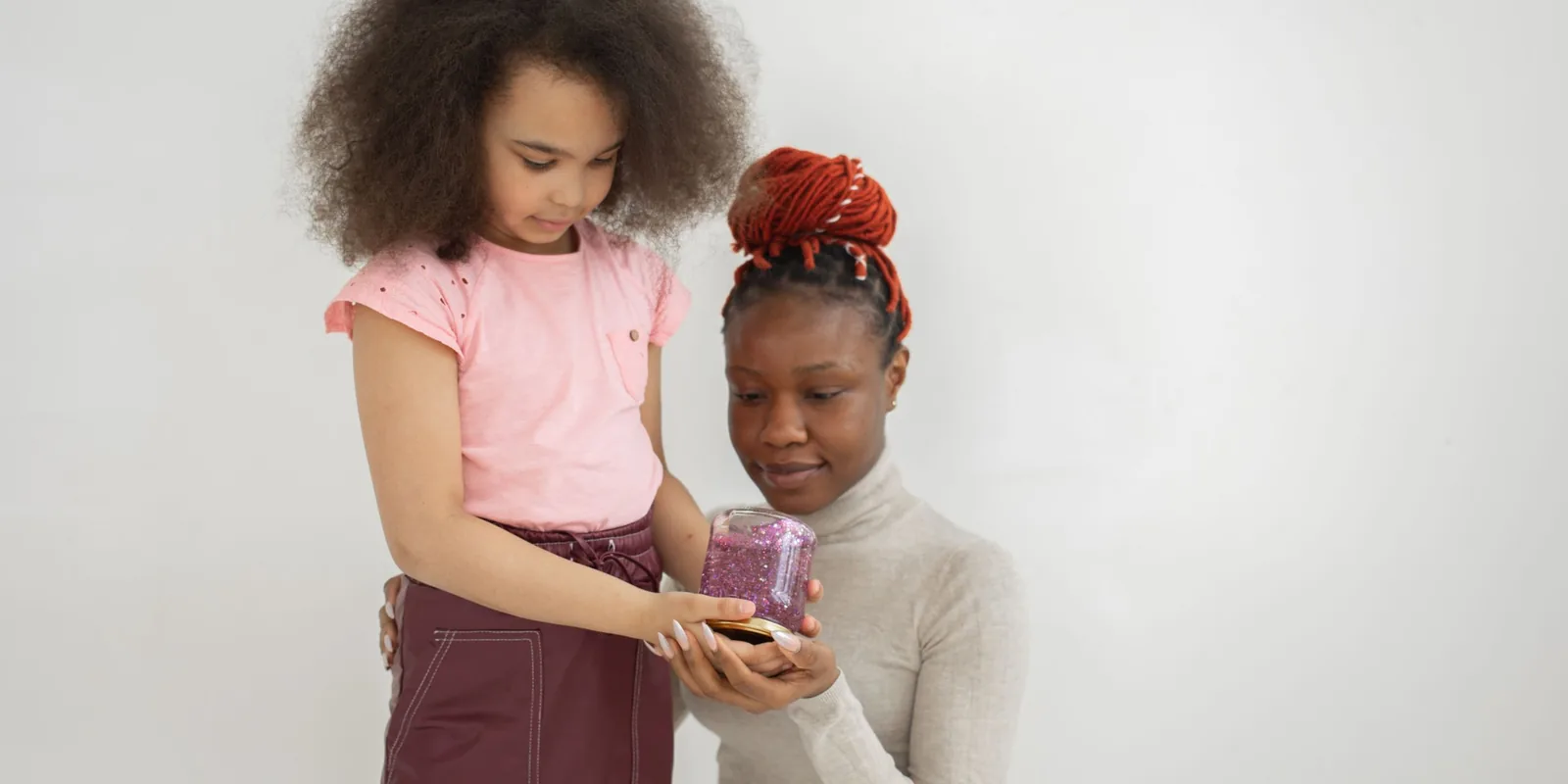
How to make a glitter jar safely, with a sealed lid and a plastic bottle, then use it as a three-minute breathing timer when a big feeling arrives.
A glitter jar is a sealed plastic bottle of water, clear glue and glitter that you shake and watch settle while you breathe slowly together. To make one, an adult mixes the water, glue and glitter, then glues the lid shut. To use it, your child shakes the jar and breathes with you until the glitter lands. The whole thing takes about three minutes.
Your five-year-old has just found out their friend can't come round after all. They're on the hall floor, too upset to hear anything you say.
A glitter jar won't fix the disappointment. What it does is give both of you something to look at while the first wave passes, and a slow job for their breathing.
What is a glitter jar for?
A glitter jar, also called a calm down jar, a calming jar or a mindfulness jar, is a breathing timer you can see. When it's shaken, the glitter swirls; left alone, it drifts back down. That's the whole trick.
In England's early years guidance, Development Matters, the Department for Education suggests introducing a 'calming jar' as one way adults can teach children self-calming to deal with intense emotions. An NHS leaflet from Just One Norfolk, the children's health service website for Norfolk and Waveney, goes a step further: it suggests explaining that the jar is like your child's brain, and the glitter like all of their thoughts and feelings.
What it isn't: a toy, a treat or a punishment. Mindfulness, as Anna Freud puts it, is about tuning in to the sensations of the present moment, and the jar is simply something to notice. If it ends up in the toy box, it gets shaken for fun and stops meaning anything.
What goes in a calm down jar?
- A clear plastic bottle with a screw lid. A small drinks bottle is fine. Choose plastic over glass: a jar that's shaken by a four-year-old will be dropped sooner or later.
- Warm water to fill most of it.
- Clear glue or glycerine to thicken the water, so the glitter falls slowly. Clear glue is easiest to find; glycerine is in the baking aisle.
- Glitter, fine and chunky mixed. A few drops of food colouring are optional.
- Strong glue for the lid. Superglue or a hot glue gun, used by an adult.
Leave out marbles, beads and anything with a battery in it, for reasons below.
How do you make a glitter jar?
- Fill the bottle about two-thirds with warm water.
- Add clear glue or glycerine, a good squeeze at a time, and stir or shake with the lid on loosely.
- Add a teaspoon or two of glitter and any food colouring.
- Top up with water, leaving a small gap at the top.
- Test it: shake, and time how long the glitter takes to settle. More glue slows it; more water speeds it up.
- When you're happy, dry the bottle neck, run strong glue round the inside of the lid and screw it on hard. Leave it overnight before anyone uses it.
Your child can choose the colours, pour the glitter and do the shaking. The glue for the lid is your job. The Just One Norfolk leaflet also suggests talking while you make it, for example letting your child give each colour a feeling: red for angry, blue for sad.
How do you keep a glitter jar safe?
Seal the lid, keep small parts out of it, and stay nearby when a young child has it. The risk isn't the jar; it's what comes out if it opens or cracks.
The NHS says it's normal for young children, especially between 1 and 5, to explore by putting things in their mouths, and lists marbles, beads and button batteries among the objects small enough to get stuck in a child's airway. RoSPA's choking hazards leaflet adds coins, pins and screws to the small things to keep out of reach. That's why the jar holds nothing but liquid and glitter, and why the lid is glued rather than just tightened.
Some shop-bought light-up glitter jars run on small batteries. The government's product safety regulator, OPSS, says button batteries can do severe harm if a child swallows one, and that a suspected swallow means A&E straight away. If you buy one, check the battery cover is secure and can't be opened by small fingers.
Then three habits:
- Check the lid and the bottle each time it comes out. If it's cracked, leaking or the seal has gone, throw it away and make another.
- Keep it out of the cot and the bath. It's for sitting with, not for taking to bed.
- Watch under-threes with it, as you would with any bottle they can grip.
When should you use a glitter jar?
Try it a few times when nobody is upset, so the steps are familiar before they're needed. After that, bring it out early in a big feeling, when your child is cross or wobbly but can still hear you.
In the middle of a full meltdown, a three-year-old may just throw it. That's when you sit close, keep things safe and save the jar for once the worst has passed. Our guide to how to calm an angry child covers that harder moment.
The three-minute glitter jar breathing routine
Six steps, three minutes, sitting on the floor together.
1. Sit down together (15 seconds)
Sit side by side on the floor or a mat, with the jar between you. Some children will want to sit on your lap instead, and that's fine.
2. Shake it hard (10 seconds)
Let your child shake the jar as hard as they like: "Show me how your head feels." Expect it to be shaken for longer than ten seconds the first time.
3. Breathe with the glitter (1 minute)
Put the jar down and watch. Breathe in slowly through the nose, then out slowly through the mouth, as if blowing on soup. Count each breath out loud. Your child may breathe fast at first, and copying your slower count is the point.
4. Name the feeling (30 seconds)
While the glitter is still swirling, ask which colour the feeling is, or just name it for them: "You're really disappointed." No questions about why yet.
5. Star while it settles (45 seconds)
Move into star, pose 3 on the Freedom Flow sequence: sit up tall with legs wide apart, toes pointing at the ceiling, palms resting on the floor. Put the jar between your child's legs so they're looking straight down at it. Some children prefer butterfly, soles of the feet together, which works just as well.
6. The last flake (20 seconds)
When most of the glitter has landed, take one more long breath out together and watch for the last flake to fall. Then talk, have a cuddle or carry on with the day.
How long it takes
Three minutes if the jar settles in about two. Yours may take longer, and the Just One Norfolk leaflet notes settling can take several minutes, so if yours is slow, stay with step 3 for longer. The glitter is a guide, not a stopwatch: if your child is calm before it lands, you're done.
If the glitter jar doesn't work
- It gets thrown. This is why it's plastic and sealed. Pick it up without comment and try again another day.
- They just want to keep shaking it. One shake per go, then it sits on the floor. If shaking becomes the game, put the jar away until tomorrow.
- They say it's babyish. Hand them the job of making a new one for a younger cousin, or let them time how long it takes to settle.
- A brother or sister wants a turn. Make two. One jar each saves an argument at exactly the wrong moment.
Where the jar lives
Somewhere you can reach it and your child can see it, but not in the toy box: a shelf, the kitchen windowsill, or in a calming corner at home if you have one. Using it at the same point, after school or before bed, makes it familiar for the harder days.
Breathing is the part that does the work. Our breathing exercises for kids give you other ways to practise it when the jar isn't nearby, and mindfulness for kids has more short noticing games.
Frequently asked questions
What liquid will suspend glitter in a jar?
Plain water lets glitter drop in seconds. Stirring in clear glue or glycerine thickens it, so the glitter falls slowly, and the more you add, the slower it goes. Warm water helps the glue mix in. Test it with the lid on loosely before you seal it, and adjust until it settles in roughly the time you want.
How do you make a glitter jar without glue?
Use glycerine instead of clear glue in the water, or a squeeze of washing-up liquid, as the NHS leaflet from Just One Norfolk does. Without anything added, the glitter settles too fast to breathe along to. You still need strong glue for the lid, though, because that's the part that keeps the contents in.
What age is a glitter jar for?
The Just One Norfolk leaflet suggests ages 4 to 11, and says it can be used with children and young people of all ages for mindful breathing. Younger children can watch one with you. In a house with a baby or toddler, keep the jar where you can see it, and check the lid every time it comes out.
How long should a glitter jar take to settle?
Long enough for several slow breaths, so somewhere between one and three minutes is a good target with young children. The Just One Norfolk leaflet notes it can take several minutes. If yours settles in twenty seconds, add more glue or glycerine before you seal it. If it takes five minutes, add a little more water.
Is a glitter jar the same as a calm down jar?
Yes. Glitter jar, calm down jar, calming jar and mindfulness jar are names for the same thing: a sealed bottle of water and glitter you shake and watch settle. The Department for Education's early years guidance calls it a 'calming jar' and suggests it as one way adults can teach young children to calm themselves.
A floor to sit on while it settles
Star and butterfly both work on a rug. If you'd like your child to have a spot that's theirs for the jar and the breathing, the Freedom Flow mat is our floor sequence: 15 poses, numbered and laser-engraved, with star at number 3. It's made for ages 3 to 8. It cleans up with mild soap on a damp cloth, which matters near a glitter jar, and it comes with a shoulder carry strap.
Sources
- Department for Education - Development Matters
- Just One Norfolk (NHS) - How to make a Glitter Jar (PDF)
- Anna Freud - Mindfulness
- NHS - How to stop a child from choking
- RoSPA - Choking hazards in the home and how to avoid them
- Office for Product Safety and Standards - Hidden danger in your home: button batteries and powerful magnets