guides
Benefits of Outdoor Play: What the Evidence Says
Explore the benefits of outdoor play, what the evidence says about sleep and movement, and a realistic winter routine for children aged 3 to 8.
What are the benefits of outdoor play?
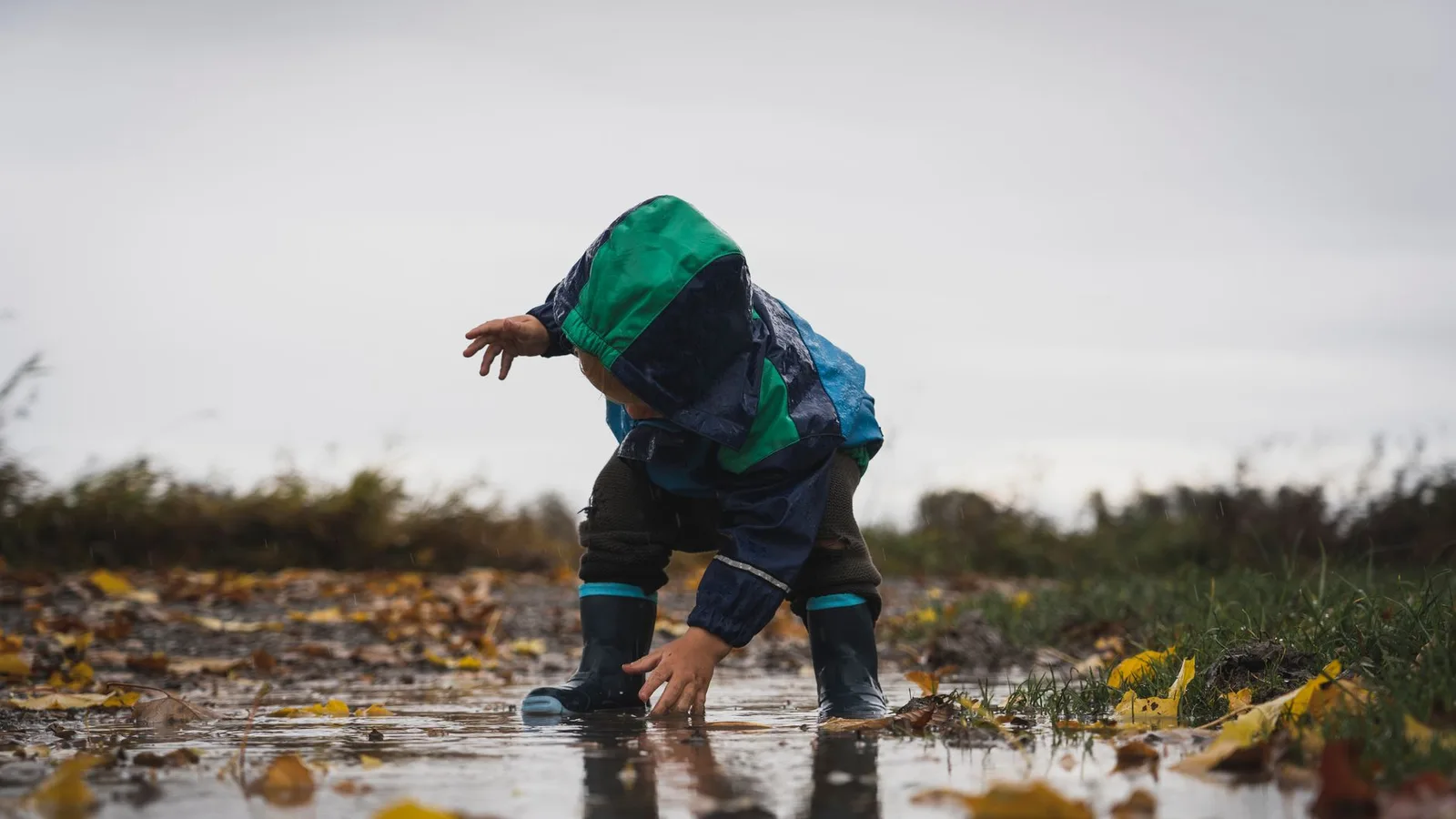
Outdoor time was associated with more physical activity in childcare settings in Anne Martin and colleagues' research review. The Health and Safety Executive also recognises play's role in developing children's awareness of risk. For your child, that can mean running, balancing and deciding how to tackle a small challenge. You can offer those opportunities through ordinary park visits, without planning a special outing.
There are good reasons to make room for outdoor play. There are also limits to what research can promise about sleep or how many minutes outside a child needs. A weekday plan can be modest and still be worth making.
More room to move
Martin and colleagues' 2022 review of childcare research found that children generally accumulated more physical activity outdoors than indoors. That supports offering outdoor time, although it doesn't mean every minute outside is energetic.
The Department for Education describes outdoor experiences such as running and clambering as opportunities to develop co-ordination and control. For example, offer a route across grass and around trees instead of arranging furniture into a course. Indoor play has a place too: the same guidance supports movement in both settings.
A chance to judge small challenges
The Health and Safety Executive says play can develop children's awareness of risk. Its guidance favours weighing benefits alongside genuine hazards, rather than removing every challenge.
For example, let your child decide whether to step onto a low playground step, offer your hand if wanted, and accept a decision to stay on the ground. The task is theirs to attempt, not a performance to complete.
How much activity do children actually need?
The UK Chief Medical Officers' guidance describes activity across the day, rather than a quota of hours outside. Include what happens at nursery or school when thinking about your child's routine. You don't have to provide the whole day's movement after pick-up.
- 3 to 4, UK activity guidance: At least 180 minutes daily, including at least 60 minutes at moderate to vigorous intensity; What to remember: The total includes lighter movement and indoor play.
- 5 to 8, UK activity guidance: Within the guidance for ages 5 to 18: an average of at least 60 minutes of moderate or vigorous activity daily across the week; What to remember: It can be spread through the day.
The figures come from the UK Chief Medical Officers' age-based recommendations. For moderate activity, the NHS describes breathing faster and feeling warmer; being able to talk but not sing is a useful guide.
The UK Chief Medical Officers' targets measure movement, so simply being outside doesn't meet them. Watching birds and running around a playground can both belong in your afternoon, but don't log them as the same kind of movement.
Ask nursery or school what outdoor opportunities are available and what your child actually chooses. That gives you something more useful to work with than assuming either that they've done nothing or that school has covered everything.
If an annual challenge appeals, our guide to 1000 Hours Outside explains that separate approach.
Does daylight mean better sleep?
Norfolk and Suffolk NHS Foundation Trust recommends natural light after waking to help synchronise the body clock, including on cloudy days. That makes daylight a reason to consider a morning outing. It doesn't give parents a set number of outdoor minutes that will solve a bedtime problem.
The distinction matters when it's dark by the time you're free. A daytime walk and an evening game outside offer different experiences. If daylight is your aim, look at the journey to nursery or school, or a lunchtime outing on days at home.
The sleep evidence needs care. Janssen and colleagues' review, published online in November 2019, found only two studies examining outdoor play and sleep. Some findings were favourable, but the evidence was rated very low quality and sleep duration findings differed.
So take the useful daylight advice without turning outdoor play into a promise of longer nights. If your child still struggles to settle after a busy afternoon, avoid responding by making the next outing longer and more exhausting.
There are limits to the movement evidence too. Martin and colleagues warn that much of the research was observational and vulnerable to bias. It supports an association between being outdoors and moving more; it doesn't establish an exact outdoor prescription for your family.
What is a realistic winter weekday plan?
Try a 20-minute outdoor slot, or split it into shorter visits, as a practical starting point. This is a suggested family plan, not a medical target or a substitute for the daily activity guidance. Choose a time and place that fit an ordinary weekday, then adjust from there.
Here is an illustrative split. Use daylight where your schedule allows it.
- Before nursery or school, Suggested time: 5 minutes; Something to try: Walk a short part of the journey and look for something that has changed since yesterday.
- At pick-up, Suggested time: 10 minutes; Something to try: Stop at a playground for a child-chosen running or chasing game.
- Another gap at home, Suggested time: 5 minutes; Something to try: Take turns leading a garden walk with giant steps, sideways steps and pauses.
That's 20 minutes of opportunity, not 20 guaranteed minutes of energetic activity. If getting everyone dressed twice is too much, make it a single outing. If today only allows a short walk, keep tomorrow's plan simple enough to try again.
For clothing and boundaries, NI Direct advises warm clothes on cold, wet days, agreed places to play, road-safety teaching and staying nearby when safety is a concern. Choose the location before starting the game.
No garden? Use a local playground or a stop on an existing route. If you have outdoor space but no equipment, our garden games that need no kit give you somewhere to start.
How can you make outside time worth repeating?
Give your child a small choice and leave room for their own game. You might offer the playground or a walk, then let them choose what to do when you arrive. Treat the plan as an invitation: you don't need to fill the whole outing with instructions or learning tasks.
Pick whichever of these suits the day:
- They want to move: choose a chasing game, take turns being the leader, or let them invent a route around the playground.
- They want to look: watch birds or clouds, find different colours without collecting anything, or revisit the same tree and talk about what you notice.
- They're reluctant to go: offer a specific destination and an agreed return point. For example, walk to the familiar bench and decide together whether to continue.
- You're short on ideas: use our outdoor activities for early years to choose something for the weather and space you have.
Let a quiet outing stay quiet. You can offer a moving game another time without turning every trip into a fitness test. At the end, ask what they'd choose to do again, and use that answer for the next visit.
For a garden yoga option, browse Yogi-Me's mats: they're 183 x 61 cm, full length so an adult can use one too, and designed for ages 3 to 8.
When should you ask for help with movement or sleep?
Speak to your GP or health visitor if you have concerns about your child's movement or sleep. The NHS advises medical guidance about exercise when a child has a health condition, and recommends talking to a health visitor for further help with young children's sleep.
Before the conversation, jot down what you've noticed: which activities your child avoids or enjoys, when the difficulty happens, and what you've already tried. Ask nursery or school what they've noticed too. Bring those observations to the appointment rather than setting a tougher outdoor target.
Frequently asked questions
How many hours should a 3 or 4 year old play outside?
There isn't a separate outdoor quota in NHS guidance. Indoor play contributes to its activity targets too. Start with an outing you can repeat: a walk before nursery, a playground stop at pick-up or a garden game. Ask nursery what your child chooses while they're there.
Will outdoor play help my child sleep?
Daylight can support the body clock, according to Norfolk and Suffolk NHS Foundation Trust. But Janssen and colleagues' review found limited, very low-quality evidence about outdoor play and sleep in young children. Make daylight part of the day without expecting a park visit to guarantee an easier bedtime.
Do children need a garden to get the benefits?
No. Try a local park or playground, or add a playful stop to a journey you're already making. NI Direct recommends getting to know suitable places in your neighbourhood and agreeing where children can play. Choose somewhere practical enough to revisit, rather than waiting for a countryside day out.
Why is outdoor play important in the EYFS?
England's Early Years Foundation Stage (EYFS) includes physical development. The Department for Education says indoor and outdoor play can support balance, co-ordination and core strength, meaning strength around the centre of the body. Ask your nursery which movement opportunities your child enjoys, then offer something similar at home.
Sources
- UK Chief Medical Officers: physical activity guidelines
- NHS: physical activity guidelines for children under 5
- NHS: physical activity guidelines for children and young people
- Martin and colleagues: outdoor environments and children's activity, 2022 review
- Health and Safety Executive: children's play and a balanced approach to risk
- Department for Education: core strength and co-ordination
- Norfolk and Suffolk NHS Foundation Trust: daylight and sleep advice
- Janssen and colleagues: activity and sleep in under-5s, research review
- NI Direct: playing outdoors
- NHS: sleep and young children
- GOV.UK: the Early Years Foundation Stage in England