guides
Board Games for 3 Year Olds: 12 That Work
Choose board games for 3 year olds with simple turns, age labels and clear budgets, plus free games and tips for that first family round.
Which board games can a three-year-old play?
Good board games for 3 year olds include Shopping List for picture matching, First Orchard for playing together, and Little Circuit for a colour race. Start with a game where you can show what happens on a turn. These 12 choices include age labels, rough budgets and first-session suggestions, so you can buy a present you'll know how to play.
A cooperative game means everyone works towards the same result, winning or losing together. A matching game asks you to find pictures, colours or shapes that go together. Neither needs a grand explanation: put the pieces out and demonstrate.
For learning to take turns, Newcastle Hospitals' guidance suggests starting with an adult, then involving more people. Its advice is to keep activities short and stop before your child gets bored.
On this page: the games, choosing between them, the first round, safety, gift etiquette, free alternatives and FAQs.
Which of these 12 games would they enjoy?
Start with matching, shared goals, or races and surprises. Ages follow the game descriptions; check the box you buy. Budgets are approximate, excluding delivery. A "first go" is our suggested introduction, not a full-game duration. Documented playing times are labelled "full game".
1. Shopping List
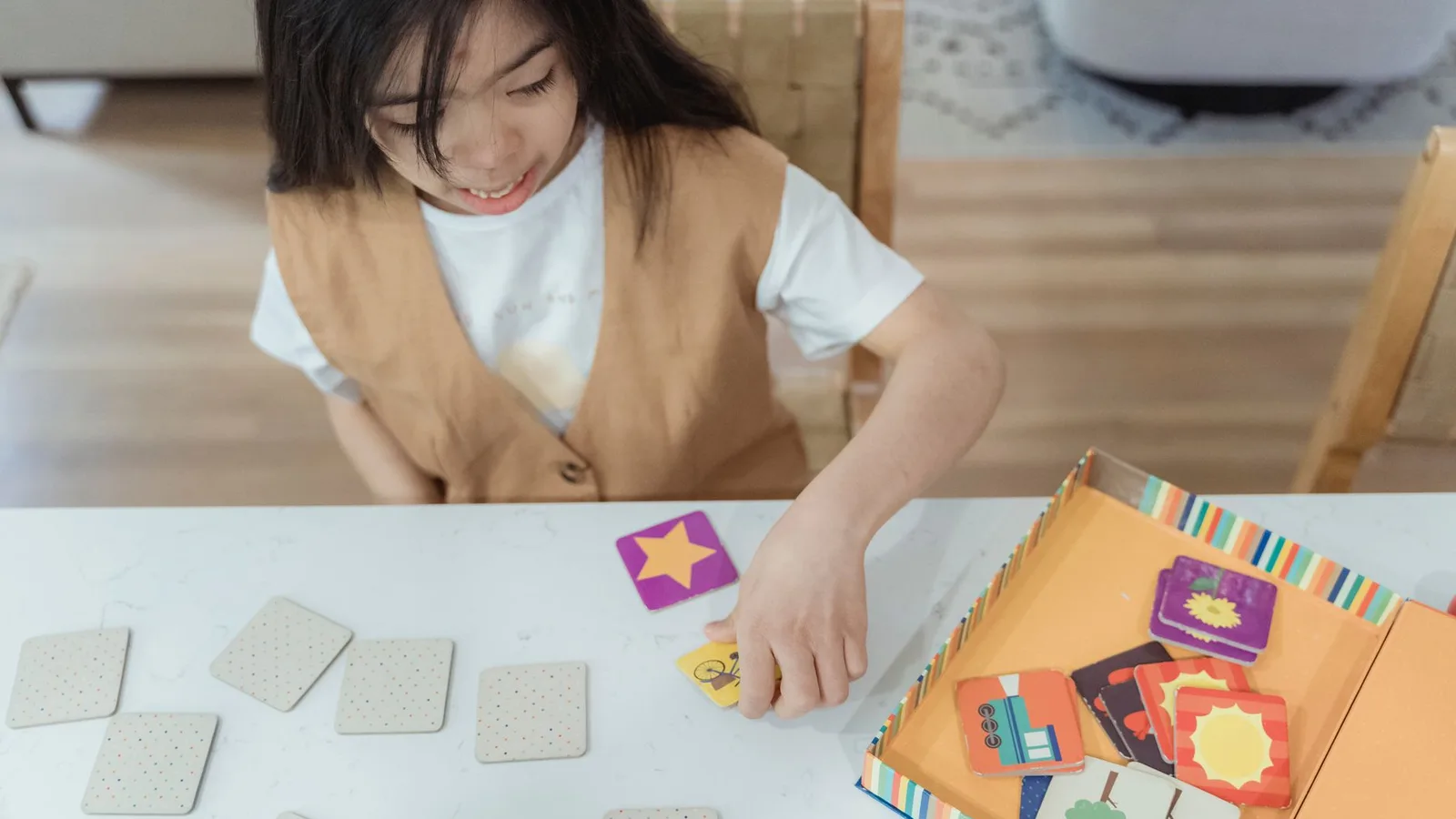
Turn over a grocery card and see whether it belongs on your shopping list, then add a match to your trolley or basket. The familiar objects give you something concrete to talk about. For an easier opening round, try leaving the cards face up, then use the memory rules when you want another challenge.
Good for: ages 3 and up. Under £10. Indoors, together. First go: 5 minutes.
2. Red Dog, Blue Dog
Match each card to a picture on your lotto board, checking both the object and its colour. A blue dog won't fill the red dog's space. Pick this when you'd like to sit with separate boards and point things out together, rather than move counters along a track. Say the colour and object as you place them.
Good for: ages 2 to 5. £10 to £25. Indoors, together. First go: 5 minutes.
3. Dinosaur Dominoes
Join matching dinosaur pictures end to end, aiming to use up your dominoes. You don't need to read dot patterns or know dinosaur names to make a match. For a first practice, lay the pieces face up and build a shared line before dealing separate hands. Leave enough table space for the line to wander.
Good for: ages 3 to 5. Under £10. Indoors, together. First go: 5 minutes.
4. Dotty Dinosaurs
Roll a colour or shape die and cover the matching spaces on your dinosaur. The double-sided boards offer colour matching on one side and shapes on the other. Choose the side you want before unpacking the pieces, and keep the unused set in the box. It's a clear choice if placing pieces appeals more than racing.
Good for: ages 3 to 6. £10 to £25. Indoors, together. First go: 5 minutes.
5. First Orchard
Everyone collects fruit before the raven reaches the orchard. Roll the colour-and-symbol die, then collect fruit or move the raven as directed. You share the result, so nobody has to lose to their grandparent. Choose this for a present you'll play together, especially if you like having a story to tell as each turn unfolds.
Good for: ages 2 and up. £25 to £50. Indoors, together. Full game: about 10 minutes.
6. Little Cooperation
Help the animals cross an ice bridge and reach their igloo before the bridge collapses. The die decides whether you move an animal or remove a bridge support. It's a shared task with something physical happening on the table. Mention the collapsing bridge before starting: working together doesn't mean the animals are guaranteed to get home.
Good for: ages 2½ to 5. £10 to £25. Indoors, together. Full game: about 10 minutes.
7. Hungry Little Penguins
Collect coloured fish together before the seal reaches the centre of the iceberg. Alternatively, separate the board into individual lotto boards and race to fill your own. That choice earns its place: you can give a shared-goal game now without committing the family to that style every time. Start with the collaborative rules and explain the seal's role.
Good for: ages 3 and up. £10 to £25. Indoors, together. First go: 5 minutes.
8. Little Circuit
Choose an animal and roll the colour die to move along the path. A colour result sends you to the next unoccupied space of that colour, so this offers a race without counting out a numbered roll. The flower and bee results add forward and backward moves. Demonstrate those special turns before beginning the race.
Good for: ages 2½ to 5. £10 to £25. Indoors, together. Full game: about 10 minutes.
9. My First Snakes & Ladders
Roll the die, count the moves and send your character up ladders or down snakes. Choose this particular age-labelled edition if you'd like a familiar race with large board spaces. Count aloud while the child moves their piece. Make the downward slides part of the explanation, rather than an unwelcome rule discovered halfway through.
Good for: ages 3 and up. £10 to £25. Indoors, together. First go: 5 minutes.
10. Catch and Count
Spin, count the bubbles and turn over a matching card to collect fish. A shark card takes away your collected fish, so there's a setback to consider before buying. Pick it for a child who likes the fish theme and the suspense of revealing cards. Count together, and explain what the shark does before the first turn.
Good for: ages 3 and up. Under £10. Indoors, together. First go: 5 minutes.
11. The Sneaky, Snacky Squirrel Game
Spin and use the squirrel-shaped squeezer to pick up an acorn for a matching space in your log. Some results let players take an acorn from someone else; another sends collected acorns back. Choose it for the picking-up action, but check that those rules suit the family. Before letting the child try the squeezer, note that Learning Resources' UK listing flags latex among this game's allergens. If the child has a latex allergy, check suitability with the supplier first.
Good for: ages 3 and up. £25 to £50. Indoors, together. First go: 5 minutes.
12. Tummy Ache
Build a meal on your place-setting board by drawing food cards, replacing the deliberately unappetising ones as you play. The bugs and worms provide the joke. It's a choice for a child who enjoys silly pictures more than a race. Let them describe the make-believe meal on the plate.
Good for: ages 3 to 7. £10 to £25. Indoors, together. First go: 5 minutes.
How do you choose when you don't know their games?
Ask the parent which games they already own and whether the child prefers matching pictures, moving a character or playing on a team. Those answers narrow the list more usefully than choosing by the size of the box. If you're buying for a party, ask before wrapping it.
Use these checks:
- Explain a turn: can you show what the child does without reading out a paragraph? Shopping List's turn is simply finding an item that belongs on your list.
- Check the setback: do players lose their collection, miss a turn or move backwards? Catch and Count and the squirrel game include losses of collected pieces.
- Picture the playing space: a trail needs room to spread out; separate lotto boards need a place for each player.
If the family already has enough games, our other gifts for three-year-olds offer a different starting point.
How do you make the first round easy to join?
Open the box together, choose the pieces and demonstrate a turn before explaining how to win. Begin with you and the child, then involve more people as your child gets better at taking turns. That follows Newcastle Hospitals' turn-taking advice, which starts with an adult and adds people gradually.
Try saying, "I turn a card over. Now you turn one over." Keep the instruction tied to the action in front of them.
Use the suggested first-go time as permission to finish, even if the game hasn't ended. For a longer gathering, our family game night ideas combine different kinds of play.
If you're concerned about your child's wider development, speak to your GP or health visitor.
What should you check before handing over the box?
Read the age label and warnings on the exact edition, particularly if there's a younger sibling at home. The Royal Society for the Prevention of Accidents advises following instructions, supervising young children and keeping toys marked unsuitable for under-threes away from them.
Keep loose counters, small dice and other small components out of younger children's reach. The NHS explains that small objects can cause choking. Gather the pieces back into the box after play and check the floor.
For a second-hand present, check the contents against the instructions and inspect the pieces for damage. Missing rules can spoil the gift; missing pieces can prevent you playing it at all.
What if the games cupboard is already overflowing?
Give the game with an offer to play it. A grandparent can read the rules before a visit, then sit down with the child when the present is opened. A party guest can include a gift receipt and let the parents decide when to bring it out.
Ask about duplicates by title, rather than asking whether the child "has board games". A different animal on the box may still mean another version of the same activity.
Keep the packaging and original instructions together, even if you add a short handwritten reminder of the first turn. If the invitation says no presents, respect it. You can bring a willingness to join in without bringing another box.
Which games need no board or shopping trip?
Matching, copying and taking turns can all become a game with things already at home. Try these before buying if you're unsure which activity appeals. They're handy when you're visiting grandchildren and nobody knows where the board games have gone.
- Sock pairs: put out 3 pairs of socks, mixed up. Take turns finding a pair.
- Copy my clap: clap a short pattern for the child to copy, then swap leaders.
- Shared tower: take turns adding a brick from the child's own building set.
- Picture pairs: draw 3 matching pairs on paper. Match them face up, then try hiding the pictures.
For more choices beyond the table, see our activities for three-year-olds at home.
Want a moving game after the table?
Finish with a game the child can lead: copy their stretch, reach or animal shape. If you'd like a separate present for that kind of play, our mats have 15 numbered poses laser-engraved into the surface and are designed for ages 3 to 8. Explore our pose mats.
Frequently asked questions
What is a good first board game for a 3 year old?
Shopping List is a straightforward choice if you want picture matching and a familiar shopping theme. First Orchard is worth considering if you'd rather everyone play on the same team. Choose between those starting points by asking whether the child would enjoy finding pictures or rolling a die and collecting fruit.
Can a 3 year old play Snakes and Ladders?
Yes, choose an edition labelled for their age, such as My First Snakes & Ladders, which is designed for ages 3 and up. Sit alongside them and count the moves together. Let them move their own piece, and agree before starting that you can stop without reaching the finish.
Are cooperative games better for three-year-olds?
They're a useful choice when you'd prefer a shared goal: everyone wins or loses together. That doesn't make them the right choice for every child. Some will want their own board or animal to move. Choose the style you'd enjoy playing together, and remember that a cooperative game can still end in a loss.
What games can you play with a 3 year old without a board?
Try matching socks, copying claps, taking turns to add a brick to a tower, or hiding a familiar toy and describing where to look. You can also draw pairs of pictures on paper and match them face up. Let the child choose the pictures, then swap who finds the match.