guides
Cork Yoga Mat or Rubber, TPE or PVC? A Parent's Guide
Choosing a cork yoga mat? Compare rubber, TPE and PVC on materials, grip, weight, care and disposal, with practical checks for your child.
Which material should you put on your shortlist?
Choose a cork yoga mat for its cork surface, natural rubber for a tree-derived material, or TPE and PVC if you're happy with synthetic materials. For a child, give carrying weight, dry grip and cleaning instructions priority over the label. Check both the top and underside before buying.
If your child already borrows an adult mat, use it as your comparison point. Note what you'd actually want to change.
Start with these checks:
- Construction: find out what the surface and backing are made from.
- Daily use: compare the actual weight, floor-space requirement and care instructions.
- Value: work from the delivered price and features you'll use.
- Disposal: ask where the complete mat can go when it's worn out.
In this guide: material differences, grip and weight, cleaning, disposal, buying mistakes, our specification and alternatives.
What do the material names actually tell you?
A material name is a starting point, so read it alongside the full construction. Cork describes a different substance from natural rubber, while TPE and PVC describe synthetic materials. Look for what touches your child's hands, what sits on the floor and what joins those parts together.
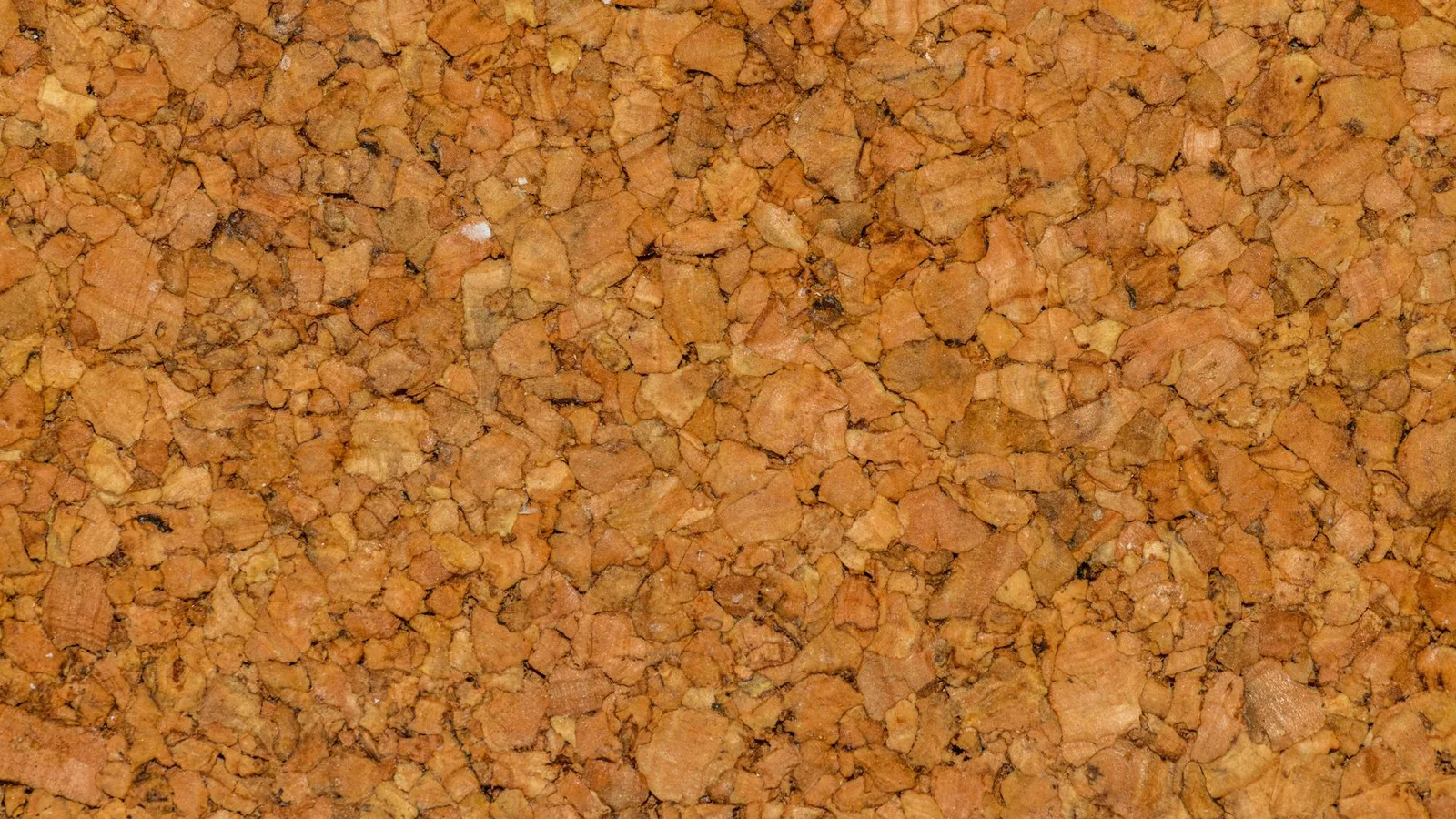
- Cork: harvested bark from the cork oak. Kew describes its low density, compressibility and resistance to water. Those are properties of cork itself. Independent material analysis found a finished mat combining cork with rubber, so check more than the top layer.
- Natural rubber: made from latex obtained from rubber trees. The Health and Safety Executive explains its origin. Check whether a rubber yoga mat has another surface layer.
- TPE: short for thermoplastic elastomer, a family of materials with rubber-like elasticity. The British Plastics Federation describes different formulations and hardnesses, so the abbreviation doesn't tell you exactly how a mat feels.
- PVC: short for polyvinyl chloride, a synthetic plastic. The Environment Agency explains that additives give PVC different properties, including its flexible form.
The listing should name every layer. If it names only the top surface, ask what's underneath. Our guide to non-toxic and PVC-free wording looks more closely at material claims.
How should you compare grip and carrying weight?
Compare grip at the top and underneath, then look at the weight of the complete mat. Your child's hands and feet meet one surface; the floor meets another. A mat that stays in the living room has a different carrying job from one taken to a class.
Laboratory methods described by Testfakta assess dry and wet upper surfaces separately from the underside. Our practical takeaway: ask about grip in the conditions you'll actually use, rather than treating a photograph of a texture as the answer.
For ordinary dry practice at home, ask specifically about dry grip. Also check which floor surfaces the seller recommends.
TPE can have a lower density than conventional rubber, according to the British Plastics Federation, but compare the finished mat's listed weight. Layers and dimensions matter to what you'll carry.
Before ordering, find the weight without packaging, dimensions and intended floor types. Our guide to choosing your child's first mat brings those checks together.
Will the cleaning routine fit your household?
Choose a mat with care instructions you'd happily follow after use. Read the permitted cleaning products, drying method and any storage restrictions before ordering. For a family mat, knowing exactly how to deal with marks is more useful than a vague promise that a material is easy to maintain.
For cork and rubber, check whether the instructions cover the surface and backing. For TPE and PVC, follow the particular mat's instructions too. Don't transfer a cleaning recipe from a different product just because both are called foam.
Smell is worth a question before buying: ask what to expect on unpacking, whether airing is recommended and what the returns terms allow. If your child dislikes the smell, that matters to whether they'll want to use it.
One health point: natural rubber latex can cause allergic reactions in some people. If you think your child may have an allergy, speak to your GP.
A useful care section names the cleaning method and products, rather than just saying easy to clean.
Where will the mat go when it's worn out?
Check the disposal route for the whole mat before buying it. Ask whether the seller names a collection scheme that accepts that exact construction, and whether you would need to pay postage. Keep any instructions with your order details so you can find them when the time comes.
The Competition and Markets Authority's Green Claims Code says environmental claims need evidence and mustn't hide the wider picture. Applied to mats, that's a reason to ask about the backing and bonding materials as well as the attractive surface.
For disposal, our practical rule is to find an actual collection route rather than rely on a material description. GOV.UK recommends checking what your council accepts.
On a listing, look for a named route with clear conditions. If none is given, ask your council about the complete item rather than assuming it belongs with packaging or garden waste.
What should you check before you pay?
The costly mistake is paying for a description while leaving the practical details unchecked. Decide what would make a mat useful in your household, then compare those features within your budget. A longer materials list or a higher price shouldn't make that decision for you.
Don't buy from the colour photograph alone, either. Measure the clear floor space and read the listed length and width. For example, a mat that fits in a classroom photograph may take up more of your living room than you expected.
Finally, don't buy engraved pictures if your child wants a plain surface. Choosing something they'll enjoy looking at is a reasonable part of the decision, alongside the material.
How does Yogi-Me fit these checks?
Yogi-Me is a TPE option for ages 3 to 8, with 15 numbered poses laser-engraved into the surface. The useful question is whether that layout suits your child. If you're choosing mainly for a cork surface or a natural rubber construction, this isn't that option.
- Material, What to look for: The stated composition; What ours offers: Non-toxic, PVC-free TPE, according to our supplier's specification
- Carrying weight, What to look for: Weight of the complete mat; What ours offers: About 800 g
- Size and thickness, What to look for: Measurements that suit your space; What ours offers: 183 x 61 cm, 6 mm thick
- Care, What to look for: Instructions you can follow at home; What ours offers: Damp cloth and mild soap, then air-dry flat
- Cost, What to look for: Delivered price; What ours offers: £34.99 with free UK delivery
It's full length, so adults can use it too. Choose the engraved layout if your child wants pose pictures on the mat itself. Choose a plain surface if they'd rather follow a class or use their own ideas without pictures underneath them.
You can compare the Sun Salutation and Freedom Flow designs once the material and measurements fit your shortlist.
When should you choose a different kind of mat?
Choose something else if cork or natural rubber is essential to you, or your child wants a completely plain surface. Yogi-Me's intended age range starts at 3. A home yoga purchase also needs a different brief from equipment for gymnastics or a busy nursery.
- Under 3: our pose sequences are aimed at older children.
- Tumbling or gymnastics: ask the session provider which purpose-made equipment to buy.
- Commercial cleaning: for a nursery needing frequent cleaning between groups, choose a commercial mat specified for that routine.
For the activity question, our comparison of gym mats and yoga mats explains the distinction.
If TPE, the carrying weight and the engraved pose layout fit your shortlist, browse our TPE mats and colours.
Frequently asked questions
Is a cork yoga mat better than TPE?
Neither is better for every family. If you want cork under your hands, choose a cork surface and check the backing. If carrying weight and a simple care routine matter more, compare those details on individual mats. Buy the complete specification that suits your household, rather than choosing by material alone.
How much should I spend on a yoga mat?
Set a budget for the complete delivered price, including any accessories you'd need separately. Compare mats with the dimensions and care routine you want, then decide whether an extra feature earns its cost. A higher price alone isn't a reason to choose one material over another.
Is a jute yoga mat made only of jute?
Not necessarily. The Ecology Center's material analysis found a mat sold as natural jute was mainly PVC with a jute layer. Ask for the backing material as well as the visible fibre, and check that the care routine suits your home.
Can I put an old yoga mat in the recycling bin?
Ask your council whether it accepts the complete mat, including any backing, before using the recycling bin. GOV.UK advises checking local collection rules. If the mat is still usable, consider passing it to someone who wants it. Otherwise, follow your council's disposal instructions.
Sources
- Royal Botanic Gardens, Kew: cork oak and its bark
- Health and Safety Executive: natural rubber latex and allergies
- British Plastics Federation: thermoplastic elastomers
- Environment Agency: PVC additives
- Ecology Center: yoga mat material analysis
- Testfakta: methods for assessing yoga mats
- NHS: allergies and when to see a GP
- Competition and Markets Authority: Green Claims Code checklist
- GOV.UK: disposing of household waste