guides
Odd Socks Day: What It Is and Ideas for Home and School
Odd Socks Day explained: when it falls, why odd socks, how it differs from World Down Syndrome Day, and kindness ideas for nursery, school and home.
Odd Socks Day is the first day of Anti-Bullying Week, when children and adults wear mismatched socks to celebrate what makes each person unique. The Anti-Bullying Alliance organises both in England, Wales and Northern Ireland, and the week runs every November. This page answers when it falls, why socks, and how it differs from World Down Syndrome Day, then gives ideas for home and school.
What is Odd Socks Day?
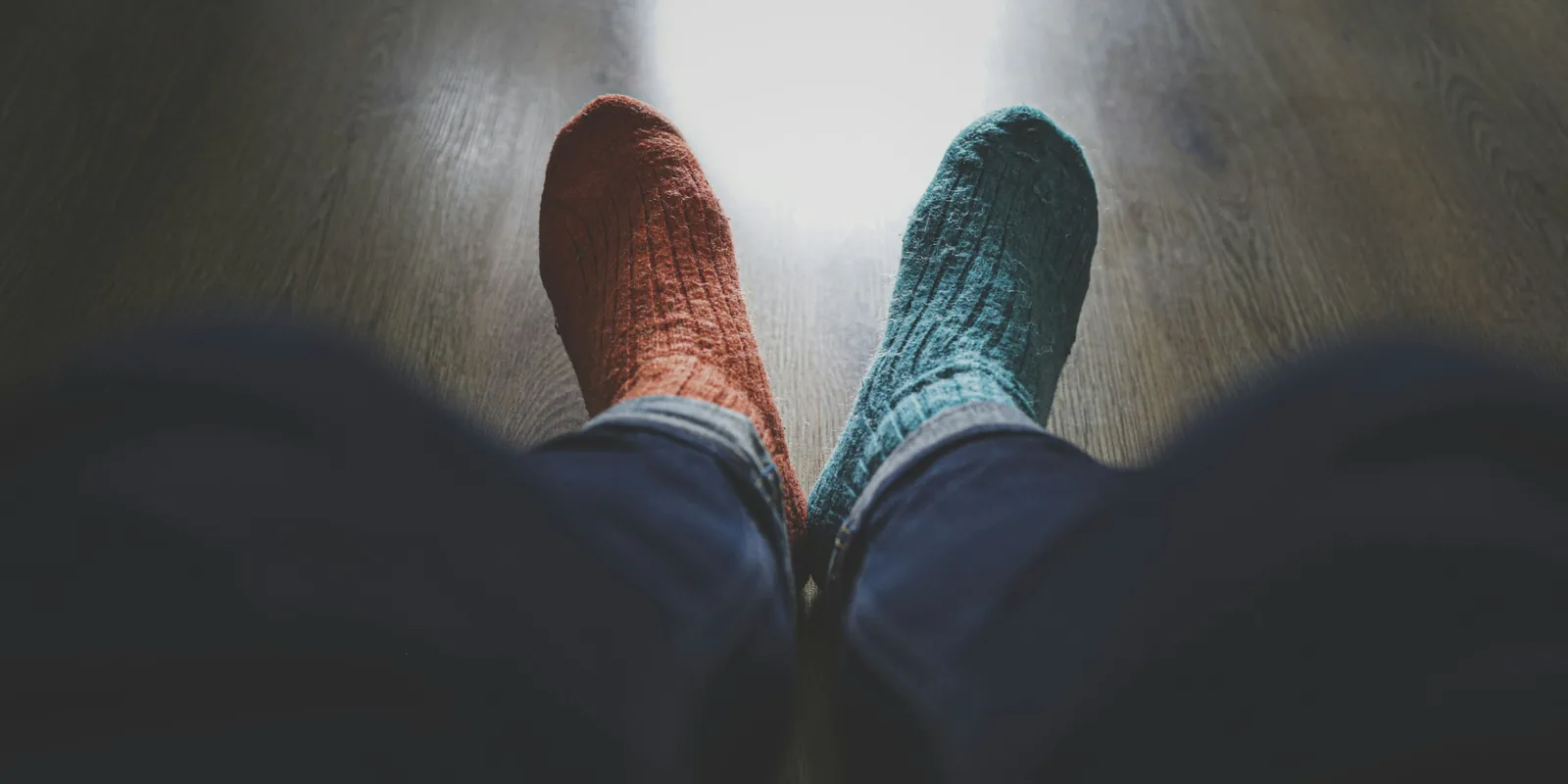
Odd Socks Day is a day of wearing two socks that don't match, to start Anti-Bullying Week with something fun. The Anti-Bullying Alliance, which runs it, says the day is "designed to be fun" and is a chance "to encourage people to express themselves and celebrate their individuality and what makes us all unique".
Taking part is simple. You wear odd socks to school, to work or at home. The Alliance says there is "no pressure to wear the latest fashion or to buy expensive costumes", which makes it one of the cheaper days in the school calendar for parents.
The socks are a hook, not the point. Schools often use the day to open a week of assemblies, class discussions and activities about bullying and kindness.
When is Odd Socks Day?
Odd Socks Day falls on the first day of Anti-Bullying Week, which runs for a week each November. The Anti-Bullying Alliance says Odd Socks Day "will take place on the first day of Anti-Bullying Week each year to help raise awareness of bullying".
The exact dates change every year, so we won't print one here. It's usually a Monday, though Odd Socks Day has fallen on a Tuesday before. Check the date on the Anti-Bullying Alliance website, which publishes it well ahead, or look for the letter home from your child's school.
If your child comes home in September asking for odd socks, they're early. If they ask on a Sunday night in November, they're probably right.
Why do we wear odd socks for Anti-Bullying Week?
Odd socks are a visible, silly way of saying that everyone is different and that's good. Two socks that don't match still do their job, and that's the message: you don't have to be the same as anyone else to belong.
The idea came from the children's band Andy and the Odd Socks. The Anti-Bullying Alliance says the band came up with Odd Socks Day with it in 2017 and has supported it ever since. It describes the band's message as one "of individuality, acceptance and tolerance", and sums it up as "everyone is different and that's good".
The band is fronted by Andy Day, the CBeebies presenter, who is a patron of the Alliance. Each year the band writes a song for Odd Socks Day to go with that year's theme, which is why your child may come home singing something you've never heard.
Is Odd Socks Day the same as the socks for World Down Syndrome Day?
No. They're two different days, months apart, for two different causes. Odd Socks Day is in November and is about bullying. World Down Syndrome Day is on 21 March every year, a date the United Nations General Assembly set, and it raises awareness of Down syndrome.
The confusion is understandable, because socks are central to both. The UN page for World Down Syndrome Day promotes a campaign called #LotsOfSocks, asking people to wear "brightly coloured socks, long socks, printed socks, 1 sock, even 3 socks for 3 chromosomes". That last part is the link: Down syndrome happens when a person has an extra full or partial copy of chromosome 21.
So in March, it's lots of socks. In November, it's odd socks. Both days are about difference, and some schools mark both, but they are separate campaigns run by separate organisations.
What is Anti-Bullying Week?
Anti-Bullying Week is a week each November when schools, youth settings and workplaces focus on preventing bullying. It's organised by the Anti-Bullying Alliance, which is coordinated by the children's charity the National Children's Bureau.
Each year has its own theme, which the Alliance announces months in advance along with free packs for primary and secondary schools. That's why the week can feel different every year: one year's assemblies might be about respect, another's about speaking up. Because the theme changes, check the Alliance's site for the current one rather than trusting an old poster.
For parents, the useful part is that school will talk about bullying that week whether you do or not. It's a good moment to ask your child what they heard, and what they think it means.
What counts as bullying, and what is just falling out?
Bullying is hurt done on purpose, again and again, by someone with more power. The Anti-Bullying Alliance's definition is "the repetitive, intentional hurting of one person or group by another person or group, where the relationship involves an imbalance of power". It adds that bullying "can be physical, verbal or psychological" and "can happen face-to-face or online".
That definition helps when your child comes home upset. Two friends who argue at lunch and make up by home time have fallen out. One child who is left out of every game, every day, by the same group, may be being bullied. The difference is repetition, intent and power: the bigger child, the bigger group, the one with all the friends.
A one-off unkind moment still matters, and it's still worth talking about. It just isn't the same problem, and calling every falling-out bullying blurs the word for a child who later needs it.
How do you explain Anti-Bullying Week to a young child?
Keep it to two ideas: everyone is different, and if someone keeps being unkind to you, tell a grown-up. Under-fives don't need the word "bullying" explained in detail. The odd socks do most of the work: "Look, my socks are different. Are you the same as your friend? What's different about you?"
In nursery and Reception, this sits inside personal, social and emotional development. The Department for Education's Help for early years providers says that when children are supported to play with others, they "learn how to make good friendships, co-operate and resolve conflicts peaceably". At three or four, that looks like taking turns, asking to join in and saying when something isn't fair. More ideas for that age are in our circle time games, which suit a nursery marking the week.
Odd Socks Day activities for nursery, school and home
These take five to fifteen minutes and need little more than socks and paper.
- Find your odd pair (age 3 and up). Everyone takes one sock from a basket and finds someone whose sock is different in one way, then says one thing they like about it. Different still makes a pair.
- Same and different (age 3 and up). Two children sit face to face and find one thing that's the same about them and one that's different. Then swap partners. It's the EYFS version of the whole week.
- The class washing line (age 4 and up). Each child decorates a paper sock to show something about themselves, and the socks are pegged up together on a string. No two match, and that's the display.
- Five people I'd tell (age 4 and up). Draw round your child's hand and write a grown-up they trust on each finger: a teacher, a lunchtime supervisor, a parent, a grandparent. Practising who to tell makes it easier to do.
- Odd sock stars on the mat (age 3 and up). Socks off, because bare feet are steadier on a mat, and lined up in odd pairs at the edge. Each child takes star pose, number 3 on our Freedom Flow mat, and says one thing that makes them them. Nurseries can find mats for a whole class on our schools page, and families our kids' yoga mats.
- The teatime question (any age). Wear odd socks to breakfast, then at teatime ask: "What's one thing about you that's different, and you'd never want to change?"
For a whole term of ideas beyond one day, see our kindness activities for kids.
If your child tells you they're being bullied
Listen, stay calm and thank them for telling you. Write down what happened and when, then talk to their class teacher. By law, every state school must have a behaviour policy that includes measures to prevent bullying, GOV.UK explains, and the school must tell parents what it is.
If it's affecting their sleep, eating or mood, or you're worried about them generally, talk to your GP too. And if you're ever worried that a child is in immediate danger, call 999.
Frequently asked questions
What should my child wear on Odd Socks Day?
Their normal uniform or clothes, plus two socks that don't match. That's all. The Anti-Bullying Alliance says there's no pressure to wear the latest fashion or buy an expensive costume. Two odd socks from the drawer do the job, and a child who forgets can swap one sock with a friend at the classroom door.
Do you have to donate money on Odd Socks Day?
No. The Anti-Bullying Alliance invites schools and workplaces to ask for a £1 donation, or whatever feels right, to help it keep running the week. It's clear that you don't have to raise money to take part, and that the message matters most. Check your child's school letter, because each school decides for itself.
Can adults take part in Odd Socks Day?
Yes. The Anti-Bullying Alliance asks people to wear odd socks at school, at work or at home, so parents, grandparents and teachers can all join in. Children notice when a grown-up does it too. Wearing a pair yourself on the school run is the easiest way to show your child you take it seriously.
Is Odd Socks Day only for primary schools?
No. Primary and secondary schools, youth settings and workplaces all take part, and nurseries can join in too. The Anti-Bullying Alliance publishes free packs for primary and secondary schools each year. For under-fives, the socks are the whole activity: a chance to talk about how people are different and why that's fine.
Sources
- Anti-Bullying Alliance: What is Odd Socks Day?
- Anti-Bullying Alliance: Andy and the Odd Socks
- Anti-Bullying Alliance: Our definition of bullying
- Anti-Bullying Alliance: Anti-Bullying Week and Odd Socks Day
- United Nations: World Down Syndrome Day, 21 March
- Department for Education: Help for early years providers, personal, social and emotional development
- GOV.UK: Bullying at school