guides
What Are Fine Motor Skills? Examples by Age
What are fine motor skills? Understand everyday examples, broad age stages and Reception goals, with practical ideas and when to ask for help.
What do fine motor skills look like at home?
Fine motor skills are the small muscle movements your child uses for tasks such as eating, drawing and getting dressed, as the Department for Education (DfE) explains. The DfE describes the brain and nervous system working with muscles in the hands, fingers and other areas, including the eyes and mouth.
If nursery mentions fine motor practice, ask which everyday action they mean. Opening a lunchbox gives you something concrete to talk about. Ask what your child can already do and which step they'd like help with.
For the wider nursery picture, see our parent's guide to physical development in the early years.
Which skills develop between 1 and 6?
The DfE's Development Matters describes broad stages, with development following different paths rather than a neat birthday timetable. Use the examples below to understand what children are learning. They aren't a list to test your child against, and the school expectations here apply to England.
- 1 to 3, within the birth to 3 band, Examples of what children are learning: Development Matters includes building with suitable resources, pouring drinks and becoming more independent with feeding and dressing themselves.
- 3 and 4, Examples of what children are learning: Development Matters includes snipping paper with scissors and using a comfortable, controlled pencil grip.
- Reception, Examples of what children are learning: Development Matters includes increasingly confident use of pencils, brushes, scissors and cutlery.
- Year 1, Examples of what children are learning: The DfE's English curriculum includes comfortable pencil handling and learning to form letters correctly.
GOV.UK's age guide places Reception at 4 to 5 and Year 1 at 5 to 6. These school labels describe the English system; if you're elsewhere in the UK, ask your setting about its learning framework.
For a familiar toddler example, NHS West Yorkshire Healthier Together gives making crayon marks at around 18 months, while stressing that its ages are averages.
What is expected by the end of Reception?
In England, the DfE's Early Years Foundation Stage (EYFS) framework sets out an expected level for fine motor skills. Its goal covers pencil use, small tools and drawing. The DfE's profile handbook places this assessment at the end of Reception, not at the school gate on the first morning.
The DfE framework describes children who can:
- Use a pencil effectively for writing, with a tripod grip in almost all cases.
- Handle tools including scissors, paintbrushes and cutlery.
- Start drawing with care and accuracy.
A tripod grip means holding the pencil between thumb and forefinger, supported by the middle finger, as Development Matters explains.
If starting school is the worry behind your search, read our guide to what children need before starting school. Bring your questions to the teacher, including any help your child already uses at home.
What does “emerging” on a school report mean?
In the DfE's assessment handbook, “emerging” means a child isn't yet meeting the expected level for that learning goal. Teachers make an overall judgement: children don't have to show equal mastery of every part. Ask what the description means for your child's next steps.
Make the conversation specific:
- Which task is difficult: drawing, cutting or using cutlery?
- What can my child do independently?
- What help are you giving in class?
- Which everyday task could we practise at home?
For example, ask the teacher to show you how they help your child hold the paper steady while drawing. Try the same prompt at home if the teacher recommends it.
Before you leave, agree what you'll try and when you'll talk again. Ask the teacher to write down any instructions you want to share with another carer.
What have shoulders got to do with small hands?
Lincolnshire Children's Therapy Services explains that shoulder strength and stability matter for hand function. Its handwriting advice also looks at the sitting position: feet supported, bottom back in the chair and forearms resting on the table. The setup deserves attention alongside what the fingers are doing.
Before the next drawing session, check the chair and table against that advice. Ask nursery how it arranges the space, and try the same setup where possible.
The DfE's assessment guidance says children may meet the gross motor goal without meeting the fine motor goal, so teachers assess them separately.
Our guide to gross motor skills and everyday examples explains the larger movements. Keep both kinds of play in the picture when planning your day.
How can you practise without another worksheet?
Start with something your child already wants to do: make food, get dressed or build something for a game. The DfE recommends purposeful activities such as cooking and making as opportunities for fine motor practice. Choose a task, show the action and leave room for their attempt.
Here are some ways to fit that into an ordinary day:
- At the coat hook: start the zip, then let your child pull it up. Development Matters suggests gradually handing over these steps. Try it when you aren't rushing out.
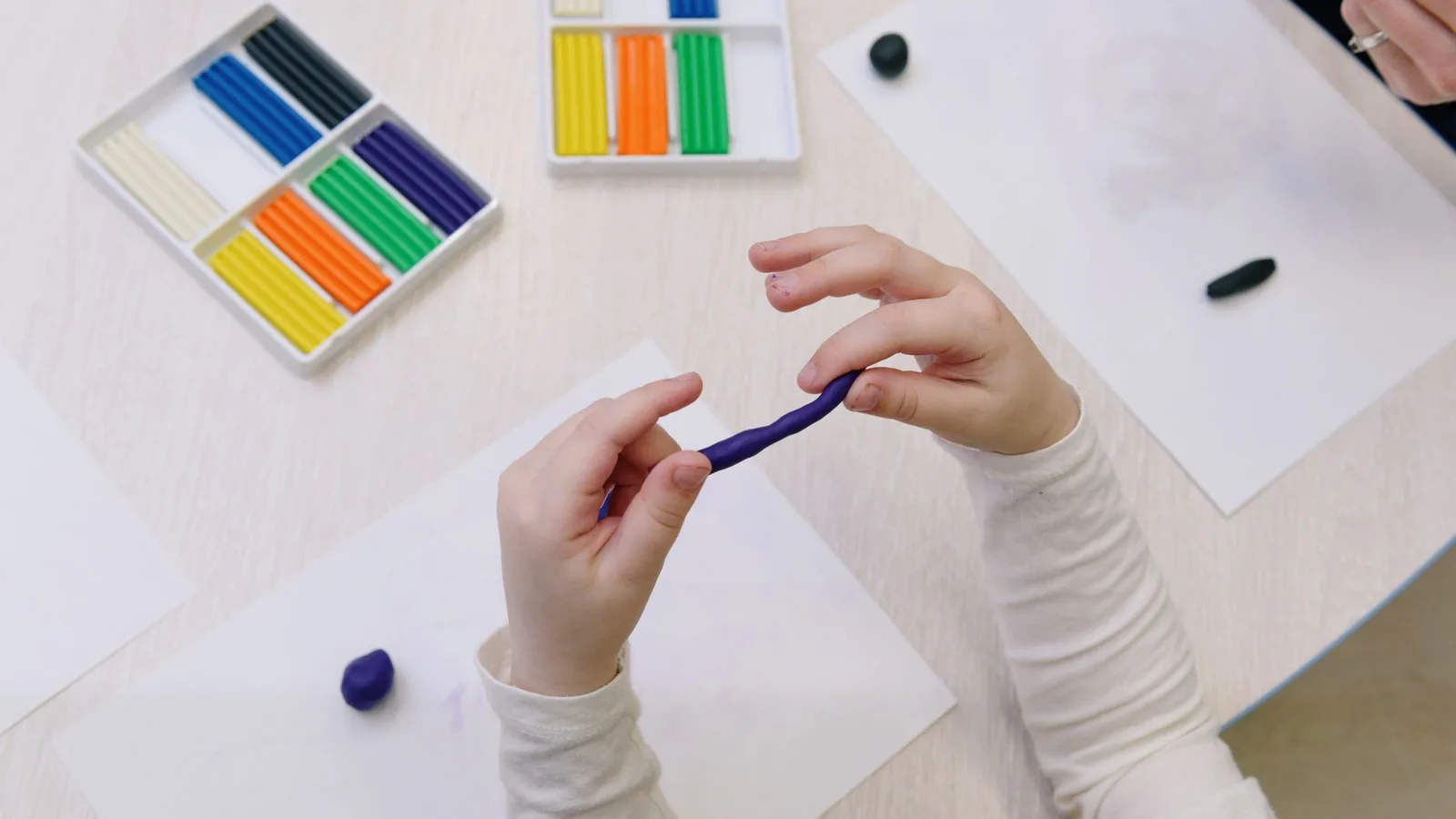
- During play: offer a lump of playdough and a rolling pin. Make a pretend pizza base, then pinch a rim around it. Alder Hey's NHS guidance includes rolling and pinching dough among its hand activities. Check ingredients against your child's allergies first: playdough can contain wheat. Supervise play and keep the dough out of mouths.
- While preparing food: hand over a bowl and spoon for mixing. Check ingredient labels against your child's allergies before starting, following NHS food allergy advice. The DfE's cooking guidance identifies mixing, pouring and spreading as opportunities to practise coordination. Your child can choose which job to join in with.
- Before story time: put out age-appropriate blocks and suggest building a garage for a toy. NHS West Yorkshire Healthier Together includes blocks, stacking and drawing among its suggestions. Let your child decide what the finished building looks like.
A clear safety note: the Child Accident Prevention Trust advises keeping small parts, loose buttons and coins out of young children's reach. Leave these out when under-3s join in. For cutting activities, Alder Hey recommends supervision, so stay alongside your child.
For movement between table activities, explore Yogi-Me's pose mats. Each has 15 numbered poses laser-engraved into the surface and is designed for ages 3 to 8. It's an optional way to add a movement break alongside the everyday hand activities above.
When is it worth asking for extra help?
Speak to your GP or health visitor if you're worried about progress, as NHS West Yorkshire Healthier Together advises. Bring specific examples from dressing, meals or play, and ask nursery or school what they notice too. You can start that conversation without deciding for yourself what's causing the difficulty.
Write down the task, what happens and what help you've tried. Keep the description simple: “The zip needs starting each time” is more useful to discuss than a broad label.
If your child loses skills they previously had, NHS Healthier Together advises seeking advice urgently.
Frequently asked questions
What are the main fine motor skills?
Alder Hey's NHS guidance includes pinching and gripping, moving objects within one hand, moving fingers separately, using both hands together and coordinating hands with eyes. Look for these actions during everyday play and dressing. A useful question for nursery is which particular action your child could practise next.
What is the difference between fine and gross motor skills?
The Department for Education describes gross motor skills as whole-body movements, such as running and jumping, while fine motor skills involve smaller movements used for tasks such as drawing. When choosing something to do together, offer a mixture: time to move around and time to handle, make or draw things.
When do children hold a pencil properly?
In England, the Department for Education's end-of-Reception goal includes effective pencil use, with a tripod grip in almost all cases. For help at home, ask the teacher to show you the grip they're practising and agree how you'll support it.
When should I ask about my child's fine motor skills?
Speak to your GP or health visitor if you're worried about your child's progress, as NHS West Yorkshire Healthier Together advises. You can also discuss the tasks with nursery or school. Write down what happens during drawing, dressing or meals so you have specific examples to talk through.
Sources
- Department for Education: Fine motor skills
- Department for Education: Development Matters
- Department for Education: EYFS framework for group and school-based providers
- Department for Education: EYFS profile handbook
- Department for Education: Gross and fine motor assessment guidance
- GOV.UK: National curriculum age guide
- Department for Education: English programmes of study
- NHS West Yorkshire Healthier Together: Hand skills
- Alder Hey: Fine motor skills
- Lincolnshire Children's Therapy Services: First move
- Department for Education: Gross motor skills
- Child Accident Prevention Trust: Choking prevention
- NHS Healthier Together: Your child's development