guides
Wet Play Activities: 20 Ideas for a Rainy Lunchtime
20 wet play activities for a full classroom: quiet games, table ideas and movement on the spot, plus a fair chooser rota for rainy lunchtimes.
What works when the whole class is staying inside?
Good wet play activities combine quiet guessing games, paper-and-pencil challenges, table games and brief movement on the spot. For a classroom of 30, start with small groups at existing tables, offer a reading or drawing alternative, and rotate who chooses. The 20 ideas below need ordinary classroom supplies, with no furniture obstacle course to clear away.
At home, try colour I spy, squiggle swap or mirror hands with one child and an adult, taking turns choosing the next game.
These are playtime choices. For short pauses during lessons, see our brain breaks for home and class.
How can you get ready without rearranging the room?
Bring activities to children at their usual places. These suggestions are aimed at ages 4 to 8; demonstrate the rules and use pictures where reading isn't part of the game. Put paper, pencils and the chosen game trays out before explaining the choices.
Agree a stop signal and speaking volume. An adult leads movement, offering a seated alternative.
Clear bags from walkways and deal with wet patches: the Health and Safety Executive identifies obstructions and wet surfaces as slip and trip hazards. Check equipment age labels. If you use the box around under-3s, keep small game pieces out of reach because of choking risks, as the Child Accident Prevention Trust explains.
Which of these 20 ideas fits today's room?
Start with the equipment you've already got: the first games need nothing, followed by paper activities, table games and movement. Choose a few for today's menu. Children can keep a game going or switch to the quiet alternative without the whole class having to change activities together.
The NHS advises children aged 5 to 18 to break up long periods of inactivity with movement. Include an active pause between table games; our movement break ideas offer more choices.
1. Colour I spy
Quiet game. A partner chooses something visible from their seat. Say, “I spy something green,” and let the other child guess without walking around. Swap after each answer. Use a shape clue next time. This version doesn't need letter names or anything fetched from a shelf.
2. Silent everyday charades
Quiet game. Mime an ordinary action, such as brushing teeth, stirring soup or opening an umbrella. Say, “Show us what you're doing without making a sound.” Children guess within their table group, then pass the turn around. Keep the actions small enough to do seated.
3. Secret object
Quiet game. Think of a familiar classroom object and invite questions answered with yes or no. Say, “You can ask whether it's soft, whether we write with it, or whether it's on a shelf.” Reveal it after five questions if needed, then let the next child choose.
4. Story round the table
Quiet game. Begin with “A tiny dragon arrived at lunchtime.” Each child adds a sentence, or passes. Say, “Tell us what happened next.” Keep the story within each table group so nobody waits through a whole class of contributions. Finish when everyone has had a turn.
5. Category chain
Quiet game. Choose animals, foods or things at the seaside. Say, “Name something that belongs in our group, then pass the turn.” Repeats are allowed, and anyone can ask for a clue. Change the category when ideas run out, rather than putting anybody out of the game.
6. Squiggle swap
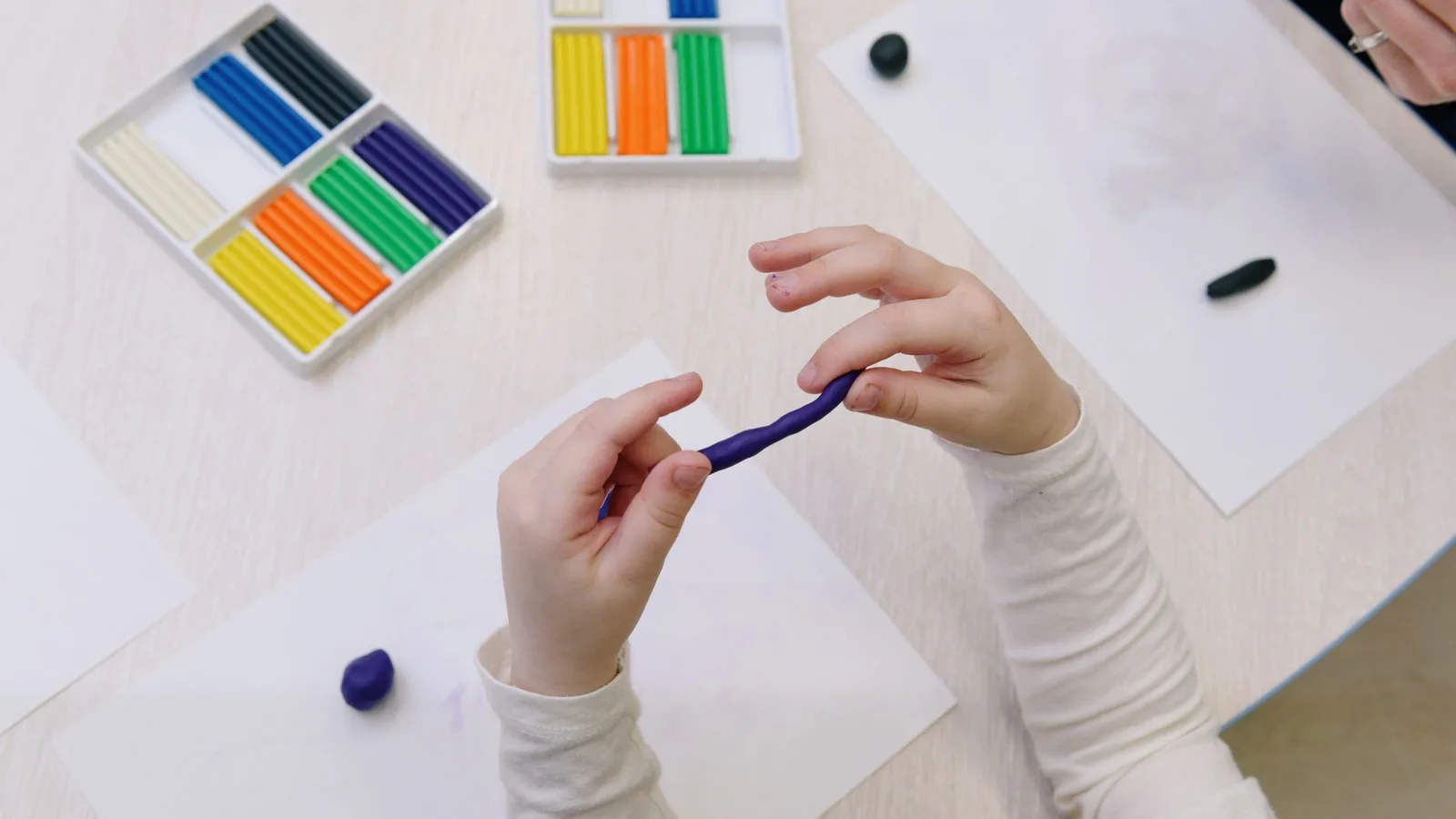
Paper and pencils. Each child makes a squiggle, then passes the page to a neighbour. Say, “Turn that line into something nobody expected.” A loop might become a snail or a flying teapot. Return the pictures afterwards so the original artists can see what their marks became.
7. Draw from directions
Paper and pencils. A partner describes an imaginary picture: “Draw a circle. Add a door. Put a moon above it.” The listener draws without seeing a model. Swap roles, then compare the pictures. A group of three can have a caller and two artists drawing separately.
8. Folded creature
Paper and pencils. Fold each sheet into three panels. Draw a head, fold it out of sight with neck lines showing, and pass it on for a body, then legs. Say, “Follow the joining lines.” Everyone starts a sheet, so the whole table draws at once.
9. Four-frame comic
Paper and pencils. Fold a page into four boxes and draw a tiny adventure: arrival, problem, attempt and ending. Offer a starting idea, such as a sandwich that escapes. Say, “Show what happens in pictures.” Speech bubbles are optional, and the story can stay unfinished until another wet lunchtime.
10. Make a pencil maze
Paper and pencils. Draw a start, a finish and a winding route between them, then add dead ends around it. Say, “Make a puzzle your partner can trace with a finger.” Swap and try each other's mazes. Add a creature to rescue at the finish.
11. Picture pairs
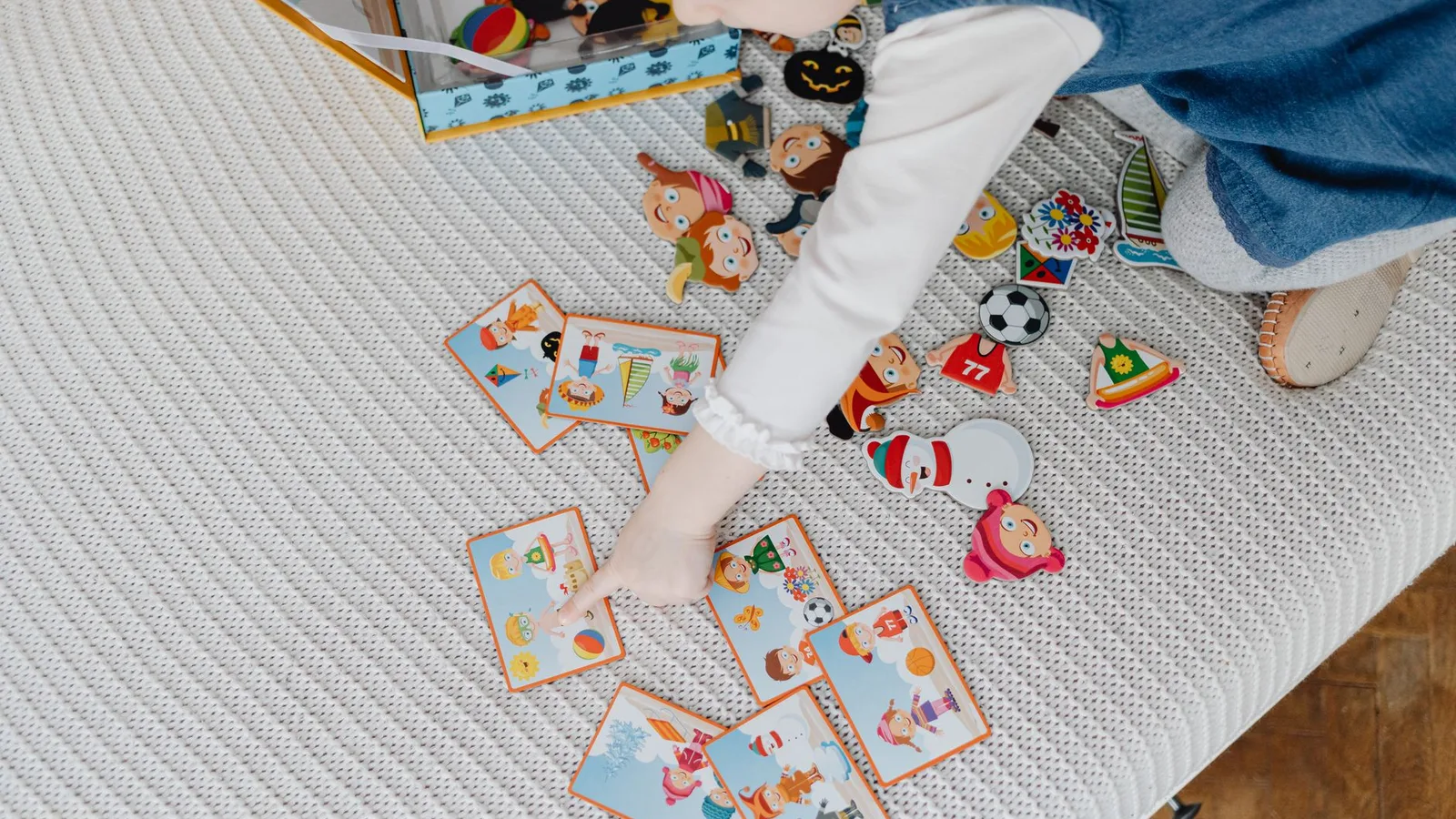
Table game. Start with four pairs of matching picture cards laid face down. Say, “Turn over two. Do they match?” Keep matches together and replace the others. Take turns around the table; beginners can play with the pictures visible. Add more pairs when the group asks.
12. Domino trail
Table game. Spread the dominoes face up and work together to build a matching trail. Say, “Find an end with the same number of dots.” Take turns adding a piece, with suggestions allowed. Keep the trail on the tabletop and put unused pieces back in their box.
13. Ten-block build
Table game. Give each group ten construction blocks and a challenge: build a bridge, shelter or creature. Say, “Everyone adds a piece before anyone adds another.” Take the finished model apart together before choosing the next challenge. The limit is part of the puzzle, not a height competition.
14. Jigsaw team
Table game. Put a familiar jigsaw and its picture in the middle of the table. Say, “Choose a bit of the picture to look for.” Children can search for matching colours or join pieces together. Leave the box lid available so everyone can check the picture.
15. Guess my sorting rule
Table game. Sort picture cards or construction pieces into groups without announcing why. Say, “What do the things in this group have in common?” Try colour, shape or something pictured on the cards. Let the next sorter invent a different rule using the same materials.
16. Mirror hands
On the spot. Face a partner while seated and copy their slow hand movements: palms up, palms down, fingers opening and closing. Say, “Move slowly enough for your reflection to follow.” Swap leaders after a short round. Keep hands close to your own body throughout.
17. Simon says, desk edition
On the spot. Use small actions such as nodding, shrugging, turning palms upwards or touching shoulders. Say, “Simon says, show me your hands.” Demonstrate before adding the trick commands. Anyone caught out simply rejoins the next instruction, so there isn't a growing queue of children watching.
18. March and freeze
On the spot. With the adult leading, march gently beside your place, then freeze when the leader raises a hand. Say, “Your feet stay in your own patch.” Offer alternating seated foot taps too. Change the marching rhythm between rounds, with no races or travelling.
19. Seated weather report
On the spot. Make weather with small movements: flutter fingers for rain, turn palms upwards for sunshine and sway hands for wind. Say, “Show today's forecast beside your shoulders.” Let children suggest the next weather change. Keep the whole report seated, with everyone following the same caller.
20. Familiar pose statues
On the spot. Choose a standing yoga pose the children already know, such as mountain, and let the adult demonstrate. Say, “Copy the shape, then relax.” Offer a seated action too. Try another familiar pose, keeping it shared rather than a competition to hold still longest.
How do you stop the same children choosing every time?
Give every child a place on a chooser list, and advance it after each wet lunchtime. Use a separate list for each table group. The chooser picks the starting game from the activities available there; everyone still has the option of reading or drawing instead.
For example, with six groups of five:
- Offer two available activity cards at each table, with pictures alongside the words.
- The next child on each list chooses the starting game.
- Move their name to the bottom afterwards.
- Keep an absent child's turn for when they're back.
- Offer a private choice before lunch to anyone who doesn't want to announce it.
Keep the list with the activity box for the next lunchtime adult. Rotate tidying jobs separately.
What could a whole wet lunchtime look like?
Use these as suggested running orders, changing the lengths to fit your break. Keep children at their usual tables and swap activity trays when needed. Show the plan before starting, including when tidying begins, so the adult taking over can see what comes next.
- A 20-minute break: 2 minutes to explain choices, 2 for mirror hands, 12 for picture pairs or squiggle swap, then 4 to collect materials and tidy.
- A 35-minute lunchtime: 2 minutes to choose, 3 for march and freeze, 12 for a table game, 2 to swap trays, 12 for drawing or a jigsaw, then 4 to tidy.
Reading stays available throughout. If lunch finishes late, shorten the activity slot and keep the tidy-up time. Save unfinished comics for another day.
For a separate yoga corner, choose a mat with poses to follow. Yogi-Me mats have 15 numbered poses laser-engraved into the surface and are for ages 3 to 8. Allow for the full 183 x 61 cm size when planning the space.
What about a child who prefers to look on?
Let them watch, draw or look at a book without making joining in the price of their break. Offer a small role, such as choosing the next picture card, if they want one. A child can take part from their seat without performing in front of the class.
Ask quietly whether they'd prefer a different game or partner. Accept the answer and leave the invitation open, without discussing their choice in front of everyone.
For children aged 5 to 18 who have a health condition, the NHS advises getting medical advice about exercising.
Frequently asked questions
What does wet play mean at school?
Wet play means spending break or lunchtime indoors because the weather has kept the class inside. It usually involves games, drawing, reading or other indoor activities. Here, it means rainy-day playtime, rather than water play with trays and pouring equipment. Your school decides when outdoor play moves indoors.
What wet play activities need no equipment?
Try colour I spy, silent charades, secret object, story round the table, category chain, mirror hands or Simon says. Start with a game the children already know, explain any changes and demonstrate a round. Play in table groups for talking games, with the adult leading whole-class movement.
How do you organise wet play for 30 children?
One option is six groups of five, adapted to the tables already in the room. Give each group a choice of available activities, keep reading or drawing open as an alternative, and rotate who chooses first. Lead movement together, then return to table games and leave time to tidy.
How can you keep wet play quiet without demanding silence?
Offer activities with low voices or no talking, such as picture pairs, drawing, jigsaws and mirror hands. Demonstrate the voice level you want and agree a familiar stop signal before starting. If a game gets loud, pause that table and offer a quieter choice. Keep competitive shouting games for another space.