guides
Games to Play on a Train With Kids: 15 Ideas
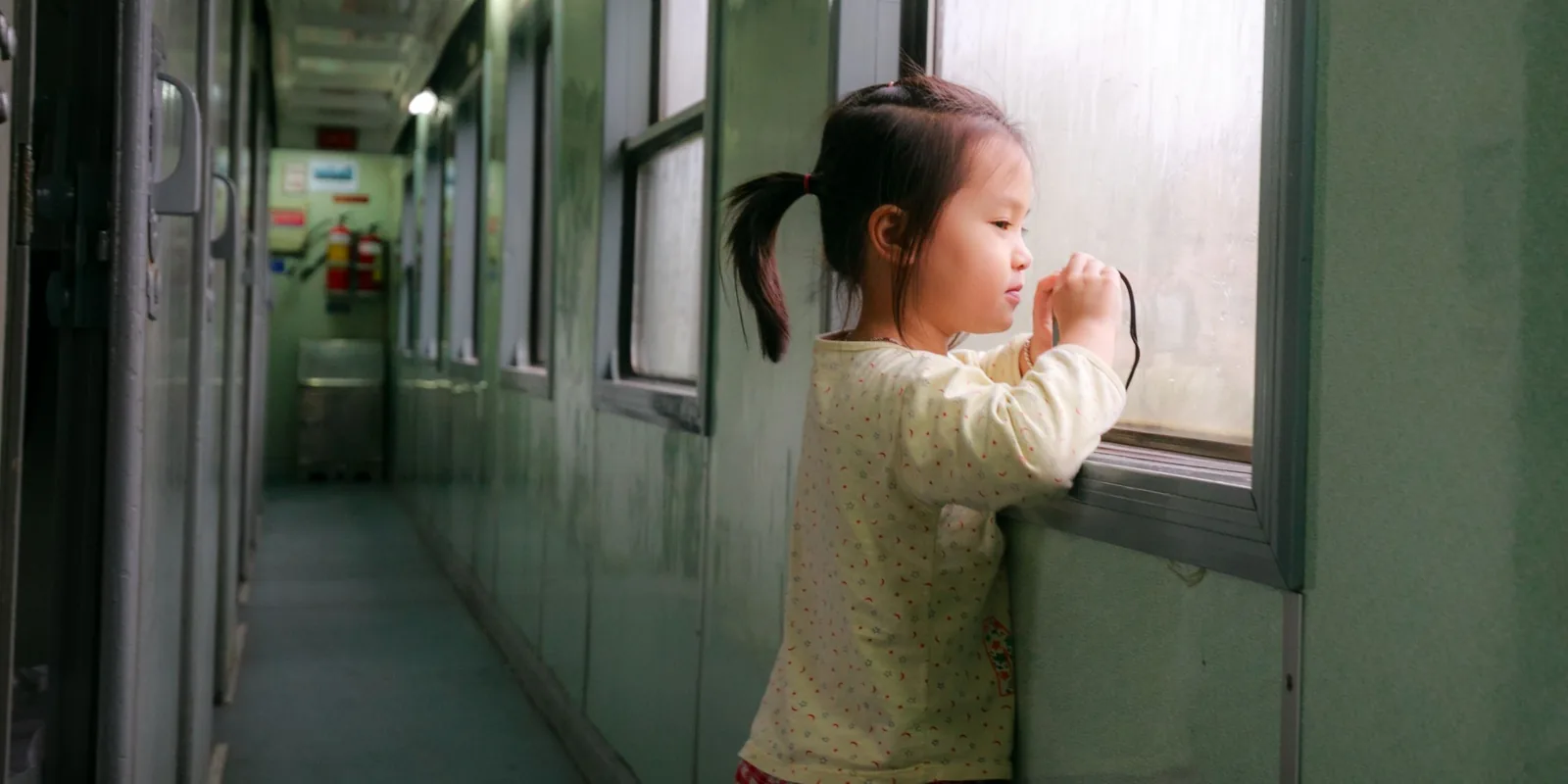
Games to play on a train with kids aged 3 to 8: 15 screen-free ideas built around the table, the window and the stations, plus what to pack.
The best games to play on a train use the three things a car doesn't have: a table, a window full of places, and stations that arrive on a timetable. Guess which side the next platform will be on, cross stops off a hand-drawn route map, play dots and boxes at the table, and walk the carriage between stations. Here are 15 ideas, each with the age it works from.
They're for children aged 3 to 8, with two at the end for toddlers. If you're driving instead, our long car journey activities for kids are sorted for children who get car sick.
What's different about taking children on a train?
You can get up. A walk to the end of the carriage and back resets a wriggly four-year-old in a way nothing in a car seat can.
There may be a table. Book table seats if you can. A table turns a train into somewhere you can play cards, draw and keep score, and most of the best things to do on a train need one.
The window is full of places, not road. Back gardens, stations, rivers and other trains go past at the side, close enough to name.
There are strangers a few inches away. Voices stay low and elbows stay in. Skip the quiet coach when you book.
Seats for under-5s aren't guaranteed. National Rail says children under 5 travel free on most journeys, but one without a ticket "may only occupy a seat that is not required by a fare-paying passenger". To reserve a seat for an under-5, you buy them a child ticket. On a busy Friday, that can be the difference between a family table and a toddler on your knee for two hours.
National Rail's own tips for families include not staring at a screen the whole journey, because there's plenty going on outside the window. These train journey activities for kids are built around exactly that.
15 games to play on a train
At the stations
1. The station map
Before you leave, draw the route as a line with a dot for every stop and write the names underneath. Your child crosses off each station as the train pulls out. "How long now?" gets an answer they can see: four dots to go. From 3.
2. Which side is the platform?
As the train slows, everyone calls it: left or right. Then watch which doors open. It's pure luck, which is why a four-year-old beats a grown-up at it as often as not. On a stopping train it comes round every few minutes. From 4.
3. Announcement bingo
Draw a grid of nine phrases you'll hear over the speakers: "calling at", "the next station is", "mind the gap", "please take all your belongings". Tick each one as it's announced, and a full line wins. Draw a little picture for each phrase for children who can't read yet. Best 5 to 8.
4. Story stops
Start a story as the train leaves a station. At the next stop, the next person takes over, and their part has to include something they can see on the platform: a pigeon, a bench, a man with a very large suitcase. Keep it kind if the man can hear you. Best 5 to 8.
Out of the window
5. Tunnel count
When the train goes into a tunnel, everyone counts out loud until daylight. Before the next one, guess: longer or shorter? Not every line has tunnels, so on flatter routes count rivers and bridges instead. From 4.
6. What colour is the next train?
Everyone calls a colour for the next train you pass or see at a platform. Different train companies paint their trains differently, so a child who's paying attention starts to win. Leave this one out for anyone who feels queasy (see below). From 3.
7. Back garden detectives
Railway lines run behind houses, so the window is full of back gardens. One player names something to find, such as a trampoline, a greenhouse or a washing line. Whoever spots it first names the next thing. From 4.
At the table
8. Dots and boxes
Draw a grid of dots. Take turns joining two dots with a line, and whoever closes a box writes their initial inside it and goes again. A 4 by 4 grid suits a five-year-old; older children can take on 6 by 6. Best 5 to 8.
9. Station sketch
When the train stops, everyone has until the doors close to draw one thing on the platform: the clock, a pigeon, the sign. Pencils down as it pulls away, then compare. Nobody draws well in forty seconds, which is the point. From 4.
10. Squiggle swap
Each player draws a quick squiggle and swaps with the next person, who has to turn it into a picture: a snail, a cloud, a grandad. There's no wrong answer and no drawing skill needed. From 3.
11. Pairs on the table
Take ten pairs out of a pack of cards, shuffle them and lay them face down on the table. Take turns turning over two. A match keeps the cards and has another go. The youngest goes first. From 3.
12. Ticket inspector
Make paper tickets at home, one per person, with a seat number on each. Your child checks everyone's ticket along the row and marks it with a pen tick. When the real guard comes through, they'll be watching very closely. From 3.
Away from the table (and for toddlers)
13. The carriage walk
Between stations, a grown-up and a child walk to the end of the train and back, counting the carriages or the doors. Hold the seat backs as you go and be back in your seat before the train slows for a station. From 3.
14. Window clings
Gel clings stick to the glass and peel off again, so a toddler can make and remake a picture on the window. Stay close: anything small enough to go in a mouth needs a grown-up next to it. For toddlers.
15. The posting tub
Cut a slot in the lid of a small tub and give a toddler a few things to post: the paper tickets, an old store card, jar lids too big to swallow. Tip them out and start again. It's a dull game for you and a gripping one at 18 months. For toddlers.
Which games suit a short hop and which a long haul?
Under an hour. The station map and which side is the platform carry most of it, especially on a stopping train where a station turns up every few minutes. No table needed.
One to three hours. Book a table. Station map out first, then the table games in the middle stretch, a carriage walk at the halfway point and story stops for the last half hour.
Three hours and over. Long intercity runs have fewer stops, so the window and table games do more of the work. Plan a carriage walk every hour and keep an audiobook for the final leg.
Whatever the length, a long sit is still a long sit. The WHO's guidelines for under-5s say children aged 3 to 4 shouldn't "sit for extended periods of time", and that "when sedentary, engaging in reading and storytelling with a caregiver is encouraged". Story stops are exactly that kind of sitting, and the same WHO release names puzzles among the non-screen activities with a caregiver that matter for a child's development. The table games fit there. The carriage walk breaks it up.
What should go in the train bag?
Keep one small bag under the seat with everything in it, so the big case can stay in the rack:
- The station map and a pencil each (pencils don't leak on a shared table)
- A pack of cards and some plain paper
- Paper tickets made at home
- Water and more snacks than seems sensible; National Rail's tips also warn against forgetting one
- Wipes and a bag for rubbish
- Window clings and the posting tub, for toddlers
- Headphones and an audiobook downloaded before you leave, for the last hour
For the days when the bag runs dry and nobody minds, our family game night ideas have more games that need only a table.
What if your child feels sick on the train?
The NHS describes motion sickness as "feeling dizzy, or feeling or being sick when travelling by car, boat, plane or train". Among the things it suggests are to "look straight ahead at a fixed point, such as the horizon" and to "distract children by talking, listening to music or singing songs". It also says to "break up long journeys to get some fresh air, drink water or take a walk". A train is the one place you can take that walk without stopping the journey.
Two of the NHS's don'ts matter here: "do not read, watch films or use electronic devices" and "do not look at moving objects, such as passing cars or rolling waves". So for a child who feels sick, we'd leave out the table games, which mean looking down, and the next-train game, which means watching things rush past. That's our reading of the NHS list, not NHS advice. Story stops, which side is the platform and announcement bingo, with a grown-up doing the ticking, all keep eyes up. The NHS also says a pharmacist can recommend the best treatment for you or your child.
Frequently asked questions
What can kids do on a long train journey without a screen?
Use what the train gives you. Cross stations off a hand-drawn route map, guess which side each platform will be on, and keep the table for cards and paper games in the middle stretch. Walk the length of the train with a grown-up every hour or so. Save an audiobook for the last leg, when everyone is tired of talking.
How do you keep a toddler happy on a train?
Short bursts and a change of scene. Gel clings on the window, a posting tub and a walk along the carriage between stations will each hold a toddler for a few minutes, which is all you need. Pack more snacks than seems sensible, sit near the toilet if you can, and expect to be the entertainment.
Do children need a ticket on the train?
National Rail says children under 5 travel free on most journeys, but check with your train company. An under-5 without a ticket can only use a seat a paying passenger doesn't need, and can't have a reservation. Children aged 5 to 15 get 50 per cent off most tickets. Buy a child ticket if you want a reserved seat for a toddler.
What games can you play on a train with nothing packed?
Which side is the platform, story stops, tunnel count, back garden detectives and what colour is the next train. All five need only eyes, ears and somebody to play against. Announcement bingo needs a scrap of paper and a pencil, and the table games need a little more, so pack those if you can.
Moving again at the other end
After a few hours in a seat, the first thing most children want at the other end is to run, roll or stand on one leg. If you're staying a few nights, one of our kids' yoga mats weighs 800 g and has a shoulder carry strap, so it can come along as well. And if the journey home brings the tablet out, our guide to cutting back on screen time is about the week after, not the one journey. Staying in a hotel? Our games to play on holiday are for the room and the airport.