guides
25 Sensory Play Ideas for Toddlers and Preschoolers
Try 25 sensory play ideas for toddlers and preschoolers, sorted by sense and mess level, with everyday materials and clear safety checks.
What can you try with things already at home?
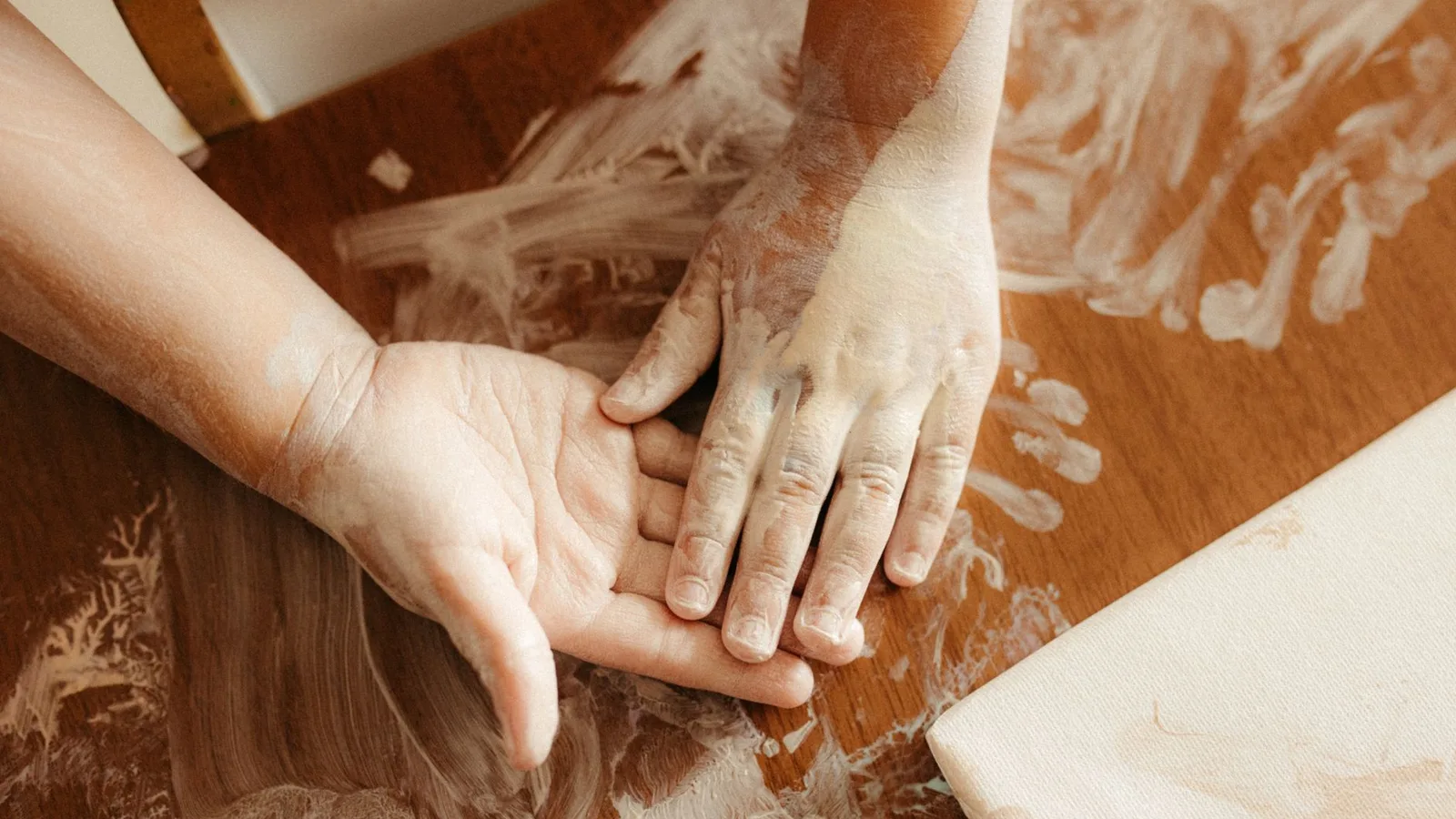
Sensory play ideas can be as simple as pouring water, feeling different fabrics, copying claps, making shadows or mashing banana. Start with something you already have and choose the mess level you can manage. These 25 activities cover touch, sight, hearing, smell and taste, with food options for children who still put materials in their mouths.
How do you pick an activity for today?
Choose by your child's interests and the clean-up you're willing to do. For a toddler, demonstrate the action and join in. For a preschooler, offer a choice of materials or invite them to change the game. Start anywhere, with an adult alongside.
- Dry textures on a tray: ideas 1 to 5.
- Water play and a towel: ideas 6 to 10.
- Looking and spotting: ideas 11 to 15.
- Sounds without equipment to buy: ideas 16 to 20.
- Smelling or exploring food: ideas 21 to 25.
Keep small parts and cords out of reach, especially with under-3s joining in. The NHS explains these hazards. Leave water beads out: government advice says to keep them away from under-5s, including at home and in settings.
If your child mouths materials, choose the food activities. Apply the same hygiene, dietary checks and seated supervision as eating; edible doesn't mean suitable for every child. At nursery, follow the setting's food and allergy procedures.
For the nursery context, our guide to early years learning in England explains the terminology.
Which of these 25 ideas suits your child today?
Pick an action your child wants to repeat: squeezing, pouring, looking, listening or tasting. The labels show the main sense and likely mess, while each check covers a detail for that activity. Set out the materials first, then invite them to have a go.
1. Fabric feeling tray
Touch, dry. Put a flannel, tea towel and fleece garment in a shallow tray. Say, "Find the softest one," then compare them together. Try stroking each with a fingertip and a whole palm. Check: no buttons, cords or detachable decorations.
2. Hidden kitchen tool
Touch, dry. Hide a wooden spoon or silicone spatula beneath a cloth. Say, "Can your fingers find the handle?" Let them peek before guessing if they want, then hide the same object again. Check: use utensils without detachable parts.
3. Cardboard finger roads
Touch, dry. Lay a large piece of corrugated cardboard beside smooth card. Say, "Drive your finger along the bumpy road." Turn it sideways and try again, then compare it with the smooth surface. Check: remove staples and loose pieces.
4. Towel sausage squash
Touch, dry. Roll a plain hand towel into a sausage. Say, "Squash it flat, then let go." Unroll it and compare squeezing the thin cloth with squeezing the roll. Your child chooses the pressure. Check: leave ties and ribbons out.
5. Brush trails
Touch, dry. Offer a clean, soft pastry brush. Say, "Shall we brush the cloth or your hand?" Your child can make slow strokes on either, or compare the brush with their own fingertips. Check: don't insist on skin contact.
6. Cup pouring station
Touch, wet. Set two plastic cups in a tray with a little cool water. Say, "Can you pour into the other cup?" Try a small pour, then a bigger one, keeping everything inside the tray. Check: stay within arm's reach.
7. Flannel squeeze
Touch, wet. Dip a flannel in cool water over a bowl. Say, "Make it rain with your hands." Squeeze, unfold and dip again. Try pressing it against the bowl's side instead of twisting. Check: empty the water when finished.
8. Water painting
Touch and sight, wet. Give your child a brush, plain cardboard and a small cup of water. Say, "Paint a road for your finger to follow." Make broad strokes, dots or circles without adding any paint. Check: wipe up floor splashes promptly.
9. Toy wash
Touch, wet. Put a washable plastic toy in a tray with cool water and a flannel. Say, "Which bit needs a wash?" Wipe, rinse and dry it, then let your child inspect the result. Check: choose toys without small parts.
10. Colander rain
Touch and hearing, wet. Hold a kitchen colander over a tray while your child pours cool water through it. Say, "Listen to the rain." Pour slowly, then pause so they can watch the last drops fall. Check: stay beside your child throughout.
11. Colour spotting
Sight, dry. Choose a colour from a cushion or garment. Say, "Point to something else that colour." Look around the room together, then let your child choose the next colour for you to find. Check: point to small objects without collecting them.
12. Shadow hands
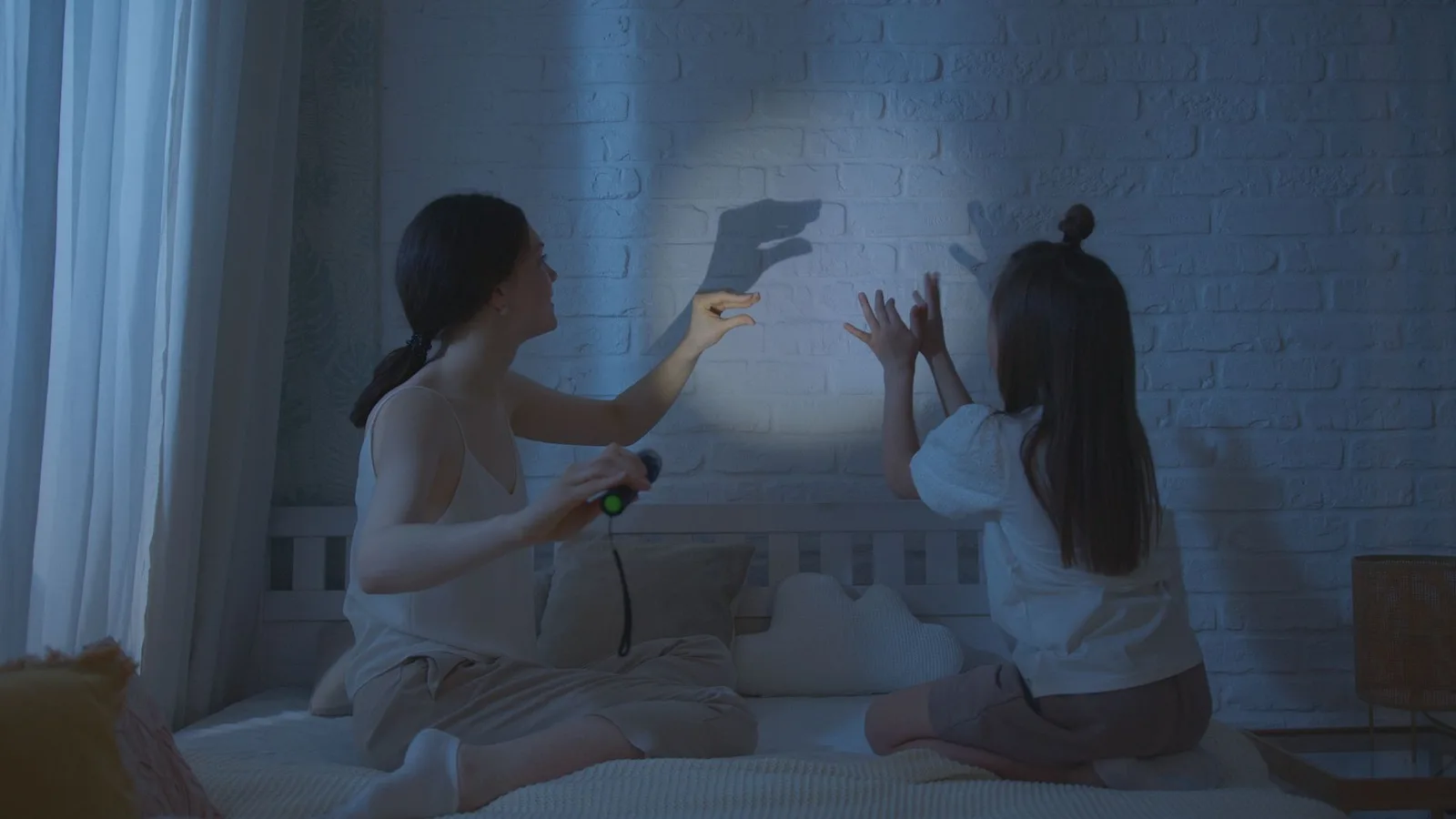
Sight, dry. Find a wall lit by sunshine and make shadows with your hands. Say, "Can you make a bird?" Open and close your fingers, then invent a creature together and give it a name. Check: never look directly at the sun.
13. Mirror faces
Sight, dry. Sit beside a securely fixed mirror. Say, "Can you make your eyebrows dance?" Try an open mouth, puffed cheeks or a wink. Let your child invent a face for you to copy. Check: don't hand toddlers a glass mirror.
14. Sock pattern pictures
Sight and touch, dry. Arrange whole socks in stripes of colour on the table. Say, "Let's make a stripe, then a spot." Turn them into a face or a rainbow, with nothing to cut or glue. Check: leave buttoned or decorated items out.
15. Slow ball roll
Sight and movement, dry. Sit on the floor facing each other with a large, age-appropriate ball. Say, "Send it slowly to me." Watch it travel, then try a different direction or a shorter distance between you. Check: clear cables and loose rugs from the route.
16. Clap echo
Hearing, dry. Make two gentle claps and invite your child to copy. Say, "Now you choose the sound." Try tapping knees or rubbing palms together, leaving a pause between your turn and theirs. Check: keep sounds comfortable for your child.
17. Kitchen drum
Hearing, dry. Turn a cold saucepan upside down on the floor and tap gently with a wooden spoon. Say, "What does the bottom sound like?" Compare it with tapping the side or a plastic bowl. Check: stop if the sound bothers them.
18. Paper orchestra
Hearing and touch, dry. Give your child a large sheet of plain paper. Say, "Can you make a rustle, then a crackle?" Scrunch it gently, open it slowly and compare your sounds. Keep the sheet whole. Check: remove any torn-off pieces.
19. Room listening hunt
Hearing, dry. Sit together for 30 seconds and listen. Say, "What can you hear without moving?" You might notice a clock or passing traffic. Point towards each sound, then swap places and listen again. Check: keep windows locked.
20. Make a sound story
Hearing, dry. Invent a short story about rain, a cat and a train. Say, "You do the noises." Leave gaps for pattering fingers, meows and chugging, then let your child change what happens next. Check: skip sounds they dislike.
For more games built around sounds, try our listening games for home and nursery.
21. Herb sniffing bowls
Smell, little mess. Put familiar culinary herbs, such as mint and basil, in separate bowls that you hold. Say, "Would you like a sniff?" Let your child choose which to smell, keeping the bowls with you. Check: wash hands and use clean bowls.
22. Citrus comparison
Smell, little mess. A grown-up cuts an orange and a lemon, then holds each half for sniffing. Say, "Do these smell the same?" Your child can point to a favourite or choose to smell neither. Check: remove pips before bringing fruit over.
23. Banana squish
Taste and touch, messy. Put two spoonfuls of mashed ripe banana on a clean plate. Say, "Can you make a trail?" Spread it with a spoon or fingers, then gather it back into a little mound. Check: keep your child seated while tasting.
24. Yoghurt swirls
Taste, sight and touch, messy. Put plain yoghurt beside a spoonful of fruit purée on a clean plate. Say, "Make the colours swirl." Mix with a spoon or finger, using foods already familiar to your child. Check: check ingredients against their dietary needs.
25. Soft fruit taste detective
Taste and smell, little mess. Offer separate spoonfuls of mashed banana and cooled stewed apple. Say, "Look, sniff or taste, you choose." Talk about what each feels like in the mouth, without turning it into a guessing test. Check: cool cooked food before serving.
How can you reuse the same kit for a short session?
Combine activities that share materials, using the same few objects for a different action each time. Choose a dry, wet or food session below, and stop after any part. These are suggested sequences to borrow, with no need to work through the whole list.
- Dry afternoon: start with the fabric tray, hide a kitchen tool beneath a cloth, then arrange the fabrics into a picture. Put everything back in the tray when you've finished.
- Water session: pour between cups, squeeze the flannel, then use it to wash a toy. Keep the same water supervision throughout.
- Food at the table: sniff the fruit, then explore banana or yoghurt using your child's own plate. At nursery, avoid sharing food between children.
For a dry movement activity afterwards, explore our mats, with 15 numbered poses laser-engraved into the surface for ages 3 to 8.
What if your child wants to watch instead?
Let them watch, use a spoon or choose a dry activity. Cambridge University Hospitals advises against forcing hands into a mixture, and suggests tools or trying something else. Put the materials within view and leave the invitation open, without repeatedly asking them to join in.
You can demonstrate a pour, then watch quietly beside them. Keep a cloth nearby if they want to wipe their hands. They can just watch today. If they change their mind later, bring back the same material. There's no need to make the next attempt bigger.
If reactions to textures, smells or sounds are making everyday life difficult, speak to your GP or health visitor.
Frequently asked questions
What are sensory play ideas that don't make a mess?
Try a fabric basket, colour spotting, shadow hands, copying claps or a listening hunt. You can also arrange whole socks into patterns or roll a large ball between you. Choose a dry activity from the list and leave the water and food trays for another day.
What can I put in a sensory bin?
A shallow tray with plain flannels, a wooden spoon and a silicone spatula is a useful starting point. A sensory bin doesn't need a loose filler. Keep small parts and cords out of reach, and choose materials for the child using them, including any younger siblings.
What should I use if my child puts everything in their mouth?
Choose a small amount of familiar food, such as mashed banana or plain yoghurt, that suits your child's dietary needs. Wash hands and utensils, and supervise them seated. Don't taste uncooked flour, dough or batter unless the product is labelled ready to eat. You can also skip materials altogether and try copying claps or making animal sounds.
How long should sensory play last?
Let your child set the pace. You could offer five minutes as a starting point, then continue if they're interested or stop sooner if they're finished. That's a suggested way to organise play, not a developmental target. There's no need to complete every activity or produce something to keep.
Sources
- NHS: Baby and toddler safety
- Office for Product Safety and Standards: Water beads safety alert
- Department for Education: Food safety
- Child Accident Prevention Trust: Drowning
- Royal Society for the Prevention of Accidents: Preventing falls
- Northumbria Healthcare NHS Foundation Trust: Staying safe in the sun
- Bedfordshire and Luton Children's Health: Strategies for playing with sensitive children
- Cambridge University Hospitals: Messy play
- NHS Lothian: Child development concerns
- Food Standards Agency: Handling flour and flour products safely