guides
Teacher Gifts: 20 Affordable Ways to Say Thank You
Find 20 teacher gifts, from homemade cards to shared class presents, with budget ideas, school policy checks and pressure-free collection tips.
What do teachers value in a thank-you gift?
Good teacher gifts start with a personal thank-you card. If you'd like to add a present, choose something small that matches the teacher's interests, or join an optional class collection after checking the school's policy. These 20 ideas cover homemade gifts, modest buys and shared presents, with no need to spend anything.
In a Department for Education article, teachers describe how much personal thank-you cards meant to them.
For Christmas or end of year teacher gifts, decide whether you're thanking the person or donating something to the classroom. Ask before choosing classroom equipment.
Find your budget:
- 1 to 6, Who makes or chooses it?: Your child, with you; Suggested spending: Free using supplies you have
- 7 to 12, Who makes or chooses it?: You choose together; Suggested spending: Under £10
- 13 to 16, Who makes or chooses it?: You choose together; Suggested spending: £10 to £25
- 17 to 20, Who makes or chooses it?: Families pool contributions; Suggested spending: £25 to £50 in total
Bands are spending suggestions, not price promises. Ages refer to children helping; recipients are adult teachers unless stated otherwise.
Which homemade gifts use what you already have?
Start with paper, pencils and your child's own words. Choose a small project you can finish together, rather than buying a box of craft supplies to make a supposedly free gift. All these ideas can cost nothing if you use materials already at home.
1. A card with a specific thank-you
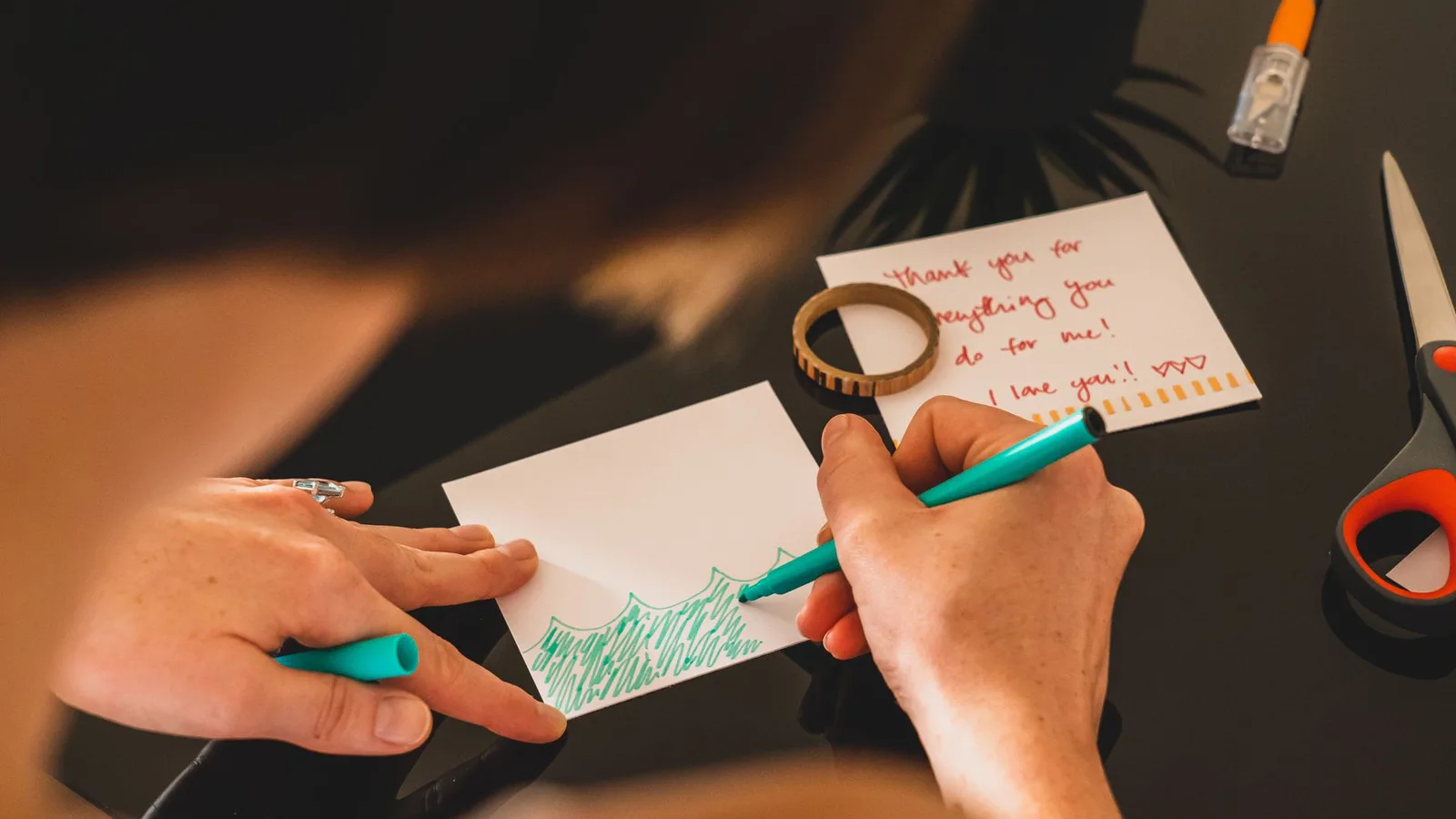
Fold a sheet of paper and let your child draw on the front. Ask what they'd like to thank the teacher for, then write their words as they say them.
Good for: ages 3 to 8. Free with existing supplies. Together.
2. A portrait of the teacher
Draw the teacher doing something your child remembers from class and add a caption in their words. Give the drawing in an envelope, without a frame that needs somewhere to live.
Good for: ages 3 to 8. Free with existing supplies. Together.
3. A handmade bookmark
Use a strip of spare card and let your child decorate it with pictures or a short thank-you. Keep it flat, without beads or dangling decorations, so it fits neatly inside a book.
Good for: ages 3 to 8. Free with existing supplies. Together.
4. A little memory booklet
Fold paper into a booklet showing a favourite lesson, a classroom memory and something your child wants to say. Write the captions while they choose what belongs inside.
Good for: ages 3 to 8. Free with existing supplies. Together.
5. A paper flower picture
Draw a vase on paper, then add flowers with coloured pencils or torn paper shapes. Add the teacher's name on the vase. Keep it small enough for an envelope.
Good for: ages 3 to 8. Free with existing supplies. Together.
6. A thank-you letter copied to the headteacher
Write about something you genuinely appreciated, with your child's drawing alongside. Send it through the school's usual communication route and copy the teacher. Their headteacher gets to hear the same appreciation.
Good for: ages 3 to 8. Free. Together.
What can you choose for under £10?
A small bought gift works best when you know something the teacher enjoys or uses. Let your child choose the colour, flavour or design within your budget. If you don't know their preferences, stick with a card rather than guessing at something personal.
7. Their usual tea or coffee
Choose the kind you know they drink, rather than an unfamiliar selection. Your child can design a paper sleeve for the packet, with a drawing and a thank-you.
Good for: ages 3 to 8. Under £10. Together.
8. A box of favourite biscuits
An unopened box is an easy option when you know their favourite. Add your child's card without building a hamper around it. Check the food note below before buying.
Good for: ages 3 to 8. Under £10. Together.
9. A plain notebook
Choose lined, dotted or plain pages to match what they use. An undated notebook avoids tying the gift to a particular school year. Put the thank-you on a separate card, leaving the pages theirs.
Good for: ages 3 to 8. Under £10. Together.
10. A pen in a style they use
If you've noticed their favourite type of pen, choose something similar. Avoid guessing about elaborate fountain pens or unusual inks. Let your child make a paper gift sleeve with the teacher's name on it.
Good for: ages 3 to 8. Under £10. Together.
11. A reusable shopping bag
Choose a simple design that fits the person's interests, without a teaching slogan unless you know they'd like one. Let your child decorate a paper wrapper.
Good for: ages 3 to 8. Under £10. Together.
12. A pocket puzzle book
Choose crosswords, word searches or number puzzles if you know which they enjoy. Skip anything that resembles classroom worksheets. Your child can add the handmade bookmark.
Good for: ages 3 to 8. Under £10. Together.
What suits a £10 to £25 budget?
Only move into this band because it suits your finances and the school's policy. It doesn't make the thank-you more sincere. Match the gift to a known interest, and avoid choosing something that brings an ongoing cost or requires the teacher to make arrangements.
13. A bookshop voucher
For a teacher who enjoys choosing their own reading, a voucher leaves the title up to them. Check that the school accepts vouchers, and read the expiry and redemption terms before paying. Add a personal message.
Good for: ages 3 to 8. £10 to £25. Together.
14. A small bunch of flowers
Choose something manageable to carry home and check when the teacher will be there to receive it. Let your child make the tag. Avoid an elaborate arrangement that needs collecting from a separate location.
Good for: ages 3 to 8. £10 to £25. Together.
15. A café voucher
Choose a café they visit, with terms allowing them to spend the voucher without adding more money. Check school permission first. Your child can draw a cup on the accompanying card.
Good for: ages 3 to 8. £10 to £25. Together.
16. A supply for a known hobby
Sketching pencils or a small gardening accessory can work when the teacher has mentioned that interest. Choose something they've said they'd use, without assuming they'll take up a new interest.
Good for: ages 3 to 8. £10 to £25. Together.
What could families give together for £25 to £50?
Treat this as the whole collection's budget, never an amount each family should give. Agree who the gift is for and get the school's approval before collecting money. A shared present can thank the teacher personally or support the classroom, but make that choice explicit.
17. A shared voucher for the teacher
Pool only voluntary contributions towards a voucher the teacher can use personally, if school policy allows it. Put everyone's messages in the accompanying card, including children whose families haven't contributed.
Good for: ages 3 to 8. £25 to £50 total. Together.
18. A staffroom thank-you box
If you're thanking a team, agree the contents with the school first. Keep it modest, with labelled packets of drinks or snacks they've said they'd welcome. Address your child's card to the whole team.
Good for: ages 3 to 8. £25 to £50 total. Together.
19. Books the class has requested
Ask for specific titles before buying, including whether pre-owned copies would be welcome. This is a donation to the classroom, so pair it with a personal thank-you for the teacher. Children can decorate the wrapping.
Good for: a class aged 3 to 8, with teacher-selected titles. £25 to £50 total. Indoors.
20. A pose mat for the classroom (this one is ours)
Our mat has 15 numbered poses laser-engraved into the surface. It costs £34.99 with free UK delivery; choose it as classroom equipment only when the teacher has requested it.
Ages 3 to 8. £34.99 with free UK delivery.
How do you avoid a gift that creates more work?
Choose something the teacher can accept, use and take home easily. Those checks matter more than personalisation or elaborate wrapping. Ask whether they want it, whether the school permits it, and whether it needs storage, care or an extra purchase.
Skip subscriptions, fixed-date experiences and bulky decorations unless specifically requested. Choose by interests, rather than shopping for a generic female or male teacher gift.
For policy context, Harrow's school employee code distinguishes small tokens from significant personal gifts and requires gifts to be recorded. That's a local example, not a UK-wide spending limit. Ask your own school, wherever you live in the UK.
If you're buying for the children too, browse our presents for kids guide or small ways to mark their effort.
What needs checking before you make or wrap it?
Keep preparation simple: paper crafts at the table, food with its packaging, and a gift the school has agreed to accept. You don't need elaborate craft kits or homemade treats to make it personal. Let the child's message do that part.
Keep small craft pieces and long ribbons away from younger siblings. The Child Accident Prevention Trust warns about choking from small parts and strangulation from long cords, particularly for under-3s.
For food gifts, check dietary requirements first and keep the packaging. Food Standards Agency guidance for community events in England, Wales and Northern Ireland recommends retaining packaging so people can check ingredients. Apply that same practical step to shared gifts.
How can a class collection include everyone?
Make the money optional and the card open to every child. Tell families who the present will thank, what you plan to buy and when you'll close the collection. Keep contributions private, avoid a minimum amount and don't chase anyone who hasn't joined in.
The National Education Union advises schools to make clear that staff gifts aren't necessary and suggests a class card as an alternative.
A suggested message is: "We're organising an optional class thank-you. Contribute only if you'd like to. Every child can add a message to the card, whether or not their family contributes."
Agree any split between teachers and teaching assistants before collecting. Keep the receipt and explain what you'll do with money left over.
To opt out, "We'll do our own card, thank you" is enough. You don't owe the group a financial explanation.
Has the teacher asked for classroom equipment?
If a mat is on the teacher's wish list, browse Yogi-Me's designs for the class gift once the school has agreed to accept it. If you're thanking the teacher personally, choose from the other ideas above and let your child's message carry the meaning.
Frequently asked questions
Do you have to buy the teacher a present?
No. A card, drawing or spoken thank-you is enough. If money is tight, leave the present out without apologising or explaining your finances. You can also decline a class collection and still ask for your child to add a message to the shared card.
What should you write in a teacher thank-you card?
Name something the teacher did and why you appreciated it. For example, if it's true: "Thank you for helping me choose books. I loved reading together." Let your child supply the detail, then add your own short message. A drawing can carry the thanks if your child would rather not write.
Should you buy for the teaching assistant too?
You can thank a teaching assistant without buying another present. A separate note naming their help makes the message personal. If you're organising a collection, agree which staff it covers before asking for money, including any job-share teachers. Keep the approach within your budget rather than matching everyone with identical purchases.
Are there rules on gifts to teachers?
Check your school's gifts and hospitality policy before buying, especially for a shared collection or voucher. Ask the office what staff can accept and whether approval is needed. Don't assume an amount accepted at another school applies to yours, or that a pooled gift is exempt from the policy.