guides
12 Quiet Time Activities for Kids Who've Dropped the Nap
Twelve screen-free quiet time activities for kids aged 3 to 5 who have dropped the nap, plus how long quiet time should last and how to start.
The best quiet time activities for kids who've dropped the nap are calm, screen-free things a three- to five-year-old can do alone for 20 minutes to an hour: a jigsaw, a den, a basket of books, a few floor poses. Here are twelve, sorted into four boxes your child rotates through by day, plus how long it should last and how to start.
The nap stopped, and with it went the only hour of the day that was yours. Quiet time is how you get some of it back.
What is quiet time?
Quiet time is a set stretch of the afternoon when a child who no longer naps rests or plays calmly on their own, without a screen, so they recharge and you get a break. Some families call it calm time. It isn't a punishment and it isn't sleep, though if your child nods off, that's fine.
It fills the gap between dropping the nap and starting Reception, which in England is usually the September after a child's fourth birthday, according to gov.uk.
How long should quiet time be?
There's no official figure. The NHS and the World Health Organization give guidance on sleep and activity for under-5s, but neither sets a length for quiet time. What we'd suggest: start at 20 to 30 minutes, add about five minutes a week, and treat an hour as plenty for most three- and four-year-olds.
The guidance does say something useful. The NHS says children under 5 should not be inactive for long periods, except when they're asleep, and the WHO says 3 and 4-year-olds should not sit for extended periods. So quiet doesn't have to mean still. Anything over half an hour should have a slow, moving box in the middle.
How do you do quiet time instead of a nap?
Same time, same place, same start signal, every day. Spend a few minutes together first, then bring out one box and a timer, and praise your child for staying rather than for being silent. Expect the first week to be wobbly.
- Same slot. Straight after lunch is easiest, because it's where the nap used to be.
- A clear end. A visual timer, or a clock that changes colour, saves you being asked "is it finished?" every two minutes.
- One box at a time. Too much choice empties a box fast.
- No screen. UK guidance on Best Start in Life says to avoid young children using screens alone (see the FAQ).
What goes in a quiet time box?
Keep four boxes, one for each kind of play: hands, the floor, stories and make. Bring out one a day, in turn, so the contents still feel new on day four. These quiet time ideas for kids need nothing you won't find at home.
- Quiet time activities for 3 year olds need bigger pieces, fewer choices and a grown-up nearby for the first few weeks. Most quiet time activities for preschoolers work at three with larger pieces, and our guide to yoga for three-year-olds has floor ideas that suit them.
- Four-year-olds can usually run a box alone once it's familiar.
- Five and over can manage longer stretches and fiddlier items.
12 quiet time activities for kids, in four boxes
Box 1: hands
1. A jigsaw
A floor jigsaw one notch harder than the one they can do with their eyes shut. Say, "Find all the corners first." A half-done puzzle can wait for tomorrow. Choose pieces sized for their age.
2. Playdough with three tools
Playdough, a rolling pin, one cutter and a blunt knife. Say, "Can you make me a plate of biscuits?" Three tools keep it quiet and the clearing-up short. Good from age 3.
3. Threading
Large wooden beads or penne pasta threaded onto a shoelace knotted at one end. Say, "Can you make a necklace for teddy?" It's fiddly enough to hold attention without frustrating. Use pieces too big to swallow.
Box 2: the floor
4. A den
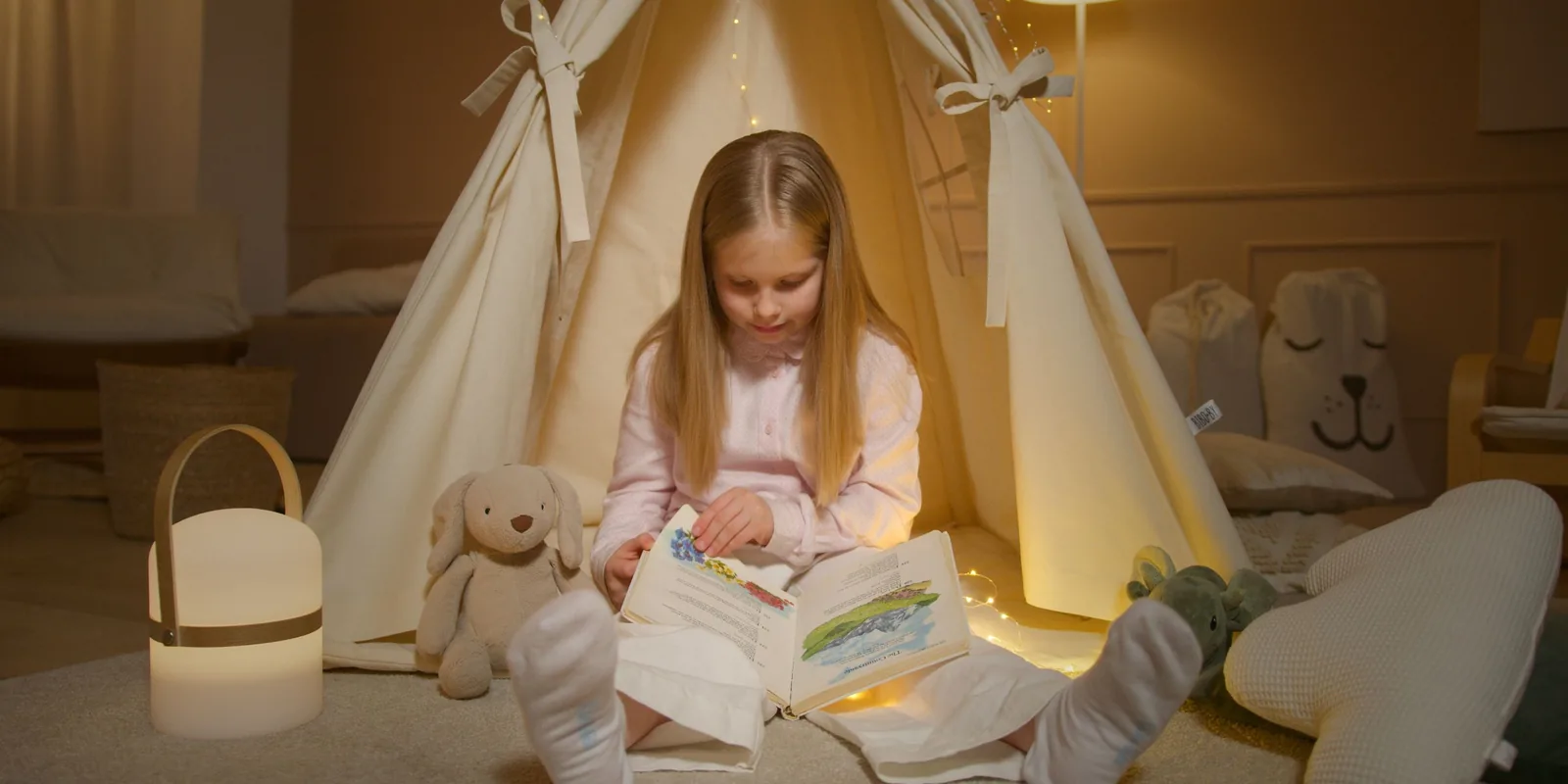
A sheet over two chairs, a cushion, a torch and two books. Say, "This is your den until the timer goes." The Department for Education's Development Matters guidance names "sitting or lying in a den" as a way to give children time to be still and quiet.
5. Floor poses on the mat
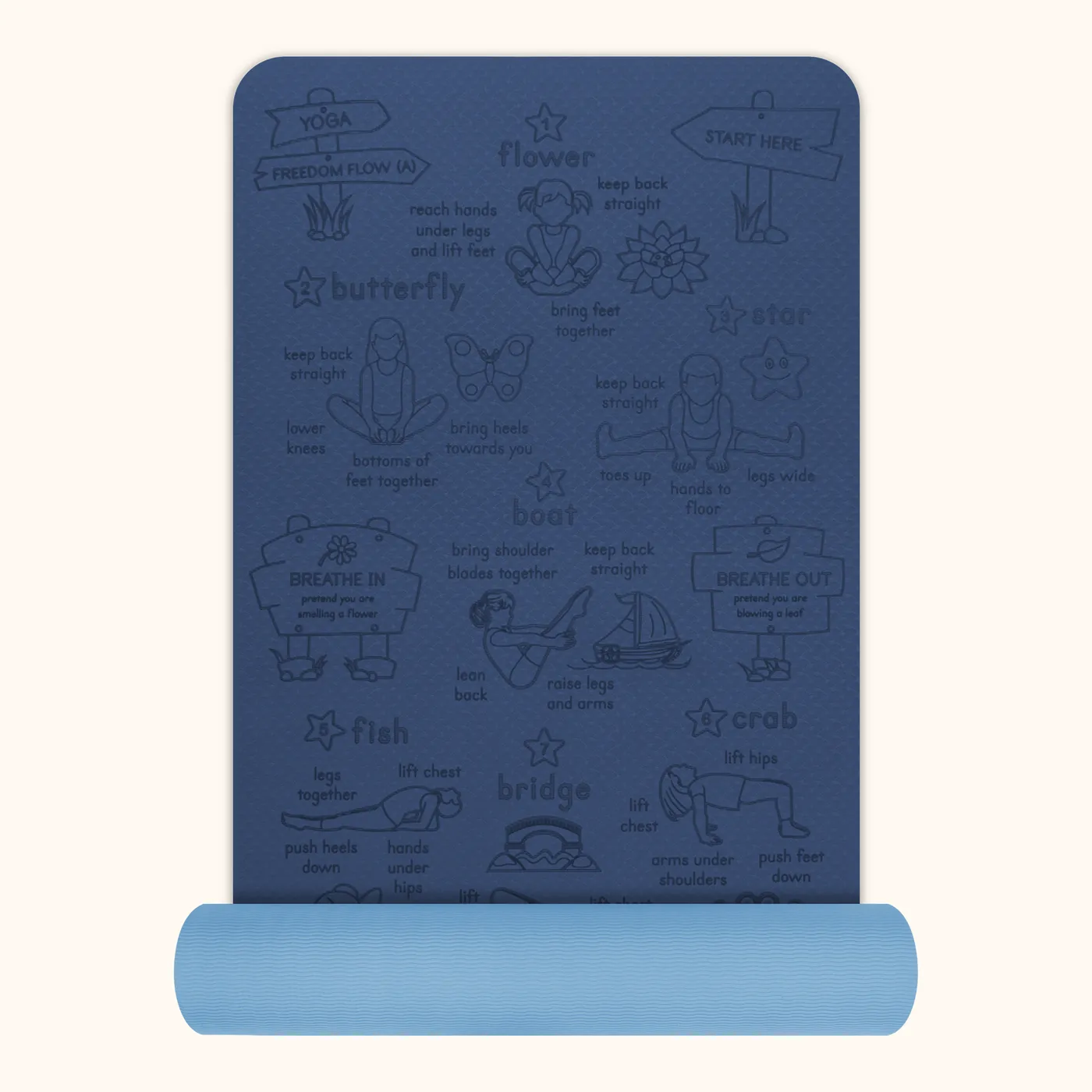
This one's ours. Roll the mat out in the same spot each day. Freedom Flow is our floor design, with 15 numbered poses engraved into it, so your child starts at 1 and goes at their own pace. See the floor-pose mat if you'd like the pictures to explain. Finish lying still for a count of ten.
6. Window watching
A cushion by the window and a job: count the clouds, the birds or the buses. Say, "Tell me when you've spotted five." Development Matters gives "looking up at the sky" as its own example of time to be still and quiet. Suits a tired three-year-old.
Box 3: stories
7. A basket of picture books
Five picture books, swapped weekly so the basket stays interesting. Say, "Choose one to read to teddy." A three-year-old "reads" the pictures, and that counts. Older children can work through the whole basket.
8. An audio story or quiet music
A story or calm music on a speaker, not a screen. Say, "Lie down and listen, then tell me what happened." It gives them something to follow without asking anything of their eyes. Keep stories short at first.
9. Looking and finding
A search-and-find book where your child hunts for one character on every page. Say, "How many cats can you find?" Good from four; a simpler spotting book suits three-year-olds.
Box 4: make
10. Reusable sticker scenes
A sticker book with a background scene and stickers that peel off and go back on. Say, "Make me a farm, then tell me who lives there." It's tidy, quiet and can be done again and again. Very small stickers can frustrate younger hands.
11. Finish the picture
Half a drawing and some crayons: a face with no hair, a house with no windows. Say, "Can you finish it for me?" It solves the blank-page problem. Swap the half-pictures weekly.
12. Statues
A silent copying game, for two children or for one in front of a mirror. Say, "Make a shape and freeze, then I'll copy you." It's quiet but it moves, so it leads nicely into the floor box. Works from age 3.
What should you leave out of a quiet time box?
Leave out anything small enough to swallow, anything with magnets and anything with a loose button battery. Those matter most when a young child plays alone, even with you in the next room.
The Office for Product Safety and Standards, on GOV.UK, says toys carry age markings based on risks such as choking, and advises following them and avoiding toys with small parts. That rules out the small-bead and dried-bean bins some quiet time lists suggest. If you think your child has swallowed a magnet or a button battery, the same office says to take them straight to A&E.
Two sample quiet time afternoons
As a starting point rather than a rule:
- The first week, 30 minutes: 5 minutes together on the sofa with a book, 20 minutes with the hands box, 5 minutes window watching. That's 5 + 20 + 5 = 30.
- A settled hour: 10 minutes together, 20 with the stories box, 15 with the floor box, 15 with the make box. That's 10 + 20 + 15 + 15 = 60, with the moving part in the middle.
For calmer evenings, a short bedtime yoga routine uses the same kind of floor poses, and our screen-free activities for ages 3 to 8 cover the rest of the day.
If the floor box is the one your child keeps going back to, the poses are engraved into our mats, so quiet time needs no screen and no grown-up demonstrating. Have a look at a yoga mat your child can follow on their own: £34.99, with free UK delivery and 30-day returns, and 10 per cent off two or more for siblings. It rolls up on a carry strap, so it can live at a grandparent's too, and it's a present that gets used on an ordinary Tuesday, like our other gift ideas that aren't another screen.
If your child won't do quiet time
Some children push back for a week, then settle. Some never love it. Both are normal.
- They keep coming out. Walk them back calmly, with few words, and start shorter. Ten minutes that works beats an hour that doesn't.
- They're bored in five minutes. Swap the box rather than adding to it.
- They hate being alone. Sit in the room with your own book for a week, then the doorway, then out.
- They're wound up, not tired. Start with the floor box. A calm corner at home can double as the quiet time spot.
If your child's sleep is worrying you, or they seem exhausted much of the time, talk to your health visitor or GP. The NHS says your health visitor can advise on sleep in young children.
Frequently asked questions
Should a 4 year old have quiet time?
There's no rule either way. The World Health Organization says 3 and 4-year-olds need 10 to 13 hours of good-quality sleep, which may include a nap, so a nap is optional at this age. Quiet time is a family choice: a rest in the afternoon, for your child and for you.
Is quiet time as good as a nap?
It's rest, not sleep, so it isn't the same thing. If your child still needs a nap, they may fall asleep during quiet time, and that's fine. The NHS's sleep tips for under-5s include avoiding long naps in the afternoon.
Can quiet time include a screen?
UK government guidance for under-5s, on the Best Start in Life website, says to try to keep screen time to an hour a day for 2 to 5-year-olds, less if possible, and to avoid young children using screens alone. Quiet time is a child on their own, so a box does the job instead.
How do you do quiet time when kids share a room?
Give them separate spots and separate boxes: one on the mat or in the den, one at the table. If one still naps, the napper gets the bedroom. A silent game of statues together is a good way to end it.
Sources
- NHS - Physical activity guidelines for children (under 5 years)
- NHS - Sleep and young children
- World Health Organization - To grow up healthy, children need to sit less and play more
- Department for Education - Development Matters
- Best Start in Life (Department for Education) - Screen time guidance for under 5s
- Office for Product Safety and Standards (GOV.UK) - Buy toys safely
- Office for Product Safety and Standards (GOV.UK) - Button batteries and powerful magnets
- GOV.UK - School admissions: school starting age