guides
20 Messy Play Activities, With a Ten-Minute Clean-Up
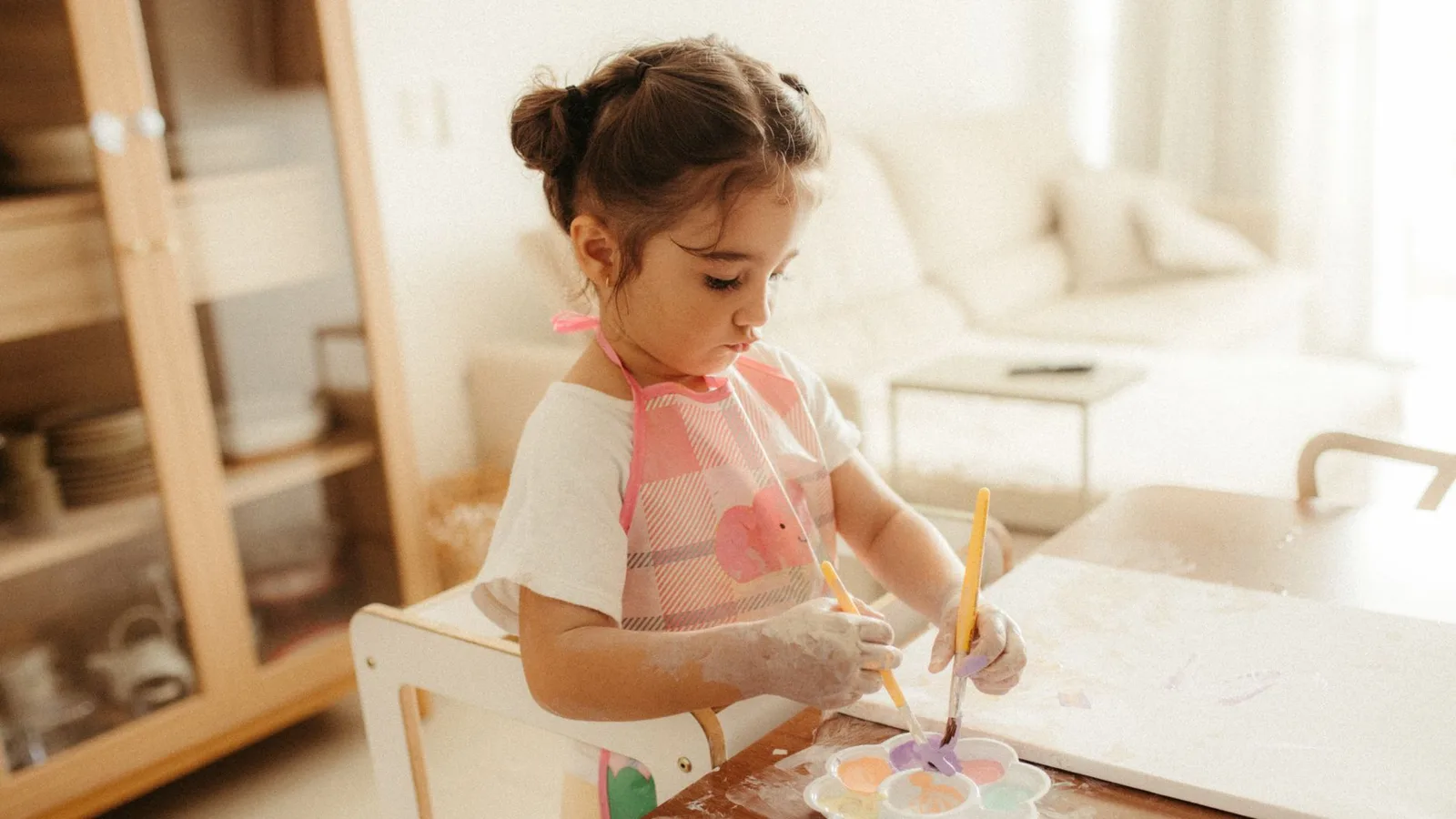
20 messy play activities for ages 3 to 8, with simple tray set-ups, food-free ideas and a ten-minute plan for clearing up afterwards.
Which messy play activities are easiest to start with?
Try water painting, sponge squeezing, finger painting, damp sand and a toy wash. These messy play activities need only a tray, a few household tools and somewhere to put wet things afterwards. Below are 20 ideas for ages 3 to 8, grouped by suggested starting age, plus a ten-minute clear-up plan you can adapt.
The Department for Education links exploring materials with creative expression and communication. You can start with 'What happens if I add water?' and see where the play goes.
How can you keep the mess in one place?
Start with a tray on a wipeable table; add an old shower curtain underneath if the surface needs protecting. Put out a small amount of material and keep a towel beside you. An empty washing-up bowl holds used tools while you finish playing.
Use old clothes and choose a drying spot before starting. Take mud play into the garden. For the leaf activities, an adult should identify the plant and check that it's safe to handle. Keep leaves out of mouths. The age bands are suggestions: choose any section your child fancies.
Before you start: stay alongside your child and follow age labels and instructions for toys and craft materials. If your child has an allergy, check paints and modelling clay for their allergens before use, asking the manufacturer if ingredients are unclear: craft materials can contain food allergens. Keep small loose parts away, especially with under-3s nearby: the NHS explains the choking risk. For water play, keep young children within arm's reach and empty containers afterwards, following Child Accident Prevention Trust advice.
This list uses no food ingredients. Skip raw-flour mixtures: the Food Standards Agency explains that uncooked flour can contain harmful bacteria, and heating it at home may not remove the risk.
What could you try with a 3 or 4-year-old?
Start with a single action: pour, squeeze, swirl or wash. Put out a small amount and top it up together. A bowl and a sponge are enough for the first go; leave the rest of the kit in the cupboard until it's wanted.
1. Water painting
Give your child a broad brush and a small bowl of water beside a patio slab. Say, 'Paint a road from here to there.' Add dots, loops or a pretend doorway. This is the choice when you want wet play without getting paint out.
2. Sponge squeezing
Put a large soft sponge between a bowl of water and an empty bowl, both inside a tray. Say, 'Can you move the water using only this?' Dip, lift and squeeze. Leave the jug nearby so they can refill and start again.
3. Pouring station
Set out a small jug and 2 differently shaped cups inside a washing-up bowl. Start with 250 ml of water. Say, 'Fill a cup, then tip it back.' Offer a spoon for a different way to transfer the same water between containers.
4. Fingerpaint swirls
Spoon a little children's fingerpaint onto paper in a tray. Say, 'Show me a tiny swirl, then a big one.' They can dot, drag or spread it instead. Put fresh paper beside the tray for anyone who wants to start another picture.
5. Toy wash
Choose large, washable, non-electronic toys without loose parts, plus a brush and a bowl of water. Say, 'Which one needs a wash first?' Make a drying area with an old towel. The game includes brushing, rinsing and lining up the toys afterwards.
6. Damp sand bakery
Put 2 cups of damp play sand into a tray with a large cup and a spoon. Say, 'Shall we make something for the pretend bakery?' Pack, tip out and reshape. Offer an empty plate for the creations, with no need to preserve them.
7. Sock laundry
Put a few old socks in a bowl with just enough water to wet them. Say, 'Wash these, squeeze them, then put them on the drying rack.' Use a low clothes airer without pegs. Repeating the washing is part of the game.
Which ideas add a challenge at 5 or 6?
Add a choice to the same materials: which colour, which tool or which shape? Let your child decide what to try next. Share the equipment without directing every mark, and let the painting stay as patterns if that's what they want to make.
8. Colour-mixing patches
Put a teaspoon each of 2 children's paint colours on a tray. Say, 'Mix a little of each, then try adding more of one.' Make a patch on paper after each mixture. Naming the colours is optional; comparing the patches is the activity.
9. Wheel-track pictures
Lay paper in a tray and add a thin patch of children's paint. Roll a large washable toy vehicle through it, then across the paper. Say, 'Can you make a bendy road?' Try different routes, then send the vehicle to the toy wash.
10. Leaf printing
Brush children's paint onto a large fallen leaf and press it onto paper. Say, 'What marks can you see?' Turn the leaf over and try its other side. A whole page of overlapping prints works just as well as a recognisable picture.
11. Mud kitchen
Mix soil and water in an outdoor bowl, then stir and spoon it into pretend pies. Say, 'What shall we put on the menu?' Keep soil away from mouths and avoid areas with animal poo, following NHS advice on soil and sand.
12. Clay snails
Offer soft children's modelling clay on a board. Say, 'Roll a long sausage, then curl it into a shell.' Make the body from another piece and press them together. Add a trail with a fingertip, then squash it flat and begin again whenever you fancy.
13. Wet chalk trails
Dip the end of chunky pavement chalk into water and draw on a paving slab. Say, 'Try a wet line beside a dry one.' Add loops or a trail for a toy. Keep the chalk whole, and compare the marks as you go.
14. Sticky paper collage
Tear scrap paper into pieces and spread children's craft glue onto card with a glue spreader. Say, 'Build a picture with layers.' Add paper, press it down and overlap another piece. A box lid can hold the collage while it dries.
What can 7 and 8-year-olds experiment with?
Offer a small project with room to change the plan. Set up a river, build an island or test different printing surfaces. Keep the materials in reach and let your child choose when the experiment or picture is finished, even if it looks unfinished to you.
15. Sand rivers
Make a hill from damp play sand in a tray and draw a channel with a spoon. Say, 'Where do you think the water will go?' Pour a little from a jug, watch, then reshape the route. The tray catches the experiment.
16. Paper-pulp islands
Tear plain scrap paper into small pieces in a bowl, cover it with water and soak it for a few hours or overnight, keeping the bowl out of children's reach until play starts. Squeeze and mash it by hand, then shape islands in a tray. Say, 'Where would the paths go?' Make shallow channels between the mounds with a spoon.
17. Clay texture tiles
Flatten soft children's clay into a tile. Press a spoon bowl, corrugated card or a large leaf into it, then lift away. Say, 'Which makes the clearest pattern?' Smooth the surface and repeat, or keep a row of textures beside each other.
18. Folded paint creatures
Fold a sheet of paper, open it and dab children's paint on one side. Close it, press gently and reopen. Say, 'What could this become?' Turn the sheet around before adding details with a brush. Leave it flat while the paint dries.
19. Rain-mark pictures
Make bold marks with washable felt-tip pens on paper in a tray. Take it outside in light rain and watch what happens. Say, 'When shall we bring it back in?' On a dry day, drip water from a brush instead, then leave it flat.
20. Scraper art
Spread a thin layer of children's paint across card inside a tray. Drag the straight edge of another piece of card through it. Say, 'Try a straight line, then a curve.' Turn the scraper sideways for another mark, or smooth over and restart.
What does a ten-minute clear-up look like?
Contain the leftovers first, wash hands next, then tackle the tools and surface. For a small tray, use this ten-minute plan as a starting point. Allow longer for garden mud or wet artwork, and leave washing and drying to take the time they need.
- Minutes 0 to 2: move artwork to its drying spot. Scoop sand, mud, clay and paper into a spare container. Wipe excess paint onto scrap paper; follow material labels and local waste guidance for disposal.
- Minutes 2 to 4: wash and dry hands. The NHS advises regular handwashing, especially before eating.
- Minutes 4 to 7: wash the tray and tools according to their care instructions, then leave them to dry.
- Minutes 7 to 10: wipe the table, deal with spills and put wet clothes and towels in the wash.
Which activities work well together?
Pair activities that share materials, so the second game starts with what you've already got out. Choose a making activity followed by washing, or a simple experiment followed by another use for the same material. These are suggested combinations; stop after the first if that's enough.
- Water afternoon: begin with sponge squeezing, then use the same bowls for sock laundry. Swap the toys and tools on the tray rather than setting up another station.
- Paint and wash: make wheel-track pictures, then turn the tray into the toy wash. Put the artwork aside before bringing out the water.
- Garden session: make damp sand bakery shapes, then reshape them into hills for sand rivers. Keep any separate mud kitchen in its own bowl.
For a longer day at home, add something from our half-term activity ideas.
Once the tray's away and hands are dry, you could follow messy play with movement. Explore Yogi-Me's mats for the next activity, with 15 numbered poses laser-engraved into the surface for ages 3 to 8.
What if your child wants clean hands?
Offer a brush or spoon and let your child decide whether to touch the material. Cambridge University Hospitals advises against forcing hands into a mixture and suggests tools when a child is unsure. Put it away whenever they've had enough.
Let them choose the colour, direct your painting or watch from beside you. Leave the invitation open without repeatedly asking them to join in. For another kind of afternoon, choose from our rainy-day activities for children.
If worries about textures extend to eating or everyday life, speak to your GP or health visitor.
Frequently asked questions
What is messy play?
Messy play means exploring materials by pouring, squeezing, mixing, spreading or shaping them. Water, sand, paint, clay and wet paper all count. You don't need a finished craft at the end: a tray of swirls or a bowl repeatedly filled and emptied can be the whole activity.
What can I use instead of a large play tray?
Try a roasting tin, washing-up bowl or shallow storage box that you already own. Put it on a wipeable table with a towel beside it. Match the container to the task: paper needs a flat surface, while pouring and squeezing need raised sides to catch the water.
Can you do messy play without using food?
Yes. Every activity in this list uses water, craft materials or garden materials instead of food ingredients. Start with water painting, sponge squeezing or a toy wash, then try finger painting, damp sand or clay. Choose whichever materials you already have rather than buying a cupboard full of supplies.
How can siblings share a messy play activity?
Give each child a working space within the same activity: separate sheets for painting or separate bowls beside a shared tray. Let them choose different jobs, such as mixing colours and making marks. They don't have to produce matching pictures, take turns with every tool or finish at the same time.
Sources
- Department for Education: self-expression
- Royal Society for the Prevention of Accidents: toy safety
- NHS: how to stop a child from choking
- Child Accident Prevention Trust: water safety
- Food Standards Agency: handling flour safely
- NHS: advice on soil, sand and toxocariasis
- Cambridge University Hospitals: messy play
- Berkshire Healthcare: sensory processing and support