community
Half Term Activities at Home: 10 Ideas for Any Kind of Day
10 screen-free half term activities at home for ages 3 to 8, sorted by the day you're having: wet, cold, wired, flat or Grandma's turn.
The best half term activities at home fit the day you've actually got, not the one you planned. On a wet day, build a den and do a short yoga session. On a cold, dry one, get into the garden. When they're wired, run an indoor sports day. When they're flat, cook lunch together. Two planned things a day is plenty.
Below are 10 things to do in half term with children aged 3 to 8, two for each kind of day, for parents and grandparents covering a day or two. Almost none need anything you'd have to buy.
What is half term, and why does it need a plan?
Half term is a short school holiday, usually a week, in the middle of a school term. Dates are set locally, so in England and Wales GOV.UK finds your council's term dates from your postcode. To use this list, name the kind of day you're having, then pick one of the two ideas under it.
Half term also takes away PE and playtime, so more of a child's daily movement falls to home and to you. The NHS says children aged 3 to 4 should be active for at least 180 minutes a day, including at least 60 minutes of moderate-to-vigorous activity. For 5 to 18 year-olds, the NHS guidance is an average of at least 60 minutes of moderate or vigorous activity a day across the week.
What half term activities work at home on a wet day?
On a wet day, give the morning a project and the afternoon a change of pace. A den gives children somewhere to be and something to add to, and a short yoga session gets them moving on the same patch of floor. Both work in a small flat.
1. Build a den, then eat lunch in it
A den is any hideout made from what's in the house: a sheet over two chairs, sofa cushions for walls, a torch for inside. Let your child design it while you hold the pegs, then serve lunch in it on a tray. Leave it up overnight.
2. A rainy-morning yoga session
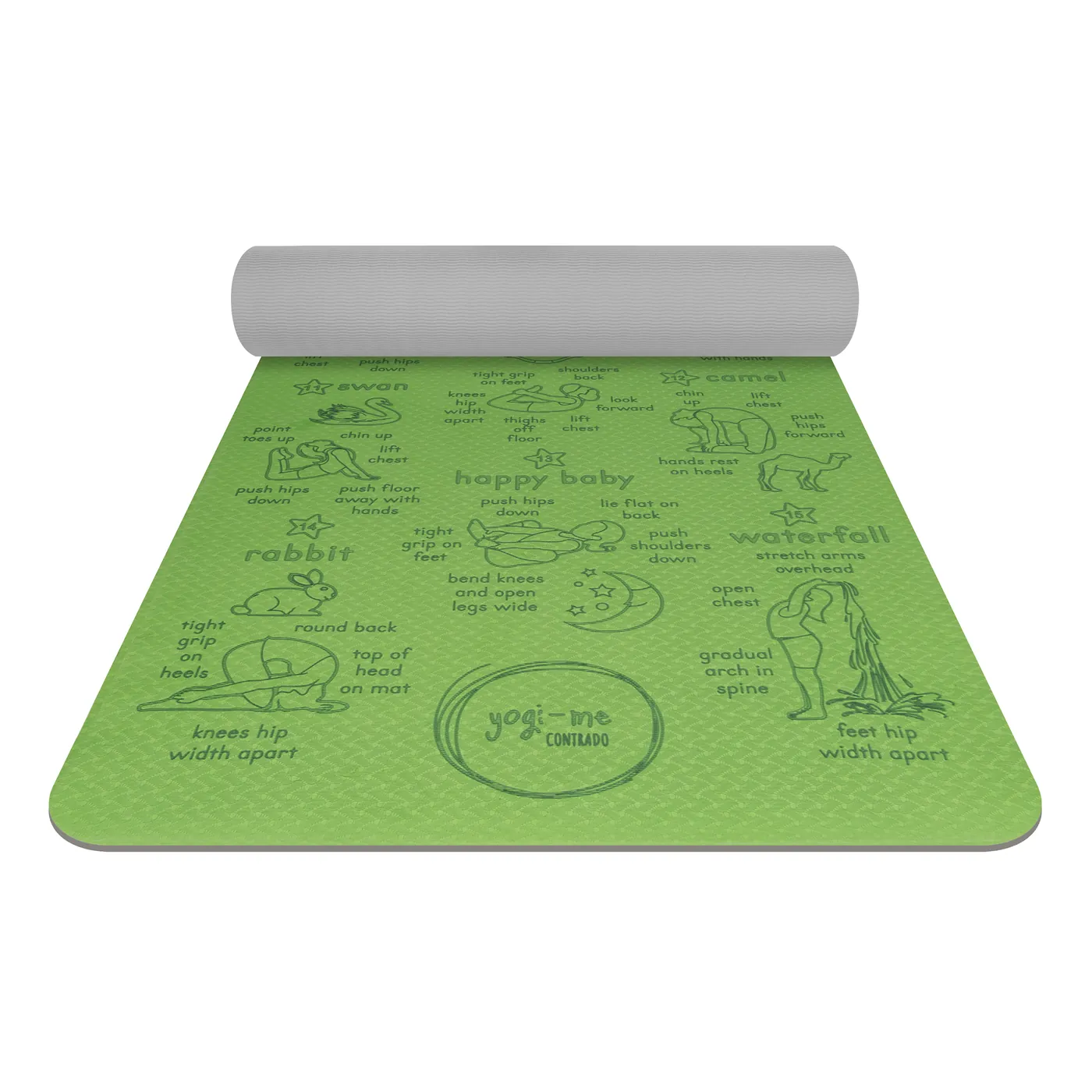
Put down a mat, rug or towel and do five poses in five minutes. Try happy baby (lie on your back, hold your feet, rock side to side), rabbit (kneel, tuck your head to the floor, hold your heels) and a tall waterfall stretch with arms overhead. Take turns calling the next pose. In the October week, the same poses can tell a Halloween yoga story.
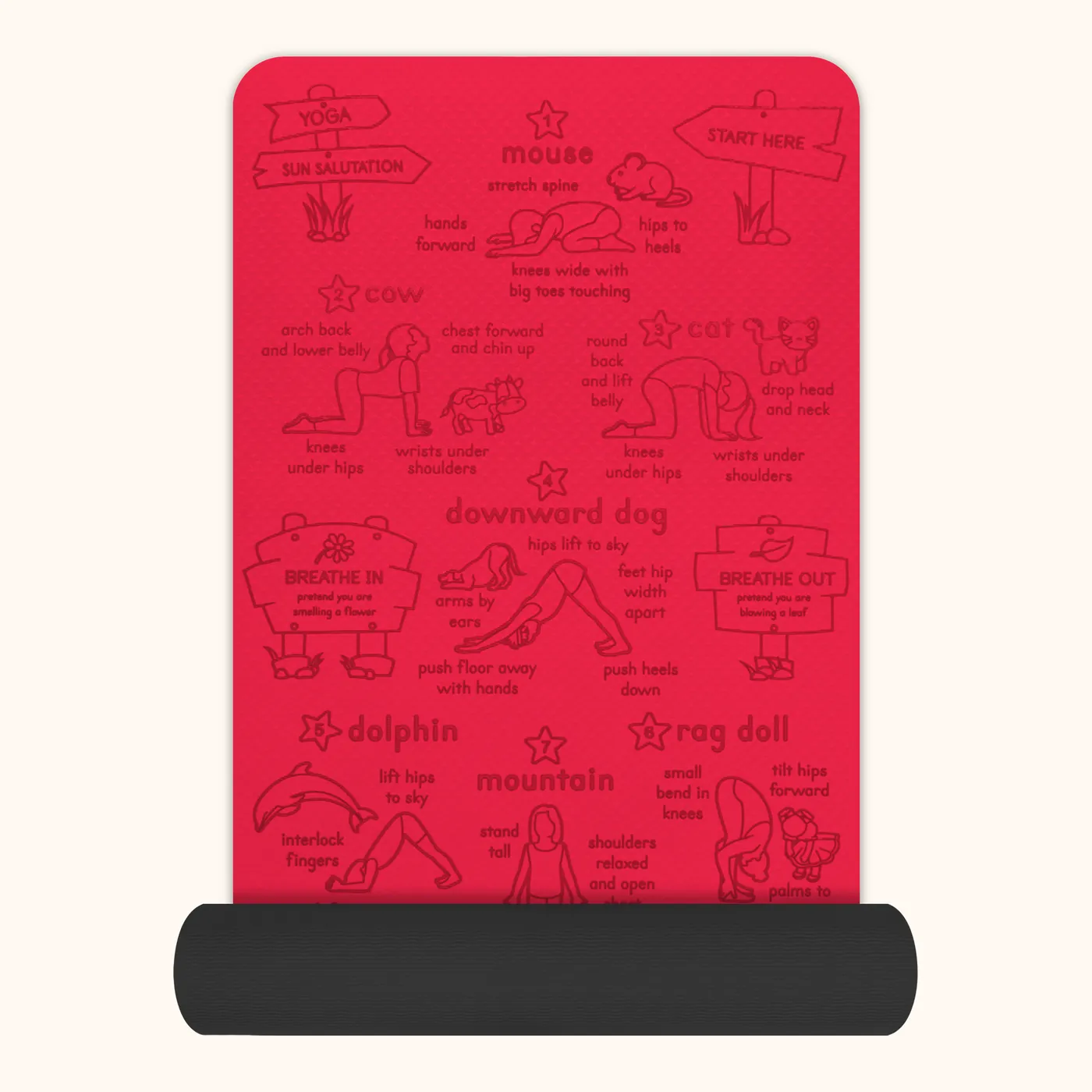
If you have a Yogi-Me mat, happy baby, rabbit and waterfall are poses 13, 14 and 15 on the Freedom Flow design, so a child who can't read yet can find them by the picture. If you don't, you can see the floor-pose mat they're engraved on.
What can kids do at home on a cold, dry half term day?
On a dry day, go outside even if it's cold. A garden, yard, balcony or the pavement outside your front door is enough. The NHS Healthier Families site includes "get outside, whatever the weather" among the tips it publishes, so wrap up, set a mission and come in for something warm.
3. A seasonal nature hunt
Draw or write a list of six things to find, with pictures for children who can't read yet. It changes with the season, which makes it a natural pick among October half term activities: a red leaf, a conker, a feather, a spider's web, a pine cone and something perfectly round. In February, try a bud, a bird, a puddle and some moss. Finds are for looking at, not tasting.
4. Water painting and chalk games
Give your child a bucket of water and a big decorating brush and let them "paint" the fence or the patio. It dries, so they can paint it again. Then chalk a hopscotch grid on the path and let older children invent the rules.
What can kids do at home when they're bouncing off the walls?
When children are wired, give the energy somewhere to go before you ask for anything calm. Short, physical games with simple rules work best: an indoor sports day, a dance freeze, races down the hall. Run it off first, then move on to something quieter.
5. An indoor sports day
Set up four events and give points for each. The NHS Healthier Families page on indoor activities for kids suggests indoor versions of real sports, such as bowling with cardboard tubes and basketball with a bin as the hoop. Add socks thrown into a laundry basket and a stand-on-one-leg challenge. The winner picks the next event and everyone else does star jumps.
6. Dance freeze
Put on a song your child loves and dance until you pause it. Anyone still moving does three hops. Let children take turns on the pause button. As the same NHS page points out, dancing needs no special kit and not much space.
What can kids do on a tired, flat half term day?
Some half term days are flat: nobody slept well and nothing appeals. Pick one hands-on job and one quiet one, keep both at the kitchen table, and don't aim for more. A day spent cooking lunch together and squashing salt dough into animals is still a good half term day.
7. Cook lunch together
Choose something children can mostly make themselves: pizza on a wrap or a fruit salad. Give each child a real job, such as washing fruit and spreading sauce for a 3 year-old, tearing, sprinkling and stirring for a 5 year-old, and chopping soft fruit with you beside them for a 7 or 8 year-old. Our list of activities for 5 year olds has more for that age.
8. Salt dough modelling
Mix two mugs of plain flour and one mug of salt, then add water a little at a time until it makes a smooth dough. Model animals or a handprint, then bake on a low heat until hard, which takes a few hours. Paint them the next day. Salt dough isn't for eating, so keep an eye on toddlers.
What can kids do at home if grandparents are in charge?
When grandparents are covering a half term day, the best activities are swaps: the child teaches something, then the grandparent teaches something back. It keeps the child busy, it suits a grandparent who'd rather not crawl through a cushion obstacle course, and it gives them both something to talk about at teatime.
9. The teach-me swap
Your child teaches Grandma or Grandad a game, or three yoga poses they know. Then the grandparent teaches a game from their own childhood: cat's cradle, a clapping rhyme or jacks. If the poses go down well, our guide to family yoga for the whole family has poses adults and children can do side by side.
10. A half term postcard or diary page
Fold a sheet of paper into a postcard. Your child draws the best thing about the day on the front and writes or dictates a few lines on the back for a parent at work. Do one a day and you'll have a diary by Friday.
What are some ideas for a half term break at home?
The simplest plan for a half term break at home is two planned activities a day, one active and one calm, with plenty of ordinary play in between. A child who has moved, made something and had some unstructured time has had a good half term day, and so, usually, have you.
Pairings by kind of day, and what you'll need:
- Wet: a den, then the yoga session. Blankets, chairs, a mat or rug.
- Cold but dry: a nature hunt, then water painting. Coats, a bucket, a brush, chalk.
- Wired: a sports day, then a dance freeze. Cardboard tubes, a soft ball, music.
- Flat: cook lunch, then salt dough. Flour, salt, water.
- Grandparents in charge: the teach-me swap, then a postcard. String, paper, pens.
If the rain sets in for more than a morning, our rainy day activities for kids sorts more indoor ideas by age. For the rest of the year, our list of 30 screen-free activities for 3 to 8 year-olds is worth bookmarking.
What to do when bored in half term?
Treat "I'm bored" as a request for a choice, not a crisis. Offer two ideas from this list, let your child pick one, and leave it there. If neither appeals, some unplanned time with toys they already own is fine. You don't have to fill every hour of a half term week.
If your child won't join in, let them lead the yoga or run the sports day while you take part.
Frequently asked questions
What are some fun things to do at home when kids are bored?
A dance freeze, a den, water painting, salt dough and an indoor sports day all use things already in the house. For a quick reset, put on one song and dance until you pause it. For a longer stretch, build a den and let your child keep adding to it.
What free half term activities can you do at home?
Almost all of the best ones are free: a den from blankets and chairs, a nature hunt, water painting with a bucket and brush, chalk hopscotch, an indoor sports day with cardboard tubes and socks, a dance freeze and a teach-me swap with grandparents. Salt dough needs only flour, salt and water.
How much screen time is OK in half term?
There is no separate half term rule. For 2 to 5 year-olds, UK government guidance on the Best Start in Life website suggests keeping it to 1 hour a day, less if possible, and avoiding screens in the hour before bed. For 5 to 18 year-olds, the NHS advises breaking up long periods of not moving with some activity.
When is half term?
Half term falls roughly in the middle of each school term, so there are usually three a year: in October, in February and at the end of May. Each is normally a week long. Dates are set locally and can differ between neighbouring councils, so in England and Wales check your council's term dates on GOV.UK using your postcode.
A mat for the next wet morning
If the rainy-morning yoga is what your child asks for again, a mat of their own means they can start without you. Each Yogi-Me mat has 15 numbered poses laser-engraved into the surface, so your child can pick a number, find its picture and copy the shape, with no screen to follow. Freedom Flow, the design in entry 2, is floor-based. Sun Salutation is a standing sequence, for the wired days.
It's designed for ages 3 to 8: three- and four-year-olds copy the animal poses with a little help, and older children lead their own sessions. At 183 x 61 cm it's the length of an adult mat, so they won't outgrow it, though a shorter mat is easier for a three-year-old to carry alone. It's non-toxic, PVC-free TPE, according to our supplier's specification. After the salt dough, wipe it with a damp cloth and a little mild soap, then let it dry flat.
Buying as a grandparent? It's long enough for you to try the poses too, and given at Christmas it's a present they can roll out again at February half term. Our list of presents that keep them moving has more that aren't a screen. Two children at home for the week? Two or more mats are 10 per cent off.
Pick a colour for the next wet morning from our kids' yoga mats. Each is £34.99, with free UK delivery and 30-day returns.
Sources
- GOV.UK - School term and holiday dates
- NHS - Physical activity guidelines for children (under 5 years)
- NHS - Physical activity guidelines for children and young people (5 to 18 years), reviewed 23 October 2024
- NHS Healthier Families - Activities for kids
- NHS Healthier Families - Indoor activities for kids
- Best Start in Life (GOV.UK) - Screen time guidance for under 5s