guides
Learning Through Play: What It Means and Why It Works
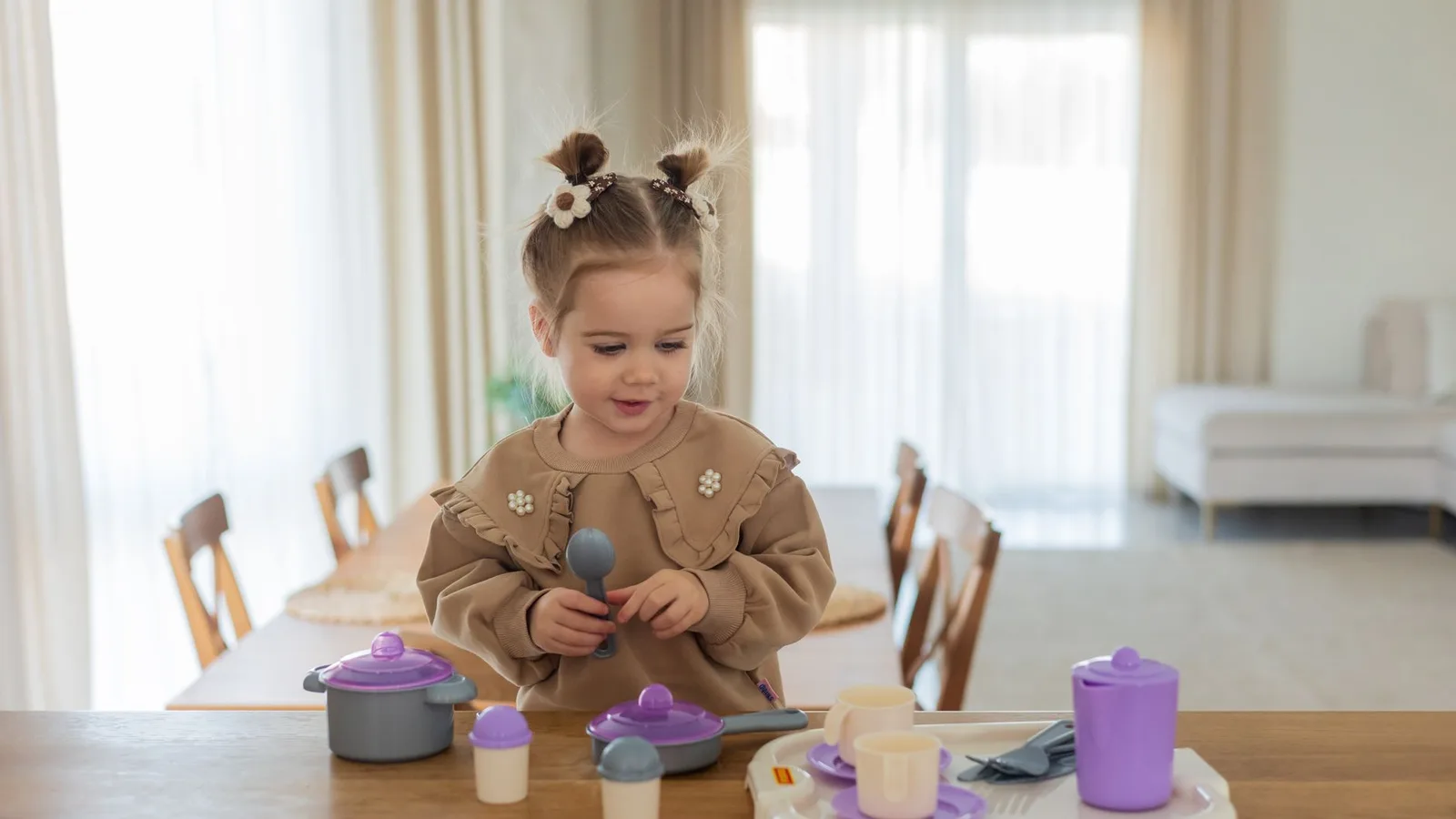
Learning through play, explained with shop and den examples, ways to join in without taking over, and ideas that carry on into Year 1.
What does learning through play mean?
Learning through play means your child builds knowledge and skills through games and exploration, an approach recognised by the Department for Education (DfE). That can include pretending to run a shop, building a den or making up a movement game. You can join in and offer ideas without turning each game into a lesson.
How does play fit into the EYFS?
GOV.UK explains that England's Early Years Foundation Stage (EYFS) covers children from birth to 5, including Reception, with learning mainly through games and play. It applies only in England, so don't assume its terminology or requirements apply in Scotland, Wales or Northern Ireland.
The DfE's statutory framework includes child-chosen play and adult guidance without prescribing one teaching method, and it asks for more focus on specific knowledge and skills in Reception.
For example, a child might decide to make a café. An adult could join as a customer, introduce the word "menu" and help write down an order. The child still decides what the café sells.
There's a difference between making space for play and expecting children to discover everything without help. Ofsted describes planned play as an opportunity to practise knowledge and skills, with adults extending vocabulary and introducing ideas.
At home, take that as permission to join in, explain something and then hand the game back. You don't need a learning objective taped to every basket. If nursery mentions an unfamiliar curriculum term, our guide to the EYFS areas of learning explains the language.
Ask the practitioner for a concrete example: "What were they trying to work out, and what did you add to the game?"
What is your child learning in a shop or den?
Look at what your child is doing within the game: explaining an order, trying a different roof or telling you what happens next. The DfE links pretend play with language and construction play with understanding space. These examples show what that might look like at home.
A shop at the kitchen table
Put out 4 clean, empty food cartons and a sheet of paper for a shopping list. If any child playing has a food allergy, avoid packaging that held foods they are allergic to. Let your child choose whether you're the customer or the shopkeeper. You might ask, "Have you got anything for a picnic?" rather than naming every item yourself.
The DfE describes pretend play as a way to extend language; in the shop, that might mean explaining what's for sale or taking a customer's order. If your child wants to draw an order instead of writing it, take the order as it comes.
A den for a teddy
Offer a large cardboard box, a light sheet and a teddy. The challenge is to make somewhere teddy can fit. Ask, "Where will the door go?" Then let your child try the arrangement.
The DfE's spatial reasoning guidance recommends den building and talking about size, shape and position. In this example, notice whether your child moves the entrance, compares spaces or explains why teddy won't fit.
A quick safety check: the DfE advises checking den materials and stability. Keep the build at floor level. Keep loose cords and anything with accessible button batteries out of every child's reach. With under-3s nearby, leave out coins and small loose parts; the Child Accident Prevention Trust identifies these hazards.
When should you help, and when should you wait?
Join the game without deciding all its next steps. The DfE's guidance on interactions recommends responding to children's interests, adding language and allowing time to answer without taking over. For a parent, that can mean making a comment and waiting, rather than asking another question immediately.
Try this when the game reaches a sticking point:
- Your child is still trying different arrangements, Something you could say or do: Stay nearby and let the attempt continue.
- They ask you to hold a piece, Something you could say or do: Hold it where they ask, without rebuilding the whole thing.
- They don't know what to try next, Something you could say or do: Offer a choice: "Shall we turn the box or move the sheet?"
- They explain an idea, Something you could say or do: Repeat it back, then give them room to carry it out.
Those are suggested responses, not a script you have to follow. If your child rejects the suggestion, leave it available and follow the next idea.
Try noticing a decision rather than judging the finished object. "You moved the door so teddy could get in" describes something specific. "What colour is it? How many sides? What's this called?" turns your role into a quizmaster.
You can also let a game continue without joining every moment. For ideas on gradually stepping back, see our guide to encouraging independent play.
How can the same games carry on into Year 1?
Keep the familiar game and change the invitation. In England, the DfE's Year 1 maths programme includes practical problems using objects and pictures, so there's room to connect school learning with a pretend shop. Ask the teacher what your child is practising before adding your own challenge.
For example, you could offer an order for 3 cartons, then ask for 1 more. Move the cartons as you talk rather than making it a mental test. If your child is interested in writing, offer paper for a delivery label or an opening sign.
Or keep the den and invite your child to draw a plan before rebuilding it. Let them decide where the entrance should go, then compare the plan with what they made.
These are ways to adapt a game, not things every child must do by a particular birthday. Ask the school how it combines play, practical tasks and teaching during the move from Reception.
What could you try after nursery or school?
For a simple movement game, try this:
- Invite your child to choose 3 actions, such as a clap, a reach and a march.
- Copy the actions in their chosen order.
- Swap leaders, or let your child change an action and show you the new sequence.
There's no need to count successful rounds or keep going once the game is finished. You could play while waiting for tea, then carry on with your evening.
For a quieter option, let your child dictate a story while you write their words. The DfE suggests recording children's invented stories as a way to support language through play. Read it back without improving the plot. If the shop sells clouds and the customer is a rabbit, keep both.
For movement play with a visual starting point, explore Yogi-Me's mats. Designed for ages 3 to 8, they have 15 numbered poses laser-engraved into the surface. Pick a pose together and build a game around it, with no video needed.
When is it worth asking someone about your child's play?
If you're worried about your child's speech, movement, learning or play, NHS Healthier Together advises seeking help: speak to your GP or health visitor. The same NHS guidance recommends urgent advice if a child loses skills they previously had, so don't wait for a routine review.
Talk to your child's nursery or school too, and describe what you've noticed rather than trying to name a condition. Write down a concrete example and when it happens. Ask what they see during play and whether you can agree a next step together.
Frequently asked questions
What are the five characteristics of learning through play?
UNICEF describes playful learning as joyful, meaningful, actively engaging, iterative and socially interactive: enjoyable, connected to life, involving thought, repeated attempts and other people. These are descriptions, not five activities to organise. The DfE's EYFS framework uses a different set of three features to describe how children learn.
Do children learn better through play than formal teaching?
There isn't one best approach for every task. Ofsted describes how teaching can introduce knowledge or demonstrate a skill, then play can provide practice. For example, show your child how to fold paper, then let them use that fold in a pretend menu.
Do I need educational toys for learning through play?
No. The NHS suggests using things you already have at home and getting involved yourself. For a pretend shop, start with clean, empty cartons and scrap paper. Avoid packaging that held foods any child playing is allergic to. Buy something only if you want it for a particular game, rather than because the packaging promises learning.
Does learning through play continue in Year 1?
Yes, you can keep using games alongside school learning. In England, the Department for Education's Year 1 maths programme includes solving problems with objects and pictures. At home, try putting out pretend shop orders or sharing paper tickets between customers, using numbers your child is working with.
Sources
- Department for Education: EYFS statutory framework for group and school-based providers
- GOV.UK: Early years foundation stage
- Ofsted: Strong foundations in the first years of school
- Department for Education: Exploring language
- Department for Education: Spatial reasoning
- Child Accident Prevention Trust: Toy safety
- Department for Education: Interactions
- Department for Education: National curriculum in England, mathematics programmes of study
- NHS Healthier Together: General information about child development
- UNICEF: Learning through play
- NHS: Baby and toddler play ideas