
guides
Gentle Parenting: What It Is and Whether It Works
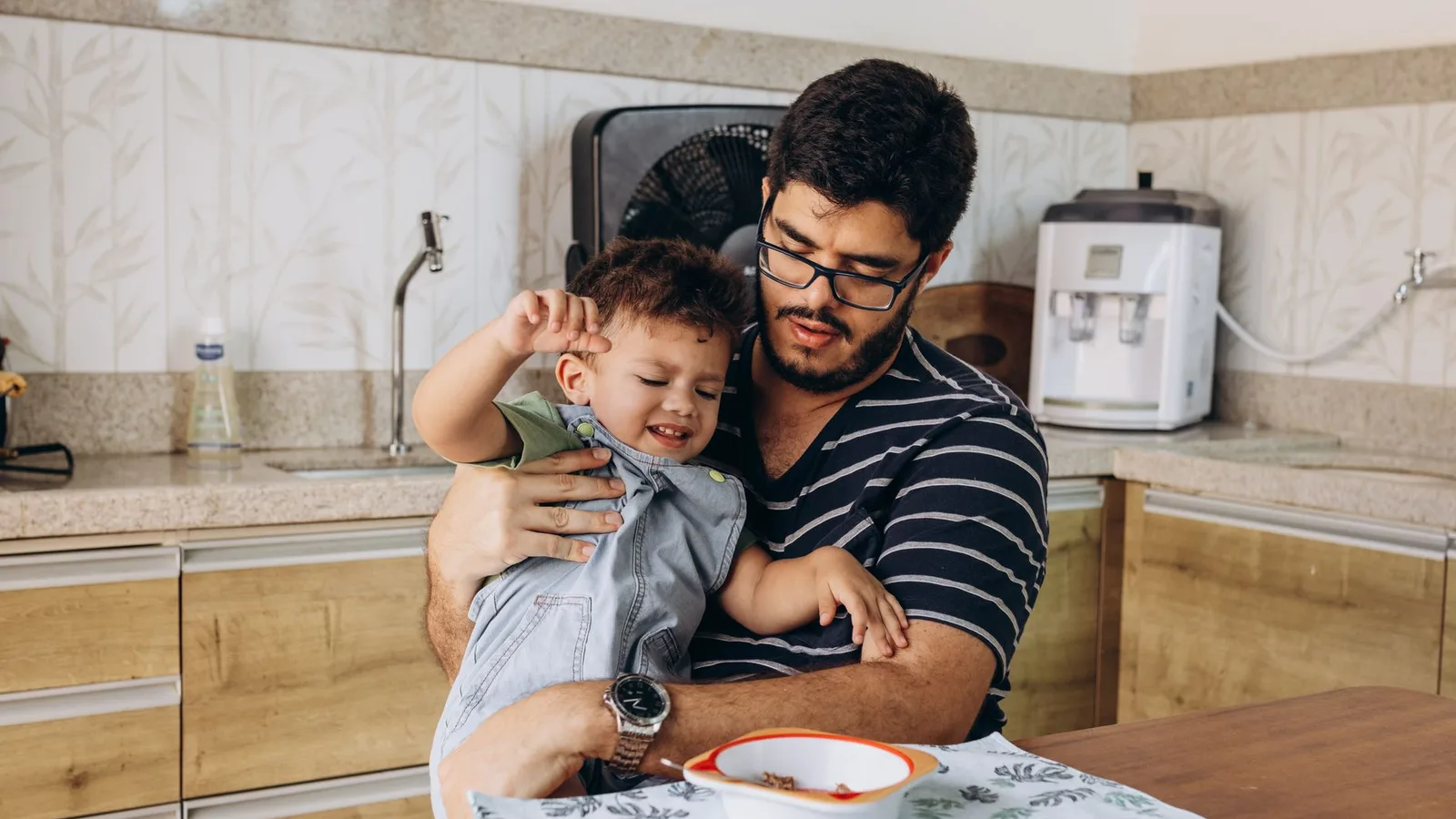
What gentle parenting means, how it differs from permissive parenting, and what UK guidance and research suggest for difficult moments.
What is gentle parenting?
Gentle parenting means responding to your child with warmth and understanding while keeping clear boundaries. It's a broad label, and research by Pezalla and Davidson found that parents used it in different ways. The useful questions are how to hold a limit, what evidence supports the approach and what to do at a difficult teatime.
In practice, separate the feeling from the action. For example: "You're cross that I'm on the phone. I'll listen when this call ends." You're acknowledging the frustration while explaining what you can offer.
The adult's needs belong in the picture too. Work calls, a sibling's turn and getting out of the door still matter. You can listen to an objection without asking your child to decide whether the family carries on with its plans.
You don't need a special voice or a memorised speech. Start with ordinary words you'd actually use: what you've noticed, what needs to happen and what help you can give.
Is gentle parenting the same as permissive parenting?
No: gentle parenting can include firm limits, while permissive parenting leaves fewer limits in place. The Welsh Government's guide to parenting styles describes permissive parents as loving but having few rules. Its authoritative approach combines affection, clear expectations and listening. Here, authoritative means being a supportive adult who remains in charge.
Say your child wants to carry on playing when it's time to leave. These illustrative responses show the difference:
- "All right, stay as long as you want.", What happens to the limit?: Leaving is now your child's decision.
- "You wanted longer. We're leaving now. I'll help you get ready.", What happens to the limit?: You acknowledge the objection and carry out the decision.
Listening hasn't handed over the decision in the second example. You can be available for a cuddle afterwards without reopening the question of leaving.
The practical check is what happens after you've stated the limit. A kind tone and a clear decision can sit together.
You can also reconsider a rule for a good reason. Action for Children recommends explaining changes when a rule no longer fits. Consistency doesn't require sticking with a decision after you've realised it was unreasonable.
Does gentle parenting work?
Research supports aspects of warm, firm parenting, but doesn't prove every version of gentle parenting works. Evidence about established parenting styles and research on people who call themselves gentle parents answer different questions. Keep that distinction in mind when someone promises better behaviour from a particular script.
Martin Pinquart's 2017 meta-analysis, which combined findings from 1,435 studies, found very small to small links between warmth, behavioural limits and fewer behaviour problems such as aggression. These were associations, not proof that parenting alone caused the differences. Some relationships ran both ways: children's behaviour also related to parents' responses.
A 2024 study by Anne Pezalla and Alice Davidson surveyed 100 US parents. It explored what gentle parenting meant to them; it wasn't a trial testing children's outcomes. The survey relied on parents' own reports, so it shouldn't be treated as an objective comparison of how their children behaved.
For your family, use that evidence to think about everyday practices. Are you listening, setting reasonable expectations and following through? A parenting label doesn't answer those questions for you, and a difficult afternoon doesn't settle a research debate.
What is the downside of gentle parenting?
The practical pitfalls are blurred boundaries and expecting yourself to stay endlessly calm. If being gentle becomes a requirement that your child must never be upset, it's hard to finish an activity or say no. Treat that as a prompt to review your approach, rather than a judgement on your family.
In Pezalla and Davidson's study, some parents described uncertainty or burnout. That doesn't establish that gentle parenting caused those feelings.
Watch for the point where you've explained a decision repeatedly but still haven't acted. You might be ready to put something away while your child is still arguing. You can carry out the decision without winning the argument.
If an approach needs more time or support than you have, that matters. Choose a response you can carry out on a busy weekday. Your capacity belongs in the plan too.
Also check what you're asking of yourself. A long discussion may fit a quiet afternoon; at teatime, a brief explanation may be all you can offer. Our guide to co-regulation explores the adult's part in handling big feelings.
Can you gentle parent and still use consequences?
Yes: you can respond kindly and still follow through on a reasonable consequence. Action for Children recommends explaining consequences and carrying them out. It distinguishes natural consequences, which happen without an adult arranging them, from logical consequences, which you choose because they relate to what happened.
For example, if your child scribbles on the table, put the pens away and help them clean up. Later, offer another try with paper underneath. The response relates to the pen use; you haven't added the loss of a weekend outing.
There doesn't have to be an extra penalty every time your child objects. Ending play at the agreed point is already carrying out the boundary.
Safety comes first: don't let someone get hurt to demonstrate a natural consequence. If a child is hitting, interrupt the activity. The NHS advises making clear that hurting isn't allowed and not hitting back.
What does gentle parenting look like at 5pm?
At 5pm, deal with what's needed now and save the longer conversation for later. For example, say your four-year-old won't stop drawing at the table when tea is ready. The NHS notes that hunger and tiredness can contribute to difficult behaviour, so check those before making your explanation longer.
Try this sequence:
- Acknowledge the unfinished job. "You haven't finished the picture. You wanted more time."
- State the limit. "The table's needed for tea. The drawing can wait on the side."
- Offer a manageable choice. "Would you like to move it, or shall I?"
- Follow through. If your child won't choose, move the drawing yourself.
If tears continue, Family Action advises using fewer words, keeping your child safe and staying nearby. Offer company without demanding a conversation.
If your child is still crying while the drawing is put aside, the boundary has held. Silence isn't a requirement. You can offer comfort without returning the table to a drawing space.
Once everyone is calmer, discuss where unfinished drawings could go next time. For other changeovers, see helping children move between activities.
A small plan for the next difficult moment
Pick a recurring flashpoint and decide your response before it happens. Write down the limit, what you'll do if your child objects and what help you can offer. Discuss it with your co-parent if you have one; Action for Children recommends agreeing rules between parents.
Afterwards, review the plan with questions you can actually answer:
- Did I carry out the limit?
- Did I speak respectfully, or do I owe an apology?
- Was there a practical problem to solve before next time, such as somewhere to keep unfinished play?
Use the answers to adjust your plan without grading your child on whether they were cheerful about it. Leave room for ordinary time together afterwards, such as reading or drawing.
If you'd both enjoy moving together later, explore our mats for a shared yoga session. Keep it as an invitation to spend time together, with no requirement to take part after an upset.
When a different script isn't enough
Ask for support if behaviour is worrying you or family life feels hard to manage. The NHS advises speaking to your GP or health visitor if you're seriously concerned. You can also compare notes with nursery or school about when difficulties happen.
Coram Family Lives offers parenting support, including its helpline on 0808 800 2222. You don't have to decide which parenting label fits before asking for practical help.
Frequently asked questions
Where did gentle parenting come from?
Gentle parenting draws on ideas about understanding children and guiding them with empathy. Sarah Ockwell-Smith set out her approach in The Gentle Parenting Book, published on 3 March 2016. Her publisher emphasises boundaries as well as respect. The term doesn't describe a single agreed set of parenting instructions.
What if I shout at my child?
Once you're calm, apologise without blaming your child. Family Action recommends acknowledging what happened and reconnecting. For example: 'I shouted. I'm sorry. I'll try again.' You can keep the boundary while taking responsibility for how you spoke to your child.
What if my partner disagrees with gentle parenting?
Agree on what you'll actually do in a difficult moment before debating labels. Coram Family Lives recommends a shared approach to boundaries among the adults caring for a child. Start with a familiar disagreement and decide what each adult will say and do.
What do you do when gentle parenting is not working?
Look at the specific difficulty: is the expectation clear, and can you follow it through? The NHS advises consistency and allowing time for an approach to work. If you're struggling with your child's behaviour, ask your health visitor for support. You don't have to solve everything alone.
Sources
- Pezalla and Davidson: exploration of gentle parenting
- Welsh Government: parenting styles
- Pinquart: parenting and behaviour meta-analysis
- Action for Children: rules and boundaries
- NHS: dealing with child behaviour problems
- NHS: temper tantrums
- Family Action: emotions and repair
- Coram Family Lives: positive behaviour
- Hachette: The Gentle Parenting Book publication details