guides
Summer Holiday Activities for Kids at Home: 12 Ideas
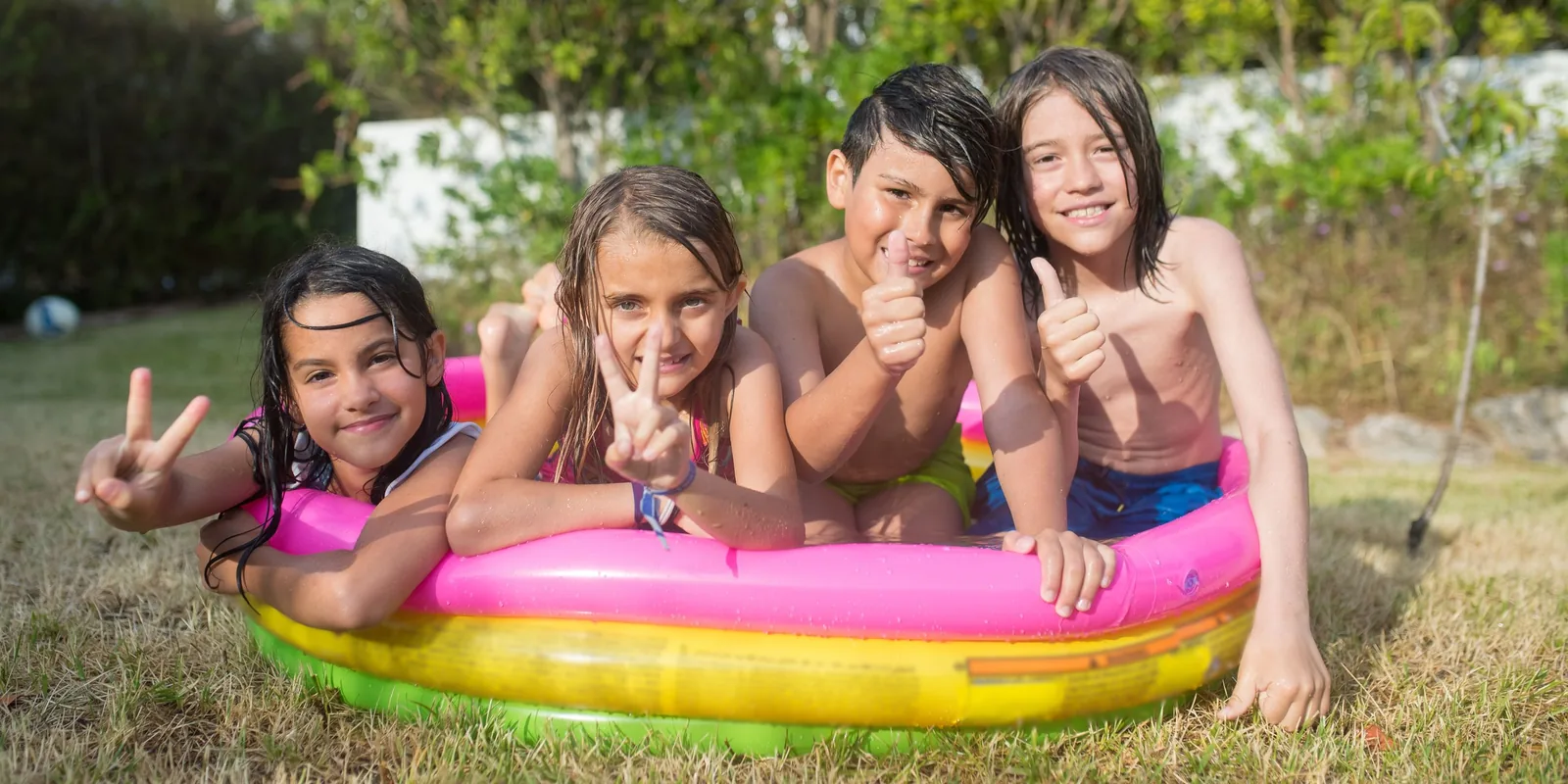
Summer holiday activities for kids at home, planned around the sun: 12 screen-free ideas for ages 3 to 8, from cool mornings to light evenings.
Plan summer days around the sun. The summer holiday activities for kids at home that work best are active in the cool of the morning, quiet in the shade between 11am and 3pm, active again in the late afternoon, and slow in the long light evenings. Here are twelve for ages 3 to 8, three for each part of the day, for a single day or all six weeks.
How do you plan six weeks of summer holidays at home?
You don't need a timetable, you need a shape. Dates are set locally: GOV.UK's school term dates finder gives your council's dates in England and Wales, and Scotland and Northern Ireland set their own.
The shape that works for most things to do in the summer holidays at home is two planned things a day, one from the morning list and one from the late afternoon. The rest is free play. An illustrative week, not a rule:
- A home day: the garden, the paddling bowl, a camp-out.
- A cheap day out: the park, the library, a walk somewhere new.
- A grandparent day: rounders, bubbles, a picnic tea.
- A quiet day: a reading picnic and not much else.
- A bucket-list day: one thing off the list (below).
School stops, so PE and playtime stop too. The NHS says 3 and 4-year-olds should be active for at least 180 minutes a day, and 5 to 18-year-olds should aim for an average of at least 60 minutes of moderate or vigorous activity a day across the week. This is Britain, so keep a wet-day plan too: our rainy day activities for kids are sorted by age.
What can kids do on a summer morning before it gets hot?
Mornings are for moving. Before 11am it's cooler and the shadows are long, so this is the slot for the energetic things: yoga on the lawn, skipping and hopping races, straight after breakfast.
1. Garden yoga before it gets hot
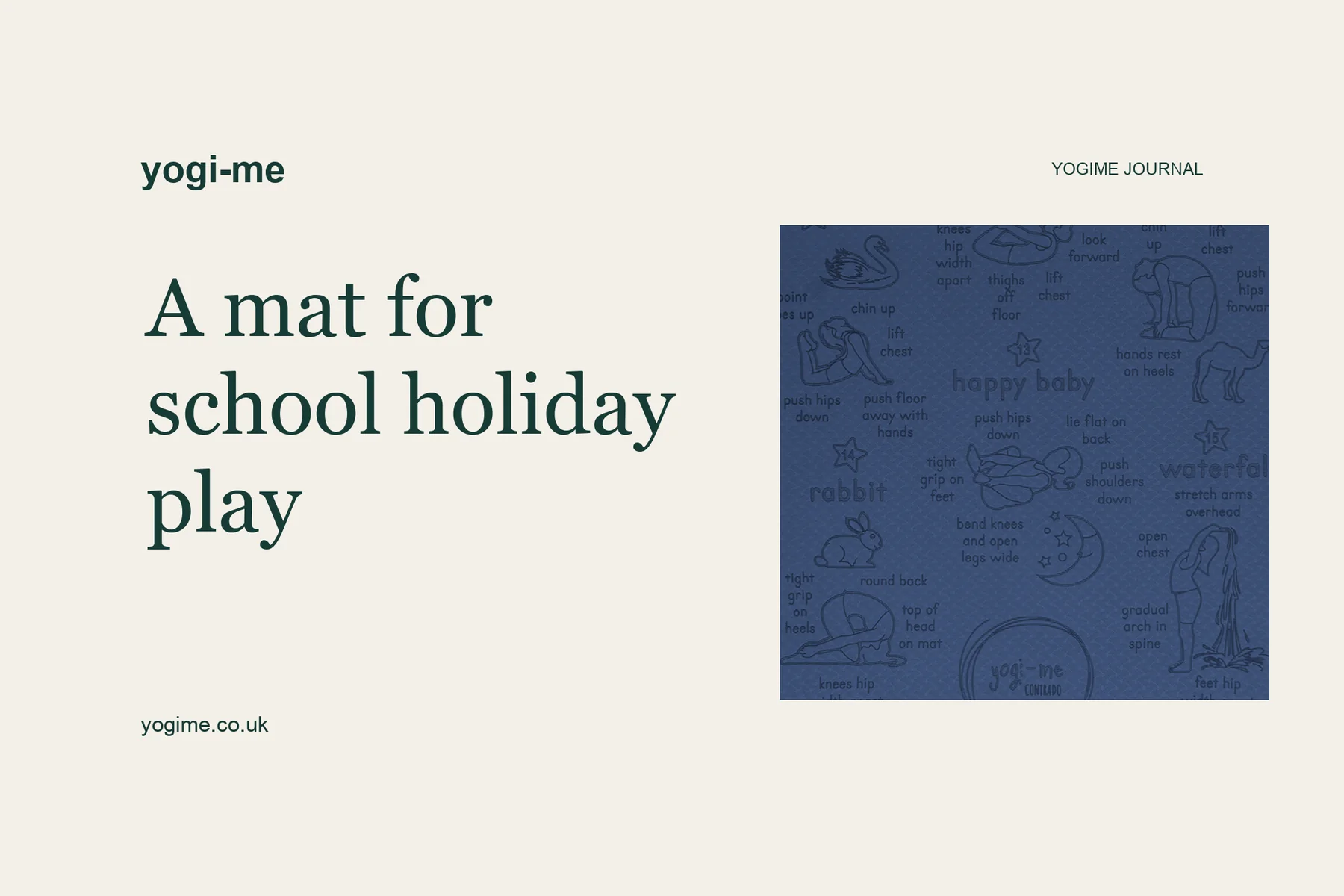
Put a mat, rug or towel on the lawn or patio, in the shade if there is some. On the Sun Salutation mat the 15 poses are numbered from mouse to dancer, so your child can start at 1 and work through while you drink your tea. With a towel, you call the poses out, or see the standing-pose mat. Bring it back in afterwards. At 3, they'll need help.
2. Shadow tracing
At breakfast, chalk round your child's shadow on the patio and write the time beside it. At lunchtime, stand in the same spot and trace again. Say: "Your shadow's shrunk. The sun's high, so it's time for the shade." It turns the 11am to 3pm idea into something a five-year-old can see. Age 4 and up.
3. Skipping and hopping challenges
A rope, a chalk line or nothing at all. Count the skips, hop on one leg to the gate, jump the chalk line ten times, or learn a skipping rhyme. The NHS lists skipping among its examples of activity for 5 to 18-year-olds. Set a score to beat tomorrow. Age 5 and up; at 3, hop and jump instead.
What summer activities work in the shade between 11am and 3pm?
The middle of the day is for the shade. The NHS says to spend time in the shade between 11am and 3pm from March to October, cover up with suitable clothing, use at least SPF30 sunscreen and take extra care with children. These summer activities for kids at home are calm and stay in one place.
4. Frozen toy rescue
The night before, freeze a few small plastic toys in a tub of water. Next day, tip out the block in the shade and hand over spoons and a cup of warm water. Say: "The dinosaurs are stuck. Can you get them out?" It takes longer than you'd think, which is the point. Age 3 and up.
5. Water play in the shade
A washing-up bowl under a tree or a parasol, with cups, a sieve, a sponge and a few bath toys. Your child pours, fills, squeezes and sinks things. Add a funnel for the older ones. RoSPA warns that young children can drown in very small amounts of water, so always supervise them near it and tip the bowl away straight after use. Age 3 and up.
6. A reading picnic
A blanket in the shade, or on the living-room floor if it's too hot, a pile of library books and a cold drink. Your child picks the books and reads, listens, or both. Many public libraries run the Summer Reading Challenge, so ask at yours. Age 3 and up.
What can kids do in the late afternoon when it cools down?
After 3pm the garden cools and the energy usually comes back. That's the second active slot of the day: water fights, a ball game and bubbles to chase. Put the sun cream back on first.
7. Sponge bombs and the sprinkler
Cut a cheap sponge into strips, stack them and tie them tightly in the middle: a reusable water bomb. Say: "Grown-ups can only be hit below the knee." A sprinkler or hose does the rest, and if there's a hosepipe ban, a bucket and watering can still work. Age 3 and up.
8. Garden rounders
Three bases made of jumpers or shoes, a soft ball, and a bat, racket or just a hand. A grandparent bowls and everyone else runs. It works for mixed ages: the youngest gets a second go, and the oldest bats with the wrong hand. Age 3 and up.
9. Giant bubbles
A squeeze of washing-up liquid in a tray of water, and a loop of string threaded through two straws, or a bent coat hanger. Dip, lift slowly and walk backwards. Chasing them is the activity. Say: "Who can catch one on a finger?" At 3, they'll need help to lift the loop. Age 3 and up.
What can kids do on a light summer evening?
Summer evenings stay light late, which is lovely and makes bedtime harder to spot. Use them for eating outside, a night under the stars, and something slow on the floor to mark the end of the day.
10. Picnic tea outside
Tea on a blanket in the garden, on the balcony or in the park. Your child plans the menu from what's in the fridge and carries it out. Say: "You're in charge of the picnic." It's cheap, it moves the mess outdoors, and nobody clears the table. Age 3 and up.
11. A garden camp-out
A tent, or a sheet pegged over the washing line, a torch and two stories. Lie inside and listen to the garden go quiet, then decide together whether to sleep out or come in. In a flat, build it in the living room with the lights off. At 3, they'll want you in there too. Age 3 and up.
12. A five-minute wind-down on the floor
Close the curtains. Start with mouse, pose 1 on the Sun Salutation mat: kneel, sit back on your heels and stretch your hands forward. Then two shapes that aren't on the Sun Salutation mat: lie flat with arms and legs wide, then hug your knees to your chest and rock. Three slow breaths each. It marks the end of the day, and that's all it needs to do. Age 3 and up.
How do you make a summer bucket list for kids?
A summer bucket list is a short list of things your child wants to do before school starts again, chosen by them and ticked off one at a time. Three rules: your child chooses, most of it is free and close to home, and it's one a week, so there's something left for August.
An illustrative list for a six-year-old: a garden camp-out, a bubble bigger than their head, a picnic tea in the park, a day at a beach or a river, pick-your-own fruit at a farm, and a skipping rhyme learned by heart. For a child who can't read yet, draw it and stick it on the fridge. Writing it is a good job for a grandparent day.
What if it's a heatwave?
On the hottest days, move the active things to early morning and evening, and keep the middle of the day indoors and quiet. The NHS says babies and young children aged 5 and under are among those more at risk in a heatwave. It advises keeping out of the heat if you can, staying in the shade especially between 11am and 3pm, having regular cold drinks, and closing curtains and blinds during the day.
Signs of heat exhaustion include tiredness, a headache, feeling sick, being very thirsty and feeling irritable. The NHS says to move them somewhere cool, give them plenty of water and cool their skin. Get help from NHS 111 if you're struggling to treat it, and call 999 for signs of heatstroke.
What if they say they're bored?
It'll happen, probably more than once. Offer two ideas, let them pick one, and then leave it. Some unplanned time with toys they already own is fine too, and here's why a bit of boredom is fine.
For more, there are more screen-free activities by age, and the shorter breaks have their own lists: half term activities at home and Easter holiday activities for kids.
Frequently asked questions
What's a good summer holiday routine for kids?
A shape, not a timetable. Keep wake-up and bedtime roughly the same most days, do something active in the cool morning, keep the middle of the day quiet and shaded, and plan two things a day at most. The rest is free play.
What free summer holiday activities can you do at home?
Shadow tracing, skipping and hopping, frozen toy rescue, water play in the shade, a reading picnic with library books, garden rounders, a picnic tea and a garden camp-out all use what you already have. Sponge bombs and giant bubbles need a cheap sponge and some washing-up liquid.
What summer activities suit preschoolers at home?
Most of the twelve work at 3 and 4 with a grown-up close by: frozen toy rescue, water play within arm's reach, a reading picnic and a picnic tea are the easiest. Garden yoga, skipping, bubbles and the camp-out need a grown-up's help at three.
How do I keep kids active in the summer holidays?
Put the active things in the morning and late afternoon, when it's cooler. The NHS says 3 and 4-year-olds should be active for at least 180 minutes a day, and 5 to 18-year-olds should aim for an average of at least 60 minutes of moderate or vigorous activity a day across the week.
One thing for the summer mornings
If you'd like one thing that gets the mornings going without a screen, each Yogi-Me mat has 15 numbered poses laser-engraved into the surface, so your child can start at 1 with nothing to set up. It's 800 g with a shoulder strap, so it goes to the garden and back, and at 183 x 61 cm they won't outgrow it. Given by a grandparent in winter, it still gets rolled out on the lawn in August. Have a look at yoga mats your child can follow without a screen: £34.99 each, with free UK delivery and 30-day returns.
Sources
- NHS - Sunscreen and sun safety
- NHS - Heatwave: how to cope in hot weather
- NHS - Heat exhaustion and heatstroke
- RoSPA - Garden safety
- NHS - Physical activity guidelines for children (under 5 years)
- NHS - Physical activity guidelines for children and young people (5 to 18 years)
- GOV.UK - School term and holiday dates
- Summer Reading Challenge