guides
Mindfulness in the EYFS: 10 Short Practices for Under-5s
Mindfulness in the EYFS: 10 practices of one to three minutes for nursery and Reception, each tied to a PSED early learning goal. No scripts needed.
Mindfulness in the EYFS means short, playful moments where young children notice what they can feel, hear, smell or see right now. The EYFS framework never uses the word, but its personal, social and emotional development area asks settings to help children "manage emotions" and "direct attention as necessary". The ten practices below take one to three minutes each and do exactly that.
They're written for nursery practitioners, childminders and Reception teachers working with children from about two to five. Our mindfulness in the classroom post covers Reception to Year 3, built around the school day. This one is built around the shorter attention, louder carpet and wetter garden of the early years.
What does mindfulness mean for preschoolers?
The NHS describes mindfulness as paying more attention to the present moment, to your own thoughts and feelings and to the world around you. Anna Freud puts it as awakening us to "the sensations of the present moment, such as the sound of the birds or the feel of an object".
For a three-year-old, that isn't sitting cross-legged in silence. It's blowing a tissue so gently it only flutters. Small, physical and over before the wriggling starts.
Does the EYFS mention mindfulness?
No. Neither the EYFS statutory framework nor Development Matters uses the word. What they ask for is close to what these practices build.
The framework's educational programme for personal, social and emotional development (PSED) says children "should be supported to manage emotions, develop a positive sense of self, set themselves simple goals, have confidence in their own abilities, to persist and wait for what they want and direct attention as necessary". The early learning goals for PSED are named ELG: Self-Regulation, ELG: Managing Self and ELG: Building Relationships. They describe what a child at the expected level can do at the end of Reception, so they're a direction of travel in the nursery years, not a checklist.
Development Matters gets more practical. Its guidance for 3 and 4-year-olds says to "Model ways that you calm yourself down, such as stopping and taking a few deep breaths". It names a "calming jar" as one way to teach self-calming. For Reception, it says to "Give children strategies for staying calm in the face of frustration" and "Give children space to calm down and return to an activity". The DfE's PSED pages for early years providers repeat the programme.
How long should a mindfulness practice last with under-5s?
No EYFS document gives a length. We'd suggest one to three minutes as the useful window: long enough to notice something, short enough to stop while the group is still with you. That's a judgement, not guidance, so watch your own group. If the wriggles start at forty seconds, stop at forty seconds and call it a success.
We'd also put repetition ahead of length: the same one-minute practice at the same point every day is easier to build on than one ambitious ten-minute session a week.
The 10 practices, from one minute to three
Each one names the PSED early learning goal it supports and the age it suits. None needs a screen or a script.
1. Rainbow breath (1 minute)
Sitting or standing, arms sweep up and over in an arc as you breathe in, and float down the other side as you breathe out.
Say: "Breathe in and paint a big rainbow over your head. Breathe out and let it float down. What colour was that one?"
PSED link: ELG: Self-Regulation. The slow arms set the pace of the breath. Ages: 2 and up.
2. Wiggle and stop (1 minute)
Wiggle one body part hard, then freeze it and notice what it feels like now.
Say: "Wiggle your fingers, wiggle, wiggle... and stop. Can you feel them buzzing? Now your toes."
PSED link: ELG: Self-Regulation, "control their immediate impulses when appropriate". Stopping on the word is the practice. Ages: 2 and up.
3. Warm hands (1 minute)
Rub hands together fast until they're warm, then rest them gently over closed eyes, or over the cheeks for children who'd rather keep their eyes open.
Say: "Rub, rub, rub until your hands are toasty. Now put the warm on your eyes. Is it dark in there? Is it warm?"
PSED link: ELG: Self-Regulation. A way to calm down they can do anywhere, with nothing. Ages: 3 and up.
4. Someone who makes me smile (1 minute)
Hands flat on the chest, children picture someone who makes them feel safe and happy. Saying the name out loud is optional.
Say: "Hands on your chest. Think of someone who gives the best cuddles. Keep them in your head and smile at them."
PSED link: ELG: Building Relationships, "Form positive attachments to adults and friendships with peers". Ages: 3 and up. A pet or a favourite teddy counts too.
5. The tissue flutter (2 minutes)
Each child holds a single tissue square in front of their face and breathes out so slowly that it flutters but doesn't fly away.
Say: "Hold your tissue up. Breathe out so gently it just wobbles. Too hard and it flies off. Can you make it dance slowly?"
PSED link: ELG: Self-Regulation, and Development Matters' "stopping and taking a few deep breaths", turned into something they can see. Ages: 3 and up.
6. Smell pots (2 minutes)
Two or three small pots with something to smell inside, such as orange peel, a sprig of mint or a cinnamon stick. Children sniff slowly, eyes closed if they like, and find one word for each.
Say: "Sniff slowly, like a mouse. Don't tell me what it is yet. Is it a happy smell or a sleepy smell?"
PSED link: ELG: Self-Regulation, and the PSED programme's "direct attention as necessary". Ages: 3 and up. Check your allergy records before choosing what goes in the pots, and keep lids on anything that shouldn't be tasted.
7. The slowest ball of dough (2 minutes)
Everyone rolls one ball of playdough as slowly as they possibly can. The prize goes to the slowest, not the roundest.
Say: "Roll it so slowly that it's almost not moving. What does it feel like? Squishy? Cold? Bumpy?"
PSED link: ELG: Self-Regulation, "control their immediate impulses when appropriate". Going slowly on purpose is harder than it looks at four. Ages: 3 and up.
8. One more look (3 minutes)
Pause on one page of a picture book and look at it together, slowly, for a count of five before anyone speaks. Then each child names one small thing they spotted, and one feeling a character might have.
Say: "Let's look really slowly. Shhh, keep looking. What can you see that you didn't see before? How is the bear feeling?"
PSED link: ELG: Self-Regulation, "Show an understanding of their own feelings and those of others". Ages: 3 and up.
9. Ice in a tray (3 minutes)
Freeze a large block of water in a tub overnight and put it in a tray. Children take turns to touch it with a fingertip and say what they notice as it melts. Keep it in the tray and keep the block large, so there are no small pieces to go in mouths.
Say: "Touch it with one finger. Is it cold? Wet? Slippery? Look, there's a drip. Where did the drip come from?"
PSED link: ELG: Managing Self, "Be confident to try new activities". Some children need a few goes before they'll touch it, and that's the point. Ages: 2 and up, with an adult beside the tray.
10. The nature frame (3 minutes)
Outdoors, each child holds a card frame (a paper plate with the middle cut out works) and looks through it for one small thing worth showing a friend.
Say: "Find one tiny thing to put in your frame. Look slowly. When you find it, show your friend and tell them about it."
PSED link: ELG: Building Relationships, "Show sensitivity to their own and to others' needs". The showing and waiting is the practice. Ages: 3 and up.
A fortnight of mindful minutes in a preschool room
Start with one practice and one fixed moment, then add a second once the first is routine. Here's an illustrative fortnight for a room of three and four-year-olds.
- After the morning welcome, Week 1: Rainbow breath; Week 2: Rainbow breath
- Before lunch, Week 1: Wiggle and stop; Week 2: Warm hands
- Story time, Week 1: One more look; Week 2: One more look
- Last thing before home, Week 1: (nothing yet); Week 2: Someone who makes me smile
Keep the longer hands-on practices (smell pots, ice in a tray and the nature frame) for a focused small group, where every child gets a turn without a long wait.
Where does yoga fit in the EYFS?
Yoga sits across two prime areas. Its stillness and breathing support PSED, and its shapes support physical development. For 3 and 4-year-olds, Development Matters includes learning to "stand on one leg and hold a pose for a game like musical statues", and the framework's ELG: Gross Motor Skills expects children to "Demonstrate strength, balance and coordination when playing".
So a short sequence of held shapes, finished with a slow breath, does both jobs in five minutes. It also gives the children who find sitting still hard a way into the quiet: moving first, then stopping. Our circle time games include a pass-the-pose round that adds yoga to a group session.
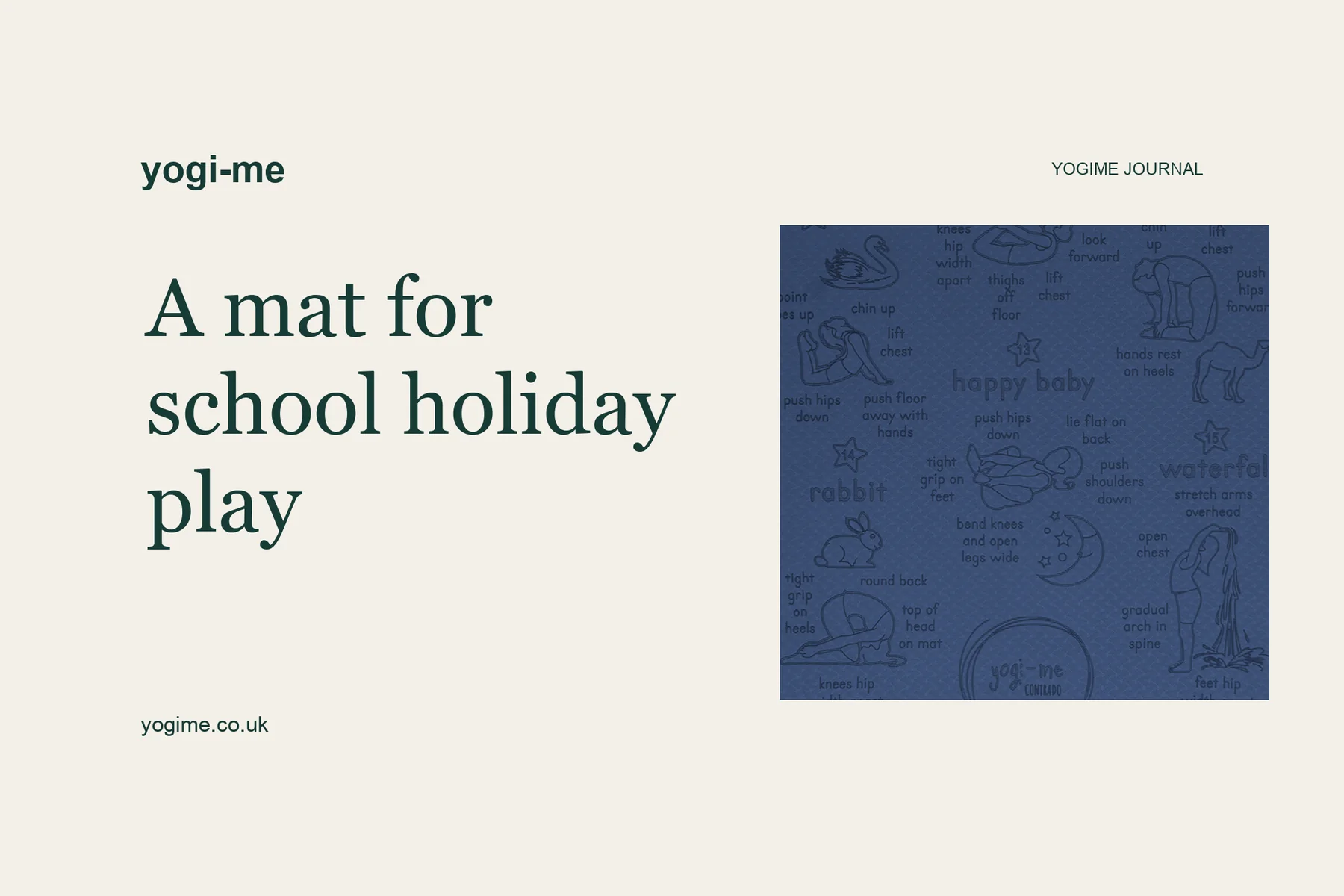
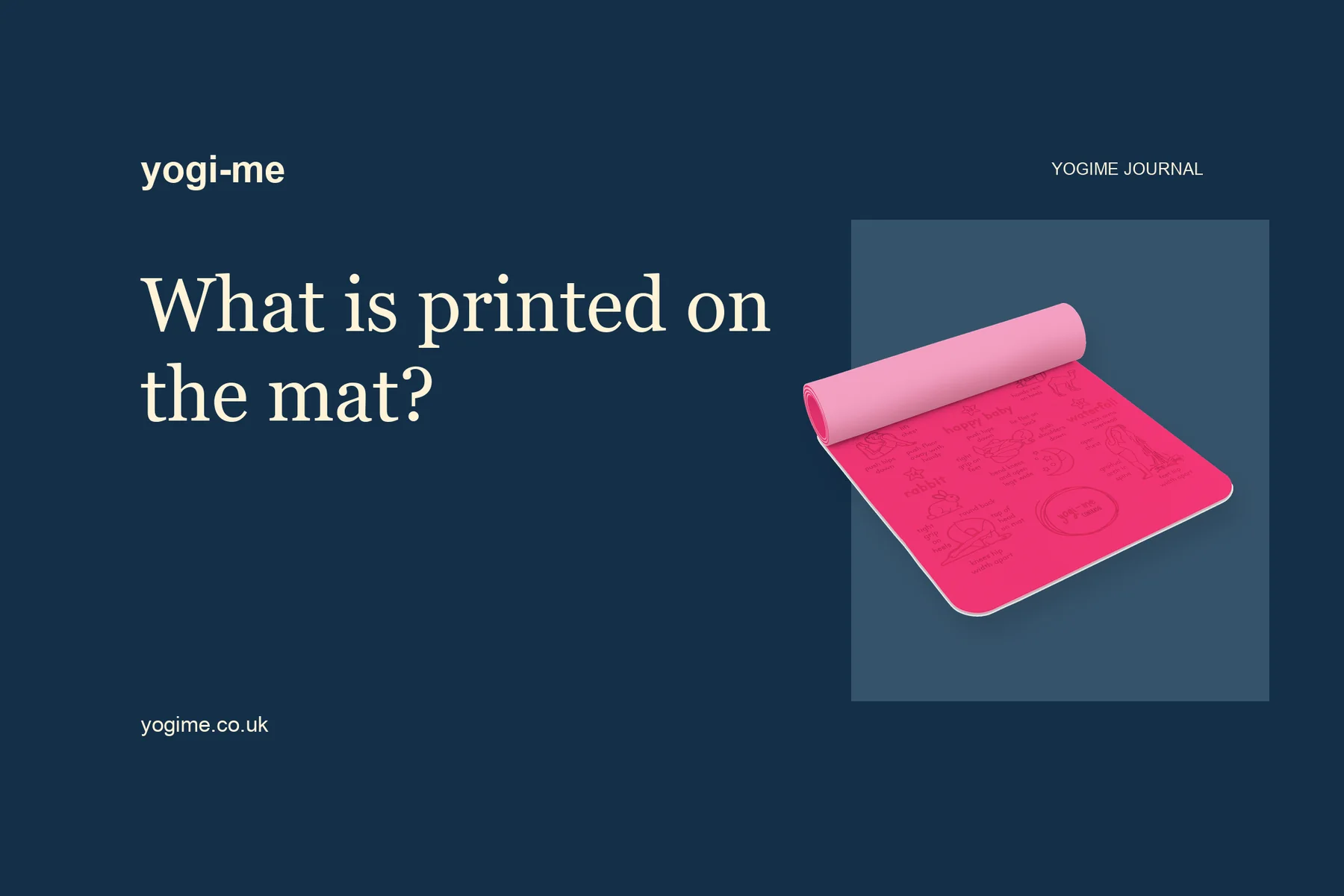
For settings, a mat with the poses marked on it means a child can lead without an adult demonstrating. The Freedom Flow design has 15 numbered, laser-engraved poses, from flower at 1 to waterfall at 15, with happy baby at 13 as a good one to end on. Our page for schools and nurseries covers ordering for a whole room.
The child who won't join in
Some children won't do any of this, at least not at first. Don't make it compulsory. Let them watch, hold the tissue, or be the one who says "go".
The NHS page on mindfulness is written for adults, but one line carries over: "it's not right for everyone. Some people find that it does not help them or that it can make them feel worse." If a particular practice upsets a child, drop it for them and try a moving one instead, such as rainbow breath or wiggle and stop.
Where children "seem worried, sad or angry for much of the time", Development Matters tells practitioners to work closely with parents and other agencies to find out more. A child like that needs their key person, their parents and, where it's needed, the setting's SENCo or a health visitor, not a longer breathing exercise.
For more PSED ideas sorted by early learning goal, see our PSED activities for the EYFS. For the same ideas at home, mindfulness for kids is written for parents.
Frequently asked questions
How do you explain mindfulness to a 3 year old?
You don't need the word at all. Say "Let's be really quiet and find out what our hands can feel", or "Let's see how slowly we can blow". Three-year-olds learn it by doing a small thing slowly with you, not from a definition. If you want a name for it, "noticing time" works better than mindfulness, because it tells them what to do.
Should children close their eyes during mindfulness?
Only if they want to. Some young children feel unsafe or silly with their eyes shut in a room full of people, and that's a reasonable feeling. Offer "eyes closed, or eyes looking at the floor" as two equal choices. Every practice on this page works with eyes open, and some of them, such as the nature frame and one more look, need them open.
Who can lead mindfulness in a nursery?
The EYFS framework doesn't mention mindfulness, so it sets no training requirement for it. The practices here are short, playful and use ordinary nursery resources, and any practitioner who already runs circle time can lead them. Keep them light, never make them compulsory, and talk to your SENCo or the child's parents if a practice seems to upset a particular child.
Can mindfulness be part of circle time?
Yes, and it's often the easiest place to start, because the children are already sitting together and listening. Put one practice at the start to settle the group, or at the end before they move off. Rainbow breath and the tissue flutter both work in a circle. Keep it to a minute or two, then move on to the main activity.