guides
15 Relay Races for Kids: Sports Day and Garden Ideas
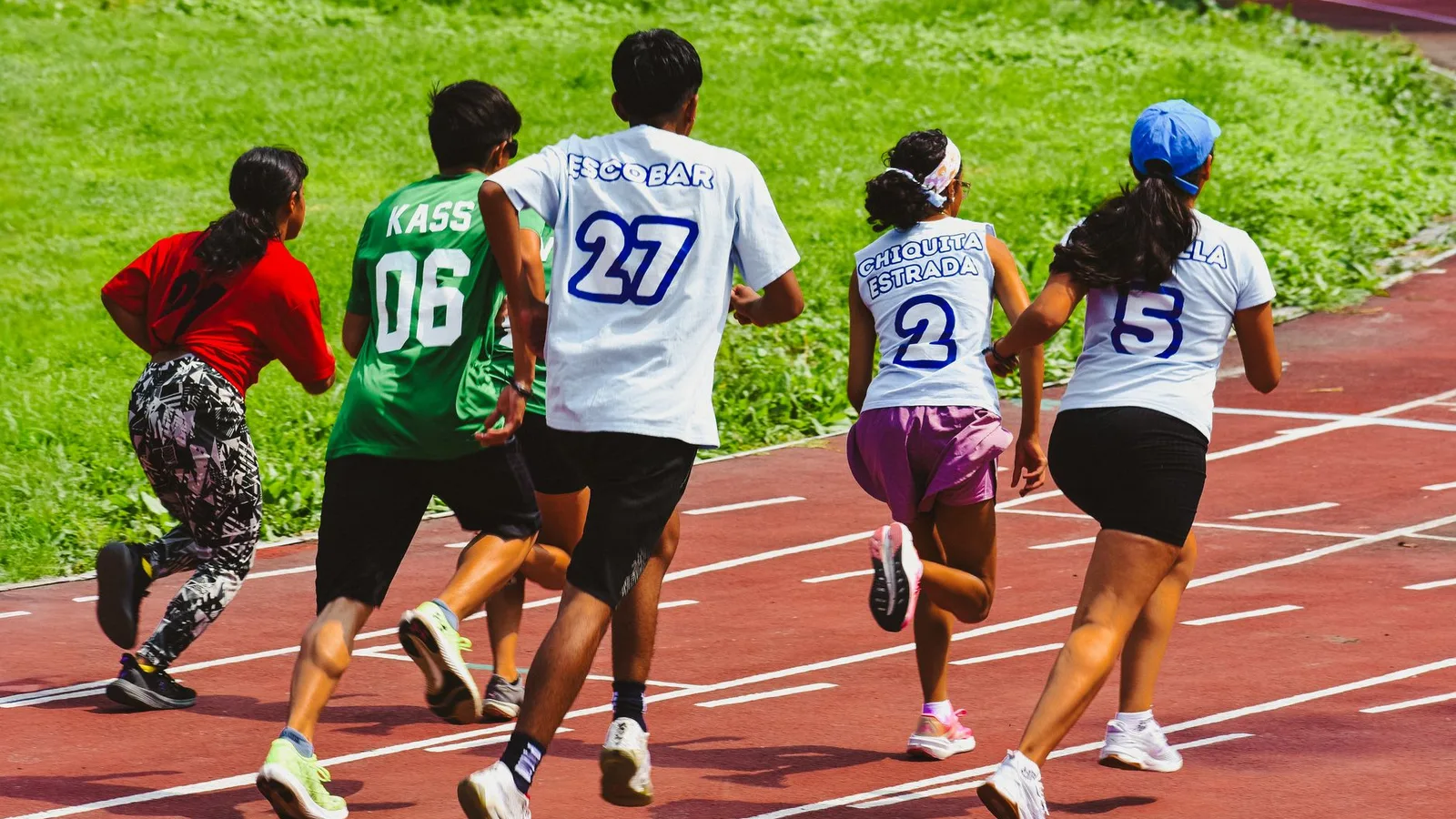
Try 15 relay races for children aged 3 to 8, with simple rules, fair teams and short queues for sports day, the garden or an indoor session.
Which relay races are easiest to organise?
Easy relay races for kids include egg and spoon, shuttle runs, beanbag delivery and sack races. Each child completes a short task, then hands over to a teammate. These 15 ideas are written for ages 3 to 8, with walking options, small teams and shared goals for children who'd rather play together than race.
How do you lay out a course without a long queue?
Mark a start line and a turning point for each team, with waiting children behind the start. Try 3 to 5 metres between markers as a starting suggestion, then adjust after a walking practice. Give each team its own lane and show where the handover happens.
Make teams of two or three where space allows. Show the handover: stop, pass the object or say the next child's name, then step aside. For a bigger event, our sports day games offer other activities to rotate through.
Before you start: supervise the game, check for slippery patches and obstacles, use suitable footwear and leave stopping space away from walls or fences, following Scouts' active-game safety guidance. Agree that "stop" means everyone stops. Check beanbags for split seams and keep loose filling or small pieces away from under-3s, following the Child Accident Prevention Trust's small-parts advice.
Which of these 15 relay games suits your space?
Choose by the space and equipment you've got, then demonstrate a complete turn before anyone races. Start with a walking round so everyone knows where to go and when to hand over. The distances and repetitions below are suggestions to change, not age milestones.
- A first go at relays, Try these: Shuttle pass, egg and spoon, beanbag delivery
- A small patch of garden, Try these: Beanbag target, builder, copy a shape
- Animal movements, Try these: Crab walk, frog jumps, penguin waddle
- A game without running, Try these: Colour collect, partner parcel, seated pass
1. Shuttle pass
This is the straightforward out-and-back relay, using a rolled pair of socks as the baton.
Say: "Go round your marker, come back and put the socks in the next person's hand." Everyone takes a turn, then the team finishes. Walk the first round; add running only if the space allows. It's a useful opener because the handover is the whole game.
2. Egg and spoon
Balance a rolled sock on a large serving spoon for an egg-and-spoon race without the eggs.
Say: "Carry it round the marker, then pass the spoon to your teammate." If it falls, stop, replace it and continue from there. Offer a second hand to steady it. The challenge is bringing the load home, so make this a walking relay.
3. Beanbag delivery
Put a basket of beanbags at the turning point and an empty basket beside each team.
Say: "Bring one parcel home, put it in our basket and send the next person." Finish when every parcel has arrived. Use rolled socks if you don't have beanbags. For a shared challenge, everyone delivers to the same basket and counts the collection together.
4. Sack relay
Use a fabric sports sack for a short hopping course, with a grown-up helping at the handover.
Say: "Hold the top at your waist, make little hops to the marker and back, then step out." Pass the sack to the next child. Offer walking the route while carrying the sack as an equal alternative. Keep the hops small rather than chasing speed.
5. Crab walk
The Plymouth NHS crab walk starts sitting, with hands behind you, before lifting your bottom and travelling backwards.
Say: "Lift your bottom, take three little crab steps, then sit down." Stand and walk back to hand over. Keep this round untimed. Anyone who'd rather stay upright can take three sideways steps instead.
6. Frog jumps
Make a short relay from small jumps with both feet, then a walking return.
Say: "Bend your knees, do three little frog jumps, then walk home and say the next frog's name." Stepping to the same marker counts too. Animal names supply the story without extra equipment; our animal walks for kids gives you other movements to explore separately.
7. Penguin waddle
Hold a soft ball between your knees and waddle along a short route.
Say: "Take tiny penguin steps round the marker, then give the egg to the next penguin." If the ball drops, pick it up and carry on. Younger players can hold it against their tummy instead. Keep everyone walking; the awkward cargo supplies the challenge.
8. Slalom relay
Place three cones in a widely spaced line for each team.
Say: "Weave round the cones, turn at the last one and weave home." Give the next person a clear handover before they set off. Leave the cones far enough apart to walk through comfortably.
9. Beanbag target
Put a basket beside each team's turning point, with a throwing mark nearby.
Say: "Take your beanbag, throw it once into the basket, fetch it and bring it home." Count one point for a basket, but finish the turn after every attempt. Give everyone the same number of throws. Move the throwing mark nearer for anyone who wants a closer target.
10. Roll and return
Swap carrying for rolling with a soft ball and a target line.
Say: "Roll the ball towards the line, walk after it, pick it up and bring it back." Hand it to the next player instead of throwing it back. Aim to stop the ball near the line rather than send it furthest. A nearby line keeps the turn short.
11. Colour collect
Place different coloured cloths at the far end and matching cloths beside the team's basket.
Say: "Choose a colour here, find its partner over there and bring it back." Send the next collector after the match is made. Use identical pairs if your cloths have patterns. Everyone works towards completing the set, with no reading or colour naming required.
12. Builder relay
Put large building blocks at the start and choose a building spot at the turning point.
Say: "Carry one block over, add it to our building and come back for the next builder." Finish after everyone has added a block. If it falls, pause the game and clear any blocks from the route before continuing. The result belongs to the whole team, whether it's a tower or a sprawling wall.
13. Partner parcel
A pair carries a soft toy on a small towel, holding opposite edges. For a relay handover, put two pairs in one team. With only one pair, finish after completing the route together.
Say: "Walk together round the marker and bring the parcel home." Stop to replace it if it tumbles, then carry on from that spot. Hand the towel to the next pair. This gives children a reason to match their pace; a grown-up can partner a child in a smaller group.
14. Copy a shape
A leader waits at the turning point and shows a standing shape for each visitor to copy.
Say: "Walk over, copy the shape, then come back and send the next person." Try standing tall like a mountain or spreading your arms like a star. No long hold is needed. Swap leaders after the round so everyone can choose a shape.
15. Seated pass
Sit in a line with a soft ball and make the handover itself the relay.
Say: "Pass it to the person beside you, all the way to the end, then back again." Finish when it reaches the starter. Let the child at the other end start the next round. Nobody needs to leave their place, and the shared task works without a running course.
How can mixed ages get fair turns?
Agree the adjustments before you start, and offer them to anyone who wants them. Mix ages across teams, give each team the same number of turns and let children choose a nearer marker or a walking turn. Smaller groups mean fewer people waiting between goes.
The Youth Sport Trust's STEP approach means changing space, task, equipment or people. Here, that might mean a shorter route, carrying instead of balancing, a bigger spoon or a partner.
With five children, skip the uneven team race: collect five parcels together, one each. For school groups, England's physical education curriculum includes both competitive and cooperative activities at key stage 1.
What could a short relay session look like?
Pick a familiar game to begin, change the challenge for the next round and finish with a shared task. You don't need to use the whole list. Keep the same teams and markers where possible, and explain only the game you're about to play.
- A first go: demonstrate shuttle pass, let everyone walk a turn, then try beanbag delivery. End when the basket is full. Offer another round if the children ask, rather than introducing several new rules.
- An animal session: try frog jumps, then the short crab turn, then seated pass. Keep the animal rounds untimed and let children choose the standing alternatives.
- A small-space session: combine colour collect, builder and copy a shape. Allow about 10 minutes as a loose starting plan, including explanations and pauses, and stop whenever the group has had enough.
For a pose session afterwards, explore our children's yoga mat, with 15 numbered poses laser-engraved into the surface. Pack the race markers away first, then take turns choosing a shape.
What if your child doesn't want a racing turn?
Offer a different role without making joining in the price of staying with the group. Your child could choose the next game, show the route or hand out the beanbags. If being watched is the problem, offer a private practice with you before returning to the group.
Ask whether they'd prefer walking, playing together or leaving it for another day. Take their answer seriously.
For ages 5 to 18, the NHS advises matching exercise to age, ability and experience and starting slowly. If a health concern makes you unsure about taking part, speak to your GP or health visitor.
Frequently asked questions
How do relay races work?
In a relay race, teammates take turns completing a course or task, then hand over to the next person. For these games, agree the route, the handover and the finish before starting. Finish after the agreed number of turns or when the collection or shared task is complete. In beanbag target, compare points after everyone has had the same number of throws.
How many children do you need for a relay race?
For these garden games, start with two children taking turns in one team. Add a grown-up if you want another player. With four children, try two teams of two. With an odd number, play together towards a shared collection target instead of comparing teams of different sizes.
Which relay races work indoors?
Choose seated pass, builder or colour collect, with everyone walking or staying in place. For seated pass, send a soft ball along the line and back. For builder, take turns carrying large blocks to a shared tower. Colour collect can use cloths moved between baskets in the same room.
How do you make relay races fair for mixed ages?
Mix ages across teams and agree any changes before the start. You might offer a nearer turning point, a larger spoon or a walking turn. Keep the same number of turns per team. If comparing finishing times causes arguments, give everyone a shared job, such as delivering all the beanbags.
Sources
- Scouts: running active games safely
- Child Accident Prevention Trust: toy safety
- University Hospitals Plymouth NHS Trust: exercises for young children
- Youth Sport Trust: inclusive physical education and sport environments
- Department for Education: physical education programmes of study in England
- NHS: physical activity guidelines for children and young people