guides
Mindfulness Gifts for Kids: 12 Without the Gimmicks
Mindfulness gifts for kids aged 3 to 8 that they'll actually use: 12 calming ideas by time of day, plus free ideas and what no present can do.
No present can make a child calm, but the right one gives them a way to wind down that they'll actually reach for. The best mindfulness gifts for kids aged 3 to 8 are simple: something to watch settle, something to breathe with, a book, or a mat for slow poses. Here are 12, sorted by the moment of the day each one suits.
Some shops call these wellbeing gifts or relaxation gifts for kids. We've judged them on whether a child will actually use them, and every idea says who it suits and roughly what it costs. None of them treats worry or anxiety, and we say plainly further down what a calming gift can't do.
What makes a gift calming rather than just sensory?
Mindfulness, in the NHS's words, involves paying attention to what is going on inside and outside ourselves, moment by moment. A calming gift is one that slows a child down and gives their attention one simple thing to follow: a breath, falling glitter, a story, a slow stretch.
"Sensory" is a broader shop category. Sensory play is about stimulating the senses, and plenty of sensory toys do the opposite of calming: they flash, spin, buzz and get faster the longer you play. Three quick tests in the shop:
- Does it slow down the longer you use it? A glitter jar settles. A light-up spinner doesn't.
- Does it work in a quiet voice? If the toy is louder than the child, it isn't a wind-down toy.
- Can a child use it on their own when they're cross? The best calming gifts don't need setting up.
Which calming gifts will a 3 to 8 year old actually use?
Twelve ideas, in the order a day runs: after school, a big feeling, the weekend, then bedtime.
1. A calm-down jar kit
A sealed plastic bottle, water, glitter and a drop of glue. Shake it, then watch until the glitter settles. The Department for Education's early years guidance, Development Matters, suggests adults introduce a "calming jar" to help young children learn self-calming.
Good for: ages 3 to 6. Under £10. After school, at the table.
2. Modelling dough to squeeze
Something for the hands to do while the rest of them settles down. Roll it, squash it, start again.
Good for: ages 3 to 7. Under £10. After school.
3. A colouring book with big, simple patterns
Slow, repetitive and quiet. Pair it with a tin of pencils rather than felt tips, which run out halfway through a mandala.
Good for: ages 4 to 8. Under £10. After school.
4. A yoga mat for slow poses at wind-down (this one is ours)
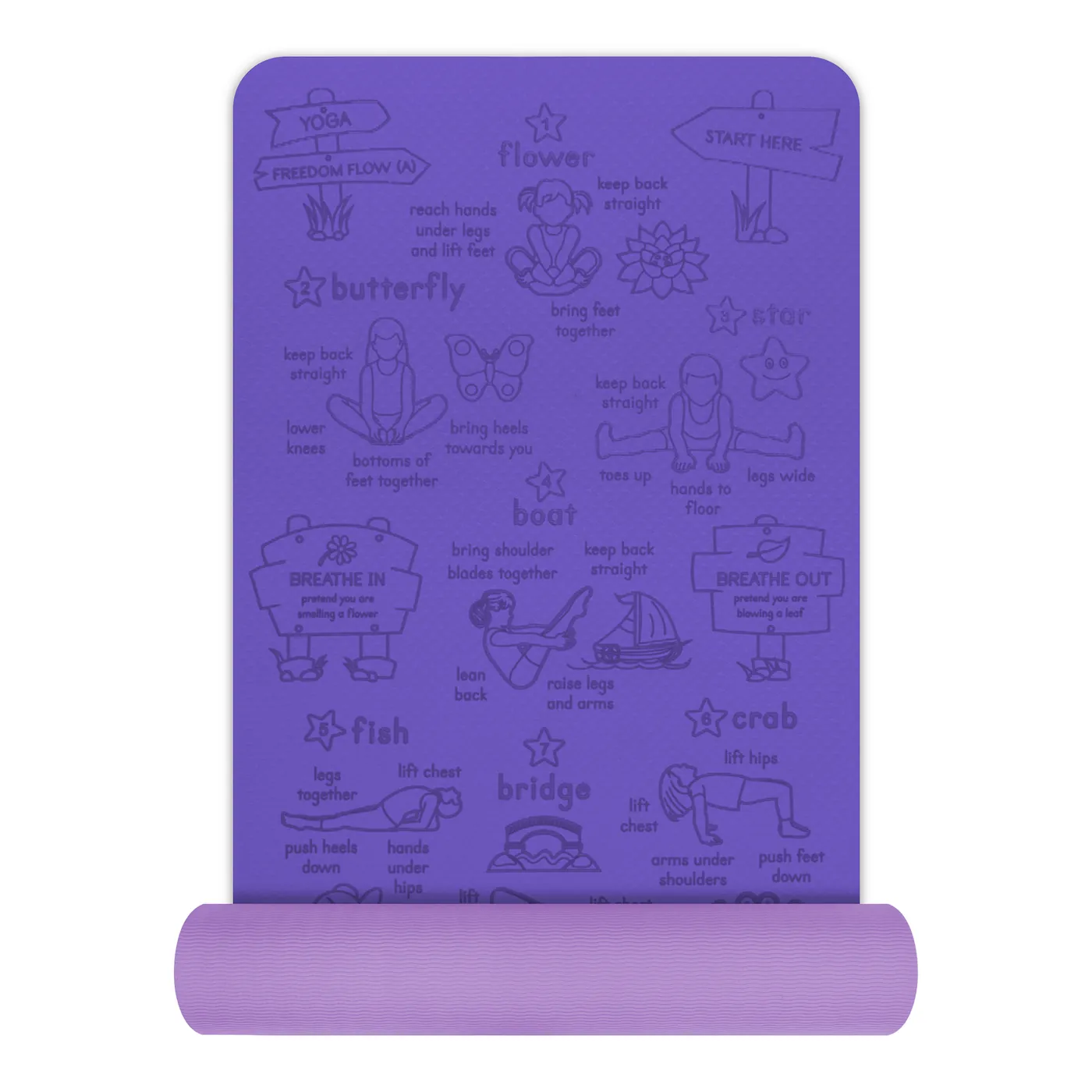
Freedom Flow is one of our two designs: its 15 numbered poses are laser-engraved into the surface, starting with flower at pose 1, and include happy baby at 13. A child can follow them in order without a screen.
Good for: ages 3 to 8. £34.99. After school or before bed.
5. A worry box kit
The NHS suggests turning an empty tissue box into a "worry" box: your child writes or draws a worry, posts it, and you sort through the box together at the end of the day or week. A kit with a box, stickers and a pad makes it a present.
Good for: ages 4 to 8. Under £10. A big feeling.
6. A picture book about feelings
A story that names feelings gives a child words for theirs. Development Matters suggests helping toddlers express what's angering them by offering words like "sad" or "angry".
Good for: ages 3 to 6. Under £10. A big feeling, or at bedtime.
7. A three-minute sand timer
Turn it over and take slow breaths until the sand runs out. The NHS suggests practising simple relaxation with your child, such as three deep, slow breaths, in for a count of 3 and out for 3.
Good for: ages 4 to 8. Under £10. A big feeling.
8. A bottle of bubbles
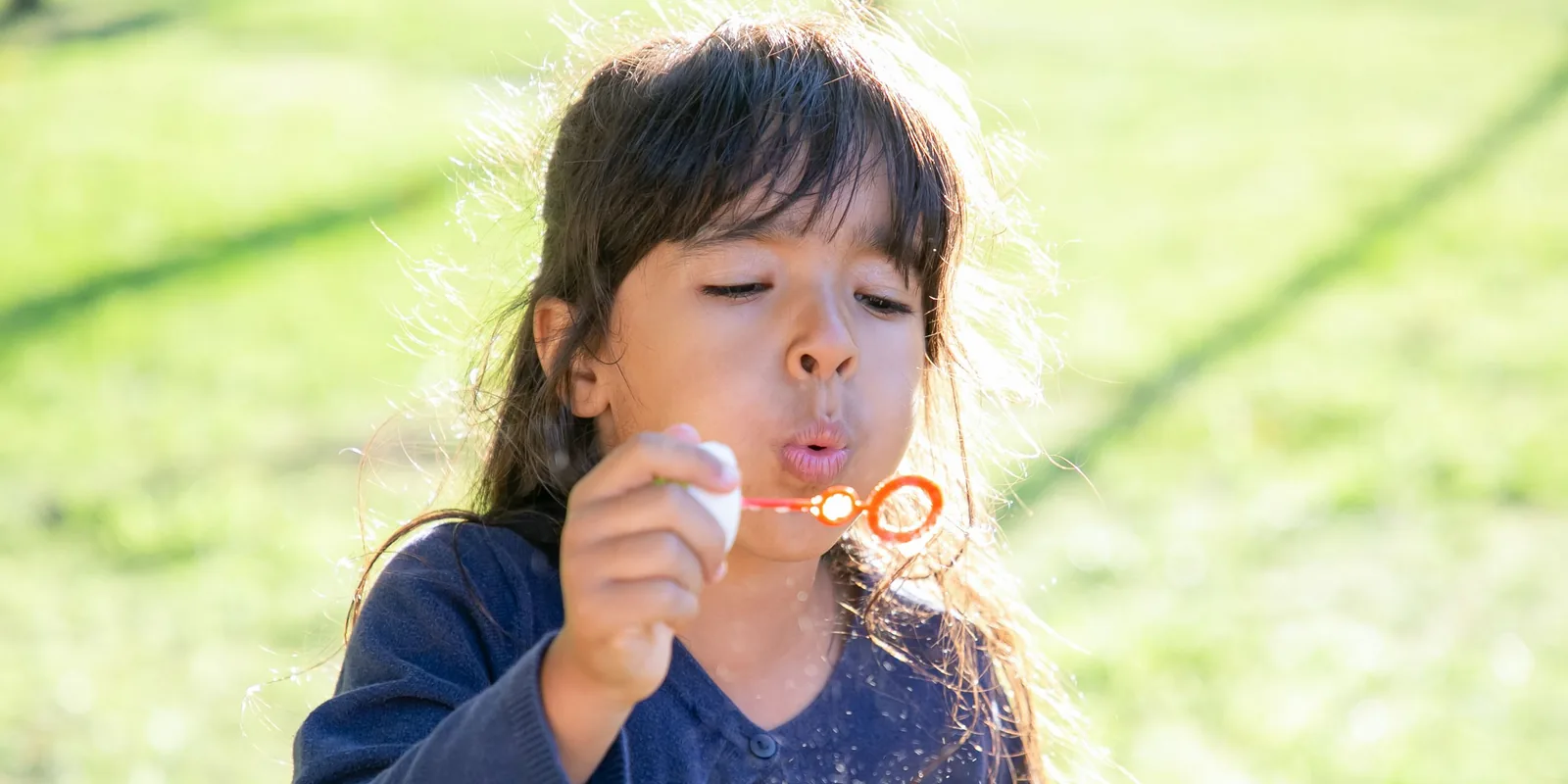
Blow too fast and the bubble bursts. Blow slowly and it grows. It's a breathing game a three-year-old already knows how to play.
Good for: ages 3 to 7. Under £10. Outdoors or the bath.
9. A nature-walk kit
A small bag, a magnifier and a card that says "find five things you can hear". Paying attention to the sights, sounds and smells of the moment is an important part of mindfulness, according to the NHS.
Good for: ages 4 to 8. Under £10. The weekend.
10. A seed-growing kit for one plant
One pot, one plant, a minute each morning to check on it. It's a small daily habit of paying attention.
Good for: ages 4 to 8. Under £10. On a windowsill.
11. A soft toy as a breathing buddy
Lie back with the toy resting on your tummy and watch it lift with each breath in. There are more ideas like this in our breathing exercises for kids.
Good for: ages 3 to 6. £10 to £25. At bedtime.
12. A slow bedtime story collection
Stories with a gentle pace and a quiet ending, read by you. The same book every night is fine; repetition is part of the point.
Good for: ages 3 to 8. £10 to £25. At bedtime.
What are some mindfulness ideas for kids that cost nothing?
Several of the best ones need nothing but you.
- Three slow breaths. In for 3, out for 3, three times. It's the NHS's own example.
- A listening minute. Sit still for a minute and count how many sounds you can hear.
- Slow-motion walking. Cross the room as slowly as you can without stopping. It's harder than it sounds.
- A worry box. An empty tissue box and a pen.
- Teddy on the tummy. Any soft toy works as a breathing buddy.
For more of these, and how to start at home, see mindfulness for kids.
What can a calming gift not do?
It can't treat anxiety, and nothing in this list claims to. Worries are a normal part of growing up, and the NHS says anxiety becomes a problem when it is very strong or getting worse and doesn't go away, or gets in the way of daily activities. If that sounds like your child, talk to your GP or school nurse. The same NHS page lists the free YoungMinds parent helpline, 0808 802 5544.
Mindfulness isn't for everyone, either. Writing about adults, the NHS notes that it isn't right for everyone, and that some people find it doesn't help or makes them feel worse. If a calming present makes a child more wound up, put it away. And Anna Freud, the children's mental health charity, says plainly that there isn't much academic research on self-care for young people living with mental health issues. A present is a nice way in, not a treatment.
Which calming toys need a safety check?
Small, squeezable and glittery things are often the ones to check.
- Glitter jars. Glue the lid shut and use a plastic bottle, not glass.
- Night lights and sound toys. The Office for Product Safety and Standards says any button batteries in a toy should be safely behind a screwed-down flap.
- Small fidget toys and worry dolls. OPSS advises avoiding toys with small parts because they can be a choking hazard. The NHS says children aged 1 to 5 often put objects in their mouth, so keep these away from younger brothers and sisters.
Frequently asked questions
What are some good gifts related to mindfulness?
For children aged 3 to 8: a calm-down jar, a worry box kit, a feelings book, a bottle of bubbles for slow breathing, a nature-walk kit, or a mat for slow poses. The best ones are simple and quiet, and most work without batteries. Skip anything that promises to fix worry or anxiety, because no present can do that.
Are worry dolls a good gift?
They can be, for a child of about five and over who likes telling a tiny doll a worry at bedtime. They're very small, so keep them well away from babies and toddlers. A worry doll doesn't make a worry go away; it gives a child a way to say it out loud, ideally to you too. If worries are getting in the way of everyday life, talk to your GP.
What are some calming crafts for kids?
Slow, repetitive ones with something calm at the end: making a glitter jar, decorating a worry box, threading big beads, colouring simple patterns, or rolling and squashing dough. Keep it short and sit with them. Leave out anything fiddly enough to frustrate them, because a craft that ends in tears has missed the point.
At what age can children practise mindfulness?
The NHS mindfulness page is written for adults and gives no age for children, so treat this as a rough guide. For under-fives, the early years guidance talks about adults teaching children self-calming, for example with a calming jar. At three, try one slow breath or a listening minute with you; by seven or eight, a few minutes on their own may work.
For the quiet end of the day
If you'd like the present to be a place to wind down, ours is made for it. Freedom Flow's fifteen numbered poses are laser-engraved into the mat, so a child can work through them slowly on their own or with you. It's £34.99 with free UK delivery. See the Freedom Flow mat in blue, or browse more ideas by age in our presents for kids guide.
Sources
- NHS: Mindfulness
- NHS: Anxiety in children
- Anna Freud: Mindfulness (self-care)
- Department for Education: Development Matters, non-statutory curriculum guidance for the early years foundation stage
- Office for Product Safety and Standards: Buy toys safely this Christmas (15 November 2021)
- NHS: How to stop a child from choking