practice
How to Start a Gratitude Jar With Your Kids
Start a gratitude jar with one small note at teatime, prompts for children who can't write yet, and a plan for reading memories back.
How do you start a gratitude jar tonight?
Before you clear the tea things, put an empty tub and some paper on the table. Start a gratitude jar by writing or drawing one small thing you're thankful for, then adding it to the jar. Let your child dictate if they can't write yet, add a note at teatime and choose a regular moment to read your memories back together.
You'll need a clean plastic tub or box, palm-sized paper slips and a pencil. Keep the kit out of younger siblings' reach and leave off small decorations: the Child Accident Prevention Trust warns that under-3s are particularly at risk of choking on small parts.
Where does it fit into the evening?
Try it after tea, while you're still at the table. Keep the paper ready so you can start without hunting through drawers. If that moment is rushed, choose another time when you're already together. The jar can sit alongside other small gratitude activities.
If adults come home at different times, nobody has to wait. Leave a blank slip ready for them to add later, and save the shared reading for a time you can all join. Let anyone still eating finish first.
How does the three-minute routine work?
Try these six steps with a grown-up and child, with paper ready before you begin. The timings are a guide. Family Action's activity booklet includes written or drawn entries, so let your child choose how to contribute. You can do the writing for them.
1. Bring the jar over, 20 seconds
Say, "Let's save something we liked about today," and put the jar between you. If your child wants to name it or inspect the lid, let them, then return to today's note. Leave decorating for another time.
2. Share your own moment, 30 seconds
Go first with a small, true example from your day, using "I was glad when..." as a starter. If your child copies your answer, accept it. An ordinary moment, such as someone making you a drink, belongs in the jar.
3. Offer a prompt, 30 seconds
Ask, "Who did something kind for you?" If that gets a shrug, try "What did you enjoy playing?" or "What made you laugh?"
Choose one prompt and wait. If the answer is a favourite snack again, write it down without asking for a different choice.
4. Write or draw it, 60 seconds
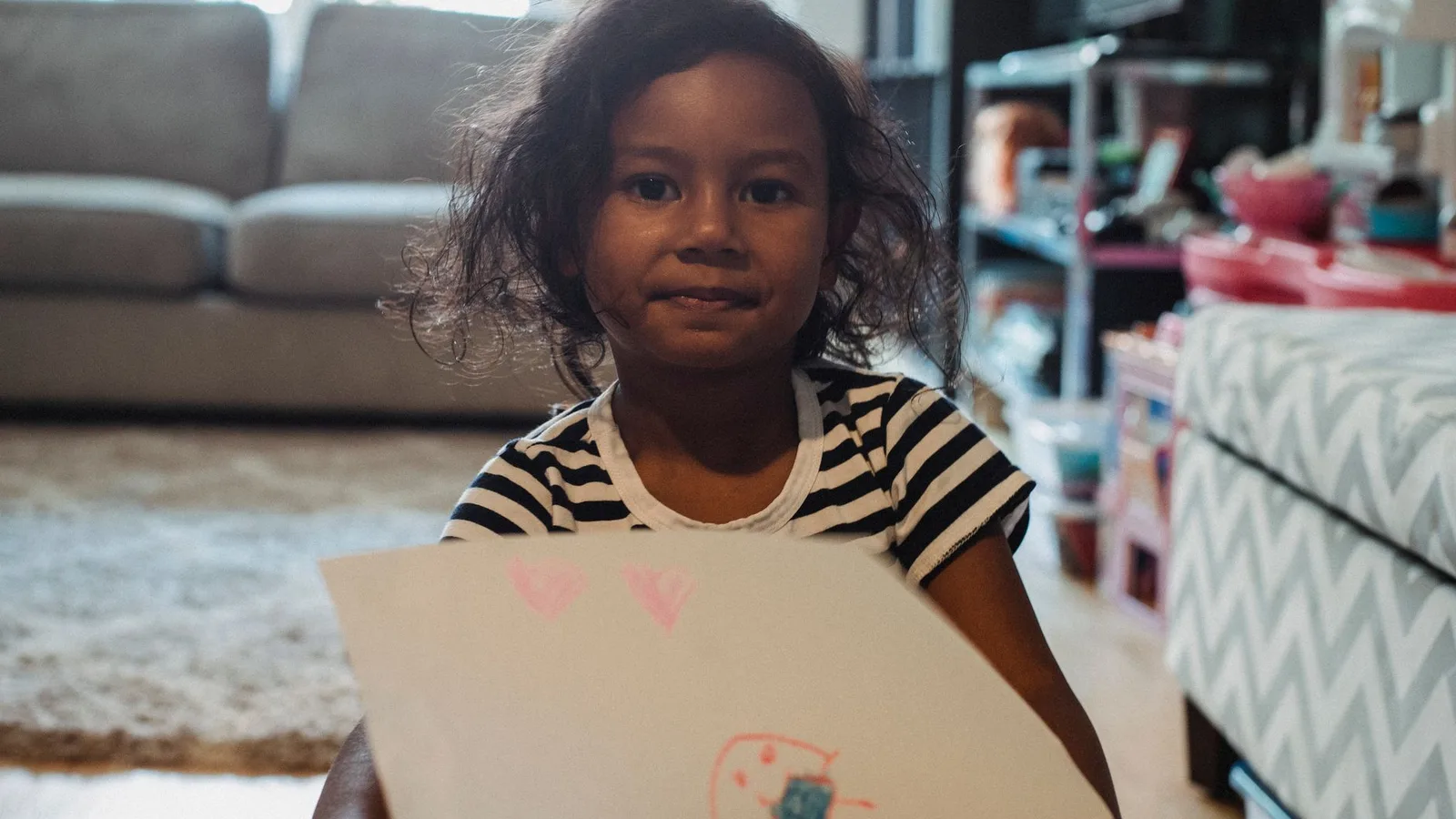
Say, "Shall I write it, or would you like to draw?" Write the words your child gives you and ask before adding a caption to their picture.
If drawing takes longer, let it. Keep their spelling as it is. Add the date in a corner so you can place the memory when you read it again.
5. Add the slip, 20 seconds
Say, "Let's put today's memory in," and let your child drop in the slip. Add their name or initial if you're sharing a family jar. If they want to fold the paper into a tiny parcel first, that's fine too.
6. Finish with a quiet pause, 20 seconds
Say, "Let's sit quietly for a moment," and rest your hands on the table. Your child can look at the jar or the room.
If they giggle or get up, leave it there rather than restarting. Finish with a little stillness together.
Does it have to take three minutes?
No. The suggested slots add up to three minutes, but a dictated sentence and a slip in the jar can be your whole routine. Leave longer drawing sessions for when there's time. Prepare the paper separately, and don't count decorating as part of the nightly activity. There is no need to set a timer.
When should you open the jar?
Choose a regular read-back, such as Sunday tea. Take out three slips, ask their owners before reading them aloud, then ask, "What do you remember about this?" Keep the rest for another time. Nobody has to explain a note they would rather keep to themselves.
For a longer look back, try New Year's Eve or when the jar fills up. Let each person choose a favourite to keep in an envelope, then start filling the jar again.
On a difficult day, offer to read an old note together. If your child says no, put it away. A memory doesn't have to become an instruction to cheer up.
What if your child says nothing was good?
Accept the answer and let them pass. You can add your own note without requiring theirs. If they want to tell you what went wrong, listen: the NHS advises giving children space when they aren't ready to talk.
For worries they want to put on paper, you could make a separate worry box. Keep time to talk about those notes too.
If it's the writing they dislike, offer to be the scribe next time. If it's the talking, they can add a private drawing instead.
If you're worried about your child's feelings or behaviour, speak to your GP or health visitor. You don't need to keep trying the jar first.
How do you keep it going after the novelty?
Give the jar a home beside the paper, and use the same everyday cue to bring it out. After a gap, simply add today's note. Skip the catch-up session and the tally of missed days. Let your child change the label or choose the next read-back. Keep a shared jar while everyone wants one.
If you'd like floor yoga after the jar, explore our Freedom Flow mats, with 15 numbered poses laser-engraved into the surface.
Frequently asked questions
What do you put in a gratitude jar?
Put in short notes or drawings about something you're thankful for: a person, a kind act, a favourite part of the day or something you enjoyed. For example, write 'Grandad showed me how to mend the kite' rather than just 'Grandad'. Repeated favourites can go in too.
Can a child who can't write use a gratitude jar?
Yes. Ask your child to tell you what they'd like to add, then write their words for them. They can also draw a picture and explain it while you add a caption. Offer a concrete prompt such as 'What did you enjoy playing?' and accept a short answer.
How often should you add to a gratitude jar?
Try adding a note at teatime, but choose a rhythm you want to keep. You could use the jar on school nights or during a weekend meal instead. If you miss a day, carry on with the next note. There's no need to fill the gaps or keep a streak.
When should you read a gratitude jar?
Choose a regular moment, such as Sunday tea, and read a few notes together. Save a longer look through the jar for New Year's Eve or when it's full. Ask before sharing someone else's note, and let each person choose which memories they want to keep or talk about.