
guides
Den Building: How to Build a Den Indoors and Out
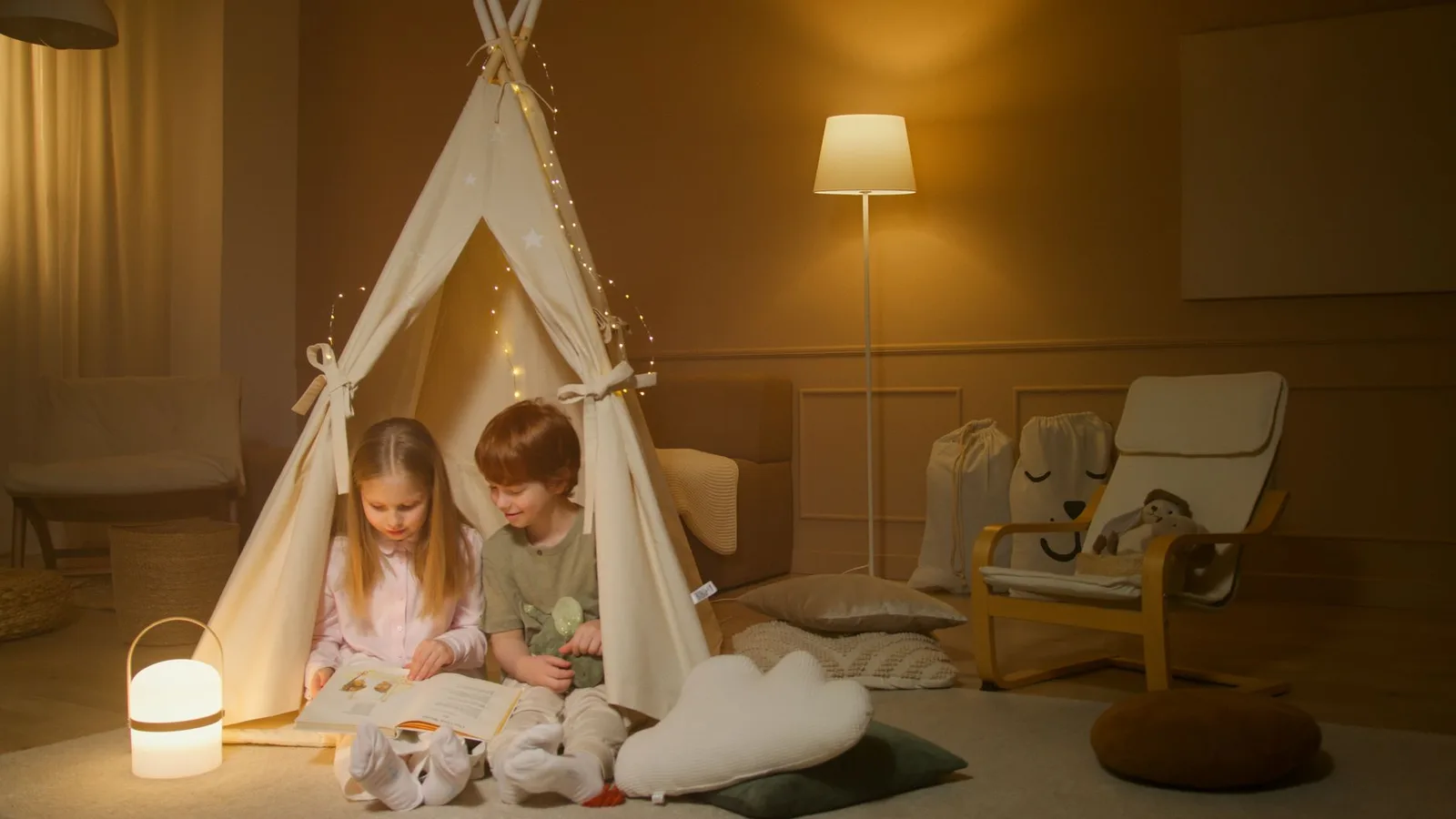
Try den building indoors with cushions and a sheet, or outdoors with sticks and a tarp, with clear steps, fastening tips and ideas for play.
How do you make a den on a rainy afternoon?
On a rainy Saturday, start den building by stretching a sheet over a sofa and sturdy chairs, then arranging cushions underneath. Outside, make a frame from fallen sticks and add a tarpaulin roof, secured with cord and tent pegs. Keep the first den small, with an open doorway and room for a story together. You don't need a bought kit to begin.
Gather these suggested supplies before you start:
- Indoors: 1 light sheet, 2 sturdy chairs, sofa cushions and 4 clothes pegs.
- Outdoors: fallen sticks, 1 tarpaulin with eyelets, 4 lengths of cord, 4 tent pegs and a groundsheet.
Where should you build, and when?
Choose the sitting room when it's wet outside, or plan a garden or woodland build in daylight. Pick somewhere you can stay alongside your child through building and play. In woodland, check the site's rules before gathering anything, and leave time to dismantle the den afterwards.
Use fallen materials without breaking living branches, and avoid ancient woodland, as the Woodland Trust advises. The Countryside Code for England and Wales asks visitors to follow local signs, protect wildlife and take litter home. Scotland and Northern Ireland have separate codes.
Keep loose cords, small parts and button batteries out of young children's reach, following NHS safety advice. Leave candles out: Cheshire Fire and Rescue Service warns against flames in or near tents.
Can you fit building and play into 45 minutes?
Budget 15 minutes for the indoor build or 30 for the outdoor version, then use the remaining time to enjoy it. These are suggested timings, with materials gathered first. Follow either column below; both finish with a quiet sit and total 45 minutes, before packing away.
- Choose the spot, Indoors: 2 minutes; Outdoors: 5 minutes
- Make the frame, Indoors: 4 minutes; Outdoors: 8 minutes
- Cover it, Indoors: 3 minutes; Outdoors: 7 minutes
- Fasten and check, Indoors: 3 minutes; Outdoors: 5 minutes
- Furnish the floor, Indoors: 3 minutes; Outdoors: 5 minutes
- Play inside, Indoors: 25 minutes; Outdoors: 10 minutes
- Sit and listen, Indoors: 5 minutes; Outdoors: 5 minutes
Only have a little time? Stop at a sheet over a table and read a story underneath. Treat the timetable as a loose guide.
How do you put the den together?
Follow the same sequence indoors or outdoors: choose the space, build the frame, add a cover, check it, then move in. Give your child the choices that interest them, such as where the doorway goes or what the den becomes. You handle the awkward fastenings.
1. Choose your patch
Say, "Show me where our door will go." Indoors, leave a clear way in and out. Outside, inspect the ground and overhead branches for hazards, following Scout Adventures' den-building guidance. If your child wants a huge castle, mark out a small first room together.
2. Make the frame
Indoors, face the chair backs towards the sofa, leaving a gap for your child. Outdoors, rest a long branch securely between low forks in neighbouring trees, then lean sticks along both sides, leaving an entrance, following the Woodland Trust's tent-shaped design. No suitable forks? For a garden den, try a sturdy table and sheet instead, as the Eden Project suggests. In woodland, choose another permitted spot.
3. Add the roof
Drape the sheet across the indoor supports, leaving the entrance uncovered. Outside, lay the tarp over the frame, keeping the doorway open. Let your child choose which side becomes the front. If the sheet won't reach, bring the supports closer instead of stretching it harder.
4. Fasten it, then check it
Clip the indoor sheet to itself around the chair backs and tuck the sofa end under its seat cushions. Outside, attach cord to the tarp eyelets using a round turn and two half-hitches, following the illustrated guide. Peg out the cords with pegs angled away from the den, as Scouts recommends.
Before children enter, an adult should check for slipping supports and give the outdoor frame a shake, as Scout Adventures advises.
5. Move the furniture in
Put cushions on the indoor floor or spread the groundsheet outdoors. Ask, "Where will the books live?" Your child might spend longer arranging the cushions than building the roof. Leave them to the furnishing while you put spare equipment away.
6. Give the den a job
Make it a reading room, a pretend picnic café or a ticket office. Let your child name it and decide who can visit. For an evening with friends, use it as the story corner in your sleepover plan.
7. Finish with listening
Sit together and listen to what's around you, an idea from the National Trust's den guide. Outdoors, try noticing birds or rustling leaves; indoors, listen beyond the sheet. If your child talks through it, listen to them instead.
What if the roof sags or nobody wants to build?
Change the awkward part before starting again. A smaller gap between supports is worth trying when an indoor roof sags; a single room is enough when the planned castle becomes exhausting. If your child only wants to sit inside, let furnishing or reading be their part.
- The sheet keeps slipping: fold its edge around a chair back and clip the fabric to itself.
- The roof dips: swap a heavy blanket for a light sheet, or shorten the span.
- Everyone wants to be in charge: offer separate jobs, such as choosing books and arranging cushions.
- Nobody wants a den: pack it away and choose from these rainy-day activities.
There's no need to finish the full plan. Offer a choice between reading in the den and taking it apart. Both are part of the afternoon.
What are children practising as they build?
The Woodland Trust describes den building as an opportunity for creative thinking, problem-solving, teamwork and communication. Make room for those decisions: ask which covering to try, invite your child to explain their design, and let them suggest a fix when the entrance turns out too small.
How do you make the next den easier?
Keep the sheet and pegs together between sessions, and ask your child what they'd change next time. After a gap, rebuild the simple version before adding anything new. A den can return as a café, a library or a hiding place without needing another shopping list.
Outdoors, dismantle the structure and take every cord, peg and cover home, following Scout Adventures' leave-no-trace guidance. For another afternoon, browse our screen-free activities for ages 3 to 8.
Want a mat for the indoor reading corner? Explore Yogi-Me's mats: each is 183 x 61 cm, full length so adults can use it too.
Frequently asked questions
Are den-building kits any good?
A kit can be handy if you want to keep a cover, cord and pegs together for outings. You don't need one to start: try a sheet and furniture indoors first. Before buying, check the contents against what you already own and read the manufacturer's age guidance.
Can you build a den in the woods?
Yes, where the site allows it. Check the landowner's signs or ask the ranger before collecting materials. The Woodland Trust asks visitors not to build in ancient woodland. Elsewhere, use fallen material without damaging living trees, dismantle your den afterwards and take all your equipment home.
How do you make a den stay up?
Start with supports that stay put, then add the covering. Indoors, try moving the chairs closer together and using a light sheet. Outdoors, secure the branches before adding the tarp, then fasten its corners. An adult should check the finished structure before anyone climbs inside.
Is den building safe for toddlers?
For a toddler, choose a simple indoor den and stay alongside them while they play. Keep loose cords, small parts and button batteries out of reach, as the NHS advises. Let them arrange cushions or choose a book while you handle the structure and its fastenings.
Sources
- Woodland Trust: How to build a den
- National Trust: Build a den
- GOV.UK: The Countryside Code, advice for countryside visitors
- Scout Adventures: Squirrels and Beavers den-building guidance
- Scout Adventures: Simple knots
- Scouts: Flysheet storytelling
- NHS: Baby and toddler safety
- Cheshire Fire and Rescue Service: Camping safety