guides
25 Christmas Crafts for Kids, From Toddlers to 8

Children's Christmas crafts to make with toddlers to age 8: 25 decorations, cards, gifts and table ideas, with clear jobs for kids and adults.
What can you make without buying a craft kit?
Easy children's Christmas crafts include paper chains, scribble cards, torn-paper wreaths and decorated bookmarks. Start with crayons and paper for toddlers, then offer simple folding, cutting and gift-making to older children. These 25 ideas are grouped by what you'll finish with: decorations, cards, presents or something for the Christmas table.
Gather paper, thin card, crayons, glue and tape. The age bands are suggestions, not skills targets. Start anywhere; for toddlers, doing the making themselves still means having you alongside.
Before you start:
- Keep small parts out of young children's reach, especially if they still put objects in their mouths. The NHS explains the choking risk from beads and similar objects. Draw details instead.
- Use rounded-ended scissors and supervise cutting, as Gateshead Health advises. Adults handle awkward cuts.
- Follow age labels; leave loose ribbons, magnets and light-up additions out. Government toy guidance covers age warnings and ribbon hazards. If you suspect a swallowed button battery or magnet, go straight to A&E.
Which decorations can children make for the house?
Start with flat paper decorations to display straight away. Folded shapes add another step, while salt dough needs baking and cooling before painting. For toddlers, prepare the outline and leave the colours to them; older children can choose a construction project.
1. Scribble baubles
Ages 2 to 3. Cut large circles from thin card first. Let your child cover them with colours, dots or snow. You tape the finished circles to a window. Write their name and the date on the back.
2. Torn-paper wreath
Ages 3 to 5. Cut the centre from a paper plate, leaving a broad ring. Your child tears green paper and glues it around the ring, overlapping pieces. Add red crayon berries. The torn edges become part of the leafy design.
3. Paper chains
Ages 3 to 5. Prepare broad strips of paper. Curl a strip into a loop and tape its ends together, then feed the next strip through before closing it. Let your child choose the colour order; you put the finished chain up.
4. Concertina fir tree
Ages 5 to 8. Fold a green paper triangle backwards and forwards from its base towards the tip. Open the folds slightly, tape the tip to backing card and draw a trunk underneath. Make a smaller one for a paper forest.
5. Cut-paper snowflake
Ages 5 to 8. Fold a paper square in half, then in half again. Snip small triangles from the folded edges, leaving plenty of paper joined. Open it and flatten beneath a book. Try another with different cuts to compare the patterns.
6. Slot-together tree
Ages 5 to 8. Cut 2 matching trees from thin card. Cut a slot from the top to the middle of one, and from the bottom to the middle of the other. Slide them together at right angles, widening the slots if needed.
7. Salt dough stars
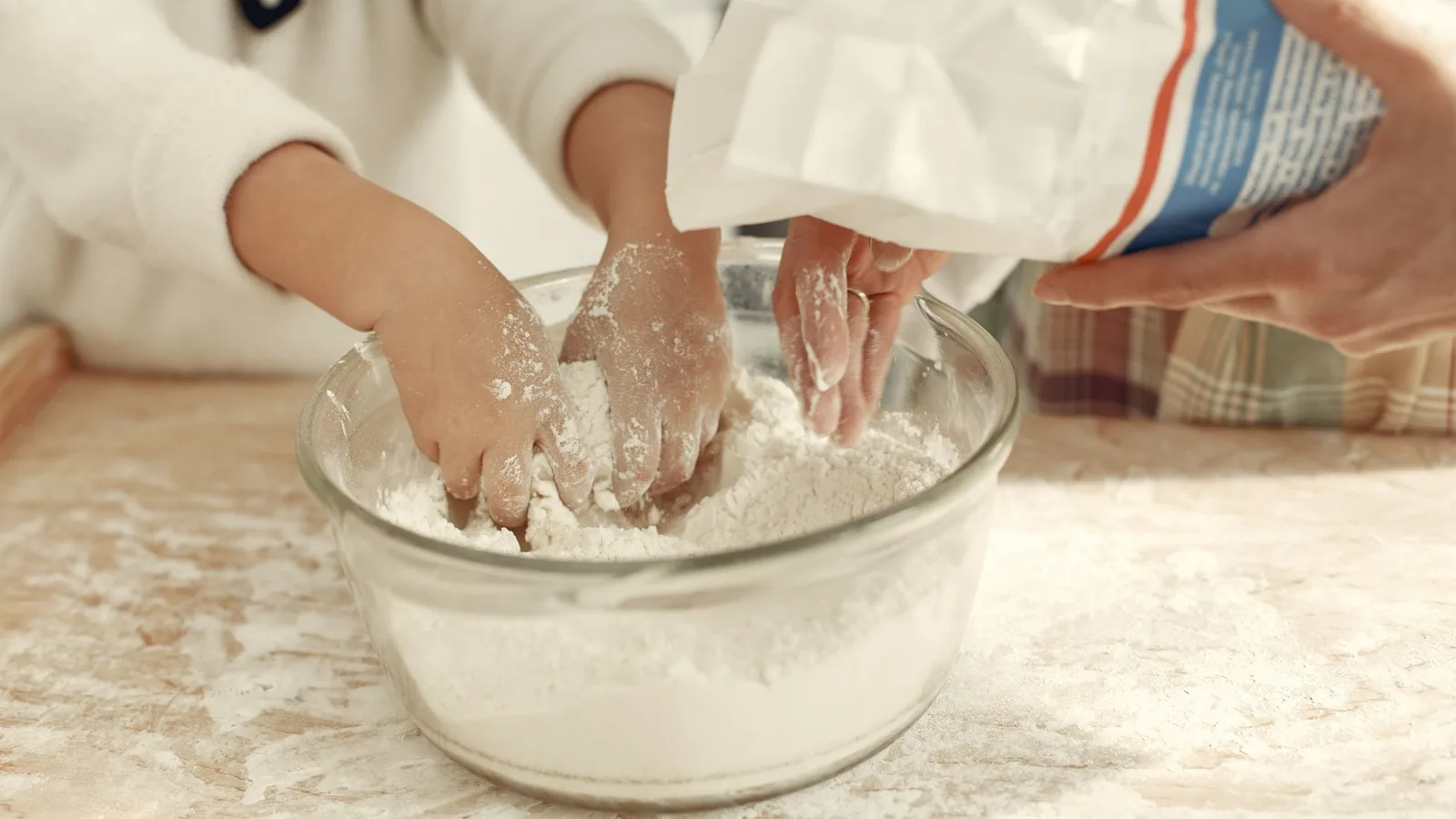
Ages 5 to 8. Check ingredient labels and any allergies or skin sensitivities before handling the dough, including wheat allergy. Following Scouts' salt dough method, mix 2 parts plain flour, 1 part salt and gradually add up to 1 part water. Roll and cut stars; an adult bakes them as directed. Paint when cold. These decorations aren't edible.
For dough crafts and baking, don't taste raw dough. Wash hands before and after handling it and clean the equipment and surfaces, following the Food Standards Agency's flour guidance.
Which homemade cards are easy to finish?
Choose a card that fits your envelope before decorating. Start with a flat design; save weaving and hidden messages for a child who wants more steps. Write the greeting inside first, then keep the decorated front flat while it dries.
8. Scribble-present card
Ages 2 to 3. Give your child a paper square to cover with crayon. Glue it to a folded card, then draw crossing lines and a bow to turn it into a parcel. Their marks stay as they made them.
9. Fingerprint fairy lights
Ages 3 to 5. Draw a looping line across a card. Using age-appropriate finger paint, your child dabs coloured fingerprints beside it. Add a short black line between each print and the wire. Leave the card flat until dry before folding it shut.
10. Triangle forest card
Ages 3 to 5. Offer 3 green paper triangles and a folded card. Your child arranges the trees and glues them down, then draws trunks and falling snow. Leave room below for a greeting, written by whichever of you wants the job.
11. Melting snowman card
Ages 3 to 5. Tear a puddle shape from white paper and stick it to coloured card. Draw a carrot nose, eyes, buttons and a fallen hat on it. Add a snowy border. The snowman can be as wonky as your child likes.
12. Woven parcel card
Ages 5 to 8. Lay 3 paper strips side by side. Weave 3 more across them, alternating over and under, then glue the ends to a card. Draw a bow above the woven square. Use contrasting colours to show the pattern.
13. Lift-the-flap present card
Ages 5 to 8. Fold a small paper rectangle in half and decorate its front as a present. Hide a drawing or message inside, then glue only the back to a larger card. Add 'open me' beside it and a greeting below.
What could children make for parents or grandparents?
Choose a present with someone in mind: a bookmark for a reader, a shared memory for a grandparent, or wrapping paper for a parcel. These makes also fit into a visit alongside our ideas for time with grandchildren at home.
14. Child-designed wrapping paper
Ages 2 to 3. Spread plain paper out and let your child draw freely with crayons. Leave the marks as they are, then use the sheet to wrap a small present. Add their name to a corner before folding it away.
15. Snowman bookmark
Ages 3 to 5. Cut a wide strip of white card and round its top. Your child draws a face, scarf and buttons down the strip, then colours the background. Write the recipient's name on the back and tuck it inside a book.
16. Side-by-side hand portrait
Ages 3 to 5. Trace your child's hand beside a parent's or grandparent's on paper. Let them colour both outlines and dictate a caption. Mount the drawing on card and add the date. The grown-up gets a drawing job too.
17. Concertina memory book
Ages 5 to 8. Fold a long paper strip backwards and forwards into 6 panels. Draw a real shared memory on each panel, adding words or dictating to an adult. Glue card covers to the ends and give the book a title.
18. Family recipe keepsake
Ages 5 to 8. Ask a grandparent for a recipe they actually make. Copy or dictate the ingredients and method on folded paper; the adult checks quantities. Draw the finished dish on the cover. Keep a copy before giving it back.
19. Paper patchwork photo frame
Ages 5 to 8. An adult cuts a window in thin cardboard. Glue a chosen photograph behind it, then decorate the border with overlapping paper patches. Add the names on the back. Keep it flat for posting, or prop it on a shelf.
What can they make for the Christmas table?
Choose table crafts by their job: show someone their seat, hold a napkin or decorate the centre. Make paper pieces before the meal so you're not clearing glue beside plates. The gingerbread option has its own recipe for a separate baking session.
20. Christmas drawing placemat
Ages 2 to 3. Give your child a large sheet of paper and crayons. Draw a circle where their plate will sit, then let them fill the border with stars, scribbles or presents. Add their name and use it at their seat.
21. Tree place cards
Ages 3 to 5. Fold a small rectangle of card into a tent. Glue a paper tree to the front and write a guest's name. Your child chooses the colours and adds decorations. Keep the tree above the bottom edge so it stands.
22. Paper napkin rings
Ages 3 to 5. Decorate broad strips of thin card with crayon stripes or stars. Wrap each strip around a rolled napkin and tape the ends together. Leave enough room to slide the napkin out. Match the colours to your handmade place cards.
23. Cardboard winter village
Ages 5 to 8. Cover small empty cardboard boxes with plain paper. Draw windows, doors and snowy roofs, then arrange the houses in a row. Make paper trees to stand between them. Each person can design a house, with their name above its door.
24. Illustrated Christmas menu
Ages 5 to 8. Fold a sheet of paper in half and ask whoever is cooking what will be served. Write or dictate the menu, then draw the dishes beside it. Give the cover a festive border and place it on the table.
25. Gingerbread place biscuits
Ages 5 to 8. Check guests' allergies and ingredient labels before starting: this recipe contains wheat, milk and egg. Follow the Food Standards Agency's allergy precautions, keeping allergens separate and cleaning hands, equipment and surfaces. Bake shapes with a grown-up using the National Trust's gingerbread biscuit recipe. An adult handles the oven and hot trays, leaving them out of children's reach to cool. When the biscuits are cold, pipe each guest's initial using the recipe's icing. Let it set, then put a biscuit on a small plate at each place.
What if your child would rather skip the craft?
Offer a different job, or leave the making for another day. Your child might choose the paper, dictate the message or decide where the decoration goes without wanting to draw or glue. You can make your own beside them without asking them to copy it.
If they dislike being watched, stop directing every mark. If sticky fingers are the sticking point, put out crayons instead. And if the tree becomes a dinosaur, let it: the recipient can have a Christmas dinosaur.
For a day that needs a different plan, our Christmas activities for kids include ideas beyond the craft table.
How can siblings share a craft table?
Share the materials, then give each child a different job. One can decorate while another folds or assembles, with you handling the parts that need help. Pick a single finished make first; a card and a present can be separate sessions rather than an afternoon's obligation.
- A short session: allow 5 minutes to choose colours, 10 to make a scribble-present card and 5 to clear up. That's a suggested 20-minute slot, not a finishing deadline.
- Siblings together: give the younger child paper to decorate while the older child turns their own sheet into a bookmark or woven card.
- With a grandparent: make the hand portrait together, then begin the memory book. Ask the grandparent to draw a remembered moment too.
When the craft table is packed away, you could make room for a little movement. Explore the Yogi-Me mats for ages 3 to 8, with 15 numbered poses laser-engraved into the surface.
Frequently asked questions
What Christmas crafts can a 3 year old do?
Try a scribble-present card, torn-paper wreath, paper chain or snowman bookmark. Put the prepared shapes on the table and let your child choose colours and placement while you handle awkward cuts. Offer a single make to begin with; there's no need to turn every idea into a finished present.
What Christmas crafts use things you already have?
Paper chains, scribble cards, bookmarks and decorated wrapping paper use a small collection of supplies: paper, thin card, crayons, glue and tape. Save plain packaging, cereal boxes and paper offcuts. Turn an old drawing into a card front, or use its colourful sections to decorate a paper frame.
How do you make Christmas crafts less messy?
Choose crayons, folded paper and tape when you don't want paint or glue to clear up. Put each child's materials on a tray, keep a scrap bowl beside them and decide where finished work will go before starting. Use drawn dots and stars instead of loose glitter.
What Christmas crafts work for a class of 30?
For 30 children, prepare 30 folded card blanks and 90 pre-cut green triangles for the forest card, plus a few spares. Put shared crayons and glue sticks on the tables. Write names inside first, then let everyone arrange their trees differently. Collect finished cards on a labelled drying shelf.
Sources
- NHS: How to stop a child from choking
- Gateshead Health NHS Foundation Trust: Scissor Skills
- Office for Product Safety and Standards: Buy toys safely this Christmas
- Office for Product Safety and Standards: Hidden danger in your home: button batteries and powerful magnets
- Scouts: Make salt dough decorations
- Food Standards Agency: Handling flour and flour products safely
- National Trust: Gingerbread biscuits