guides
Bedtime Stories for Kids: 10 Short, Calm Ones to Read Aloud
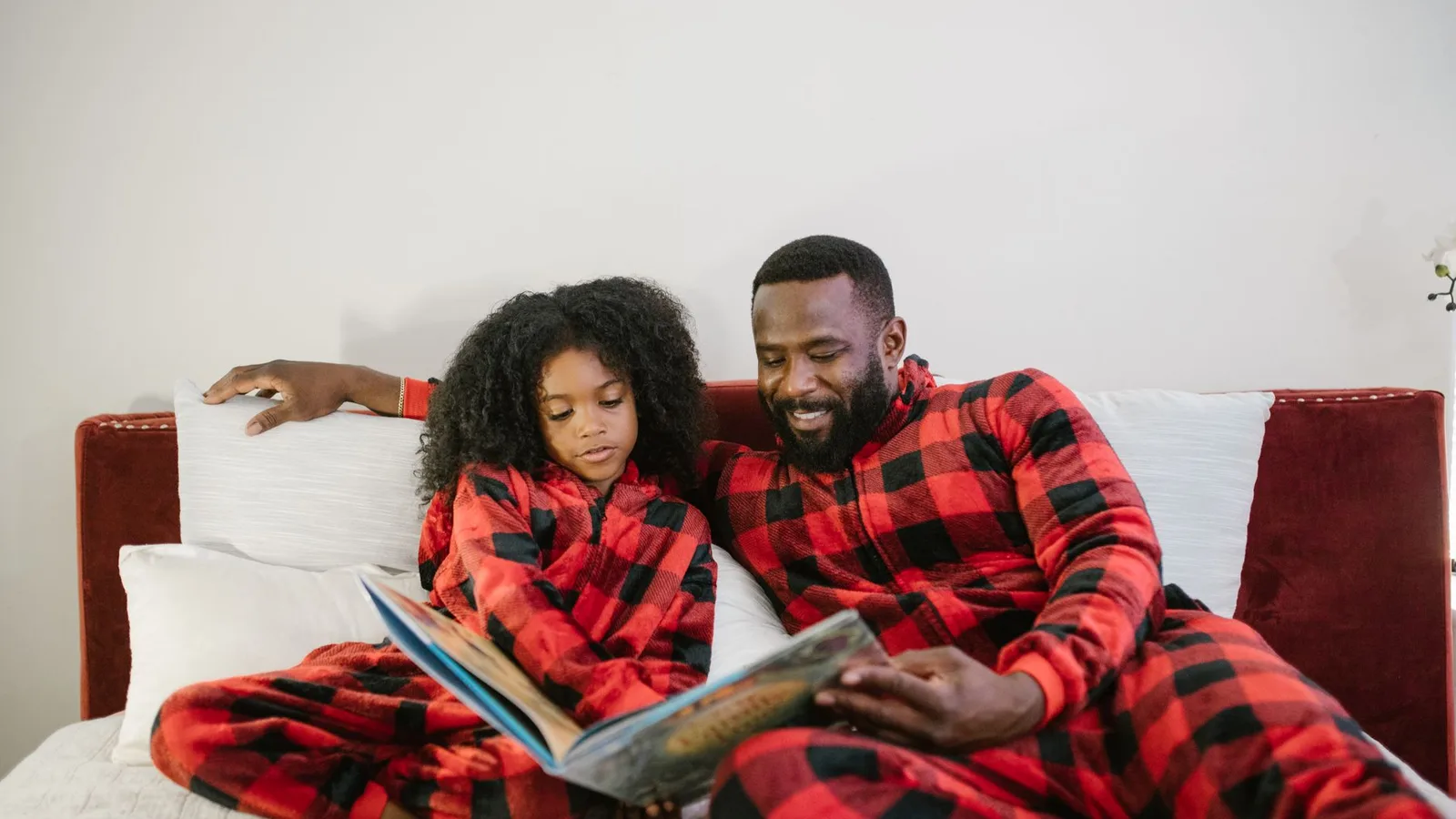
Ten original bedtime stories for kids, with gentle endings and optional breaths. Choose a tiny adventure to read aloud before saying goodnight.
Which bedtime story should you read tonight?
Choose bedtime stories for kids with a simple plot, familiar things and a definite ending. Below are ten original, very short stories to read aloud, from a mouse sorting socks to a cloud finding somewhere to rest. Pick your child's favourite character, read at your own pace and finish with the optional gentle breath.
How should you read these stories?
These stories are written for sharing with children aged 3 to 8. Start anywhere, using a paper copy if you'd rather leave your phone outside. There's no acting, equipment or reading test: you read, they listen. The last sentence of each story is an invitation they can skip.
The Sleep Charity includes sharing a story once children are in bed. Our bedtime routine for children puts story time into the wider evening.
Keep the closing breaths comfortable and unforced, following the NHS's general breathing advice.
Which little world takes your fancy?
The labels help you choose by what your child likes: animals, journeys, making things or looking at the sky. Each little story finishes with nothing left to rescue or solve. Read the final invitation softly, or simply end at the last story sentence.
1. Mouse and the Spare Sock
For a child who likes tiny homes.
Mouse folded the washing on her kitchen table. She paired the striped socks, then the spotty socks. A little green sock had no partner.
Mouse looked inside the basket. Empty. She looked beneath the table. Only her slippers.
Then she noticed her toy rabbit sitting on the shelf.
"You could use a sleeping bag," she said.
She tucked Rabbit into the sock, with his ears showing above the top. He fitted beautifully.
Mouse put away the basket and settled into her own bed. Everyone had somewhere cosy to be.
If you'd like, breathe in gently, then let your breath out slowly beside Mouse.
2. The Cloud's Resting Place
For a child who likes imagining shapes.
A small cloud spent the afternoon trying out shapes: a bun, a boat, a very round sheep.
As evening came, he wondered which shape to keep.
Below him, a pond held his reflection.
"Which one do you like?" asked Cloud.
The pond gave a little ripple. Every shape wobbled.
Cloud laughed softly. He stopped making corners and curls. He spread out into the shape that came most easily: a cloud.
The pond held that shape too.
Cloud stayed above the water, with nothing more to decide.
You can breathe in gently and let the breath drift out, as softly as Cloud.
3. The Train With Nothing Left to Carry
For a child who loves little journeys.
The little green train brought everyone home. Badger stepped down with his shopping.
Rabbit collected her empty basket. The station cat climbed onto his cushion.
"Anyone else?" asked the driver.
The carriages were empty.
The train rolled slowly into the shed. His wheels stopped beside the familiar yellow line.
All day he had carried parcels, passengers and a bunch of flowers wrapped in paper. Now there was nothing to carry.
The driver hung up her coat and closed the shed door.
Outside, the station clock ticked. Inside, the train rested.
Breathe in gently, if you like, and slowly breathe out beside him.
4. Rabbit's Patch of Moonlight
For a child who likes gardens.
Rabbit found a silver patch on the sitting-room floor. It looked like a little rug.
She fetched a cushion and placed it beside the light.
"What are you doing?" asked her mum.
"Making somewhere for the moon to visit."
Mum sat beside her. They watched the bright shape lie across the floorboards.
Rabbit didn't need to fetch a cup or find a game. The moon was a quiet sort of visitor.
After a while, Mum tucked Rabbit into bed. The silver patch could stay where it was.
If you'd like, take a gentle breath in and slowly breathe out with Rabbit.
5. Badger's Blue Corner
For a child who likes making things.
Badger was finishing a patchwork blanket. It had a yellow square for sunshine, a green square for grass and a red square for his front door.
Only the corner remained.
He opened his sewing basket. Inside lay a scrap of blue cloth.
"The pond," he thought. Then, "A summer sky."
He stitched the blue corner into place and spread the blanket across his knees.
It could be a pond or a sky. He didn't have to choose.
Badger put his sewing away. The blanket was finished.
You can breathe in gently, then let your breath out slowly beneath your own covers.
6. The Baker's Last Apron
For a child who likes everyday details.
The bakery had closed for the evening. Bear wiped the counter and put the clean trays away.
He hung his apron on its peg. A little cloud of flour fell onto the floor.
"One last sweep," he said.
He swept the flour, washed his paws and checked the room. The bowls were upside down. The spoons stood in their pot. His favourite mug waited on the shelf.
Tomorrow there would be dough to knead. Tonight the kitchen was finished.
Bear went upstairs and pulled back his quilt.
If you'd like, breathe in gently and slowly breathe out as Bear settles down.
7. The Crayon That Had Finished
For a child who likes drawing.
Blue Crayon had drawn a river across the paper. Green had added grassy banks. Yellow had put a small sun in the corner.
Blue wondered whether the river needed another bend.
He looked from one edge of the page to the other. There was room for more, but the river already reached the sea.
"I'm finished," he said.
The crayons rolled into their box. Blue lay between Green and Purple, with his paper jacket tucked neatly round him.
The drawing stayed on the table, ready for morning.
You can breathe in gently, then let the breath out slowly. Nothing needs adding.
8. The Star in the Window
For a child who likes the night sky.
A little star looked down at a house. In its window, he could see a paper star hanging from a thread.
The paper star had a crooked point.
"Mine are crooked sometimes too," said the little star.
A breeze turned the paper star towards him. Then it turned away, slowly, as though waving goodnight.
The little star didn't need an answer. He liked having a friend in the window.
Below them, the curtains closed. The paper star stayed indoors; the little star stayed in the sky.
If you'd like, breathe in gently and let your breath out slowly beneath the stars.
9. Whale's Quiet Song
For a child who likes sea creatures.
Little Whale was making up a song for Mum. He had a note for the wide blue sea and a note for their favourite bay.
He tried adding a splash, but decided the song sounded nicer without it.
Mum listened beside him.
"Is it finished?" she asked.
Little Whale sang the notes again, softly.
"Now it is."
They floated together in the bay. There was no audience to find and no louder version to practise. Mum had heard it, and that was enough.
The sea moved gently around them.
You can breathe in gently, then let your breath flow slowly out.
10. The Boat in the Blue Cup
For a child who likes small adventures.
A tiny wooden boat lived in a blue cup on a windowsill. She had a paper sail and a painted red seat.
Through the window she could see a puddle, a path and the garden gate.
She imagined sailing past them all, right to the sea.
Then the evening rain began. Drops tapped the glass, and the garden blurred into soft colours.
The boat looked at her little harbour. The cup curved round her on every side.
"The sea can wait," she said.
She rested against the blue rim.
Breathe in gently, if you'd like, then slowly out. Your journey is finished too.
What fits between pyjamas and goodnight?
Choose the stopping point before you start reading, whether that's a single story or an agreed pair. The NHS suggests one story followed by tucking in and saying goodnight as an example of setting a bedtime limit. Keep your usual ending when you swap stories.
- A small-home pairing: read Mouse and the Spare Sock, then The Boat in the Blue Cup. Both finish with the character in their own small space. Follow with your usual goodnight.
- A sky-and-sea pairing: read The Cloud's Resting Place, then Whale's Quiet Song. Let your child choose whether to join in with the final breath or simply listen.
If movement is already part of your evening, our bedtime yoga ideas can go before getting into bed. Then pick the story.
For floor movement before story time, explore the Freedom Flow mat. Its sequence is mostly on the floor, with 15 numbered poses laser-engraved into the surface.
What if your child would rather skip the story?
Offer a choice between a story and looking at a picture book together. You don't need to turn bedtime into listening practice or ask them to repeat the plot. If your child wants a familiar favourite, BookTrust encourages choosing and rereading stories they enjoy.
Try reading beside them, without asking them to perform a character or copy a breath. You can leave out the invitation at the end and simply say goodnight. Save questions about the story for another time if they're ready to stop.
If sleep difficulties are affecting your child or family life, speak to your GP or health visitor.
Frequently asked questions
Which of these bedtime stories should I start with?
Start with whatever your child already likes: Mouse and the Spare Sock for tiny homes, The Train With Nothing Left to Carry for trains, or Whale's Quiet Song for sea creatures. Read the titles aloud and let them choose. You can keep that favourite for another evening too.
How long should we spend on a bedtime story?
For these very short stories, try setting aside five minutes for choosing, reading and saying goodnight. That's a planning suggestion. Leave room for pauses and read at your own pace. You can finish earlier or agree on a pair before you begin, without needing to fill every minute.
Are these stories suitable for a three-year-old?
They're written to be read aloud to children aged 3 to 8. For a first try, choose Mouse and the Spare Sock or Rabbit's Patch of Moonlight, and read it yourself. Your child can listen without answering questions or doing the closing breath. Swap to a familiar picture book whenever you'd like.
Do I need to do the breathing bit?
No. Every story has a complete ending before the final invitation, so you can leave that line out. Your child can stay exactly as they are and listen while you finish. You don't need to add movements, a breathing count or any equipment to make the story complete.