practice
Balance Poses for Kids: 7 Yoga Poses, Easiest to Hardest
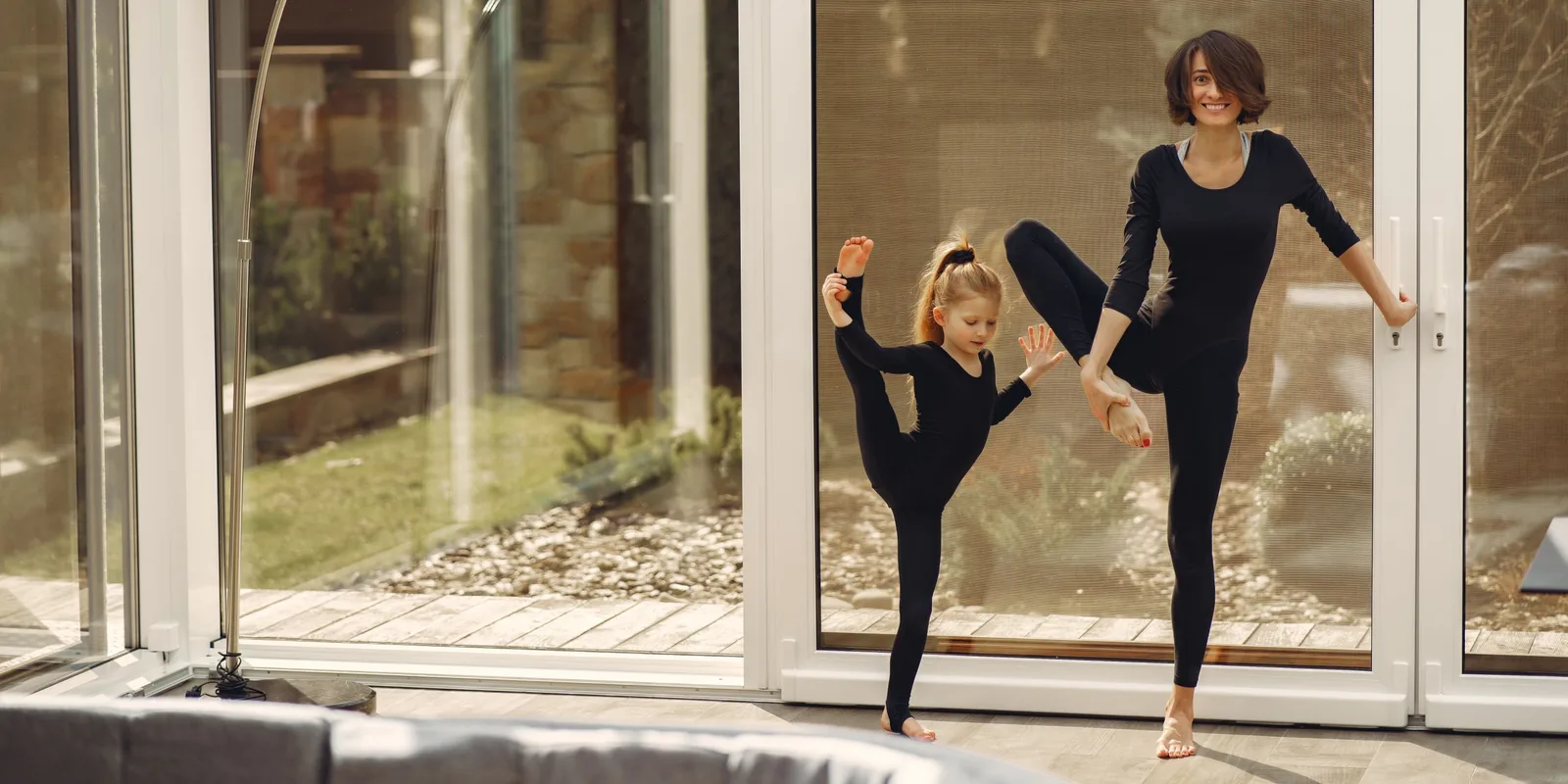
Seven balance poses for kids aged 3 to 8, in order from two feet to eyes closed, with a safe set-up and when to move up a rung.
Balance poses for kids work best as a ladder: start on two feet, move to one foot, and only later try one foot with the eyes closed. The seven below climb in that order, from mountain to an eyes-closed tree, and suit children aged 3 to 8. Your child moves up a rung when the last one holds for three slow breaths. Wobbling is allowed at every step.
It's the answer for the child who keeps trying to stand on one leg and toppling over, and for the afternoon when you want something quieter than running about.
What are balance poses for kids?
Balance poses for kids are yoga shapes a child holds still on a small base, usually one foot, such as tree, airplane, eagle and dancer. Some people call them balance positions. They're different from standing poses, where both feet stay down, which have their own page.
Balance is part of what early years settings in England work on. The Department for Education's Development Matters guidance says 3 and 4-year-olds will be learning to "skip, hop, stand on one leg and hold a pose for a game like musical statues". In reception, it lists balance alongside strength, coordination and agility as things children develop for future PE.
How do you set up a balance ladder safely?
Clear the floor, take socks off and have a wall or the back of a sturdy chair within reach. Start at rung 1, and only move up when the pose holds for three slow breaths. A grown-up stays close, and right beside the child for the eyes-closed rung.
Wobbling is the practice, not a failure. Stepping out of a pose and back in counts. Touching the wall counts. Swap legs on every one-legged rung, so both sides get a turn.
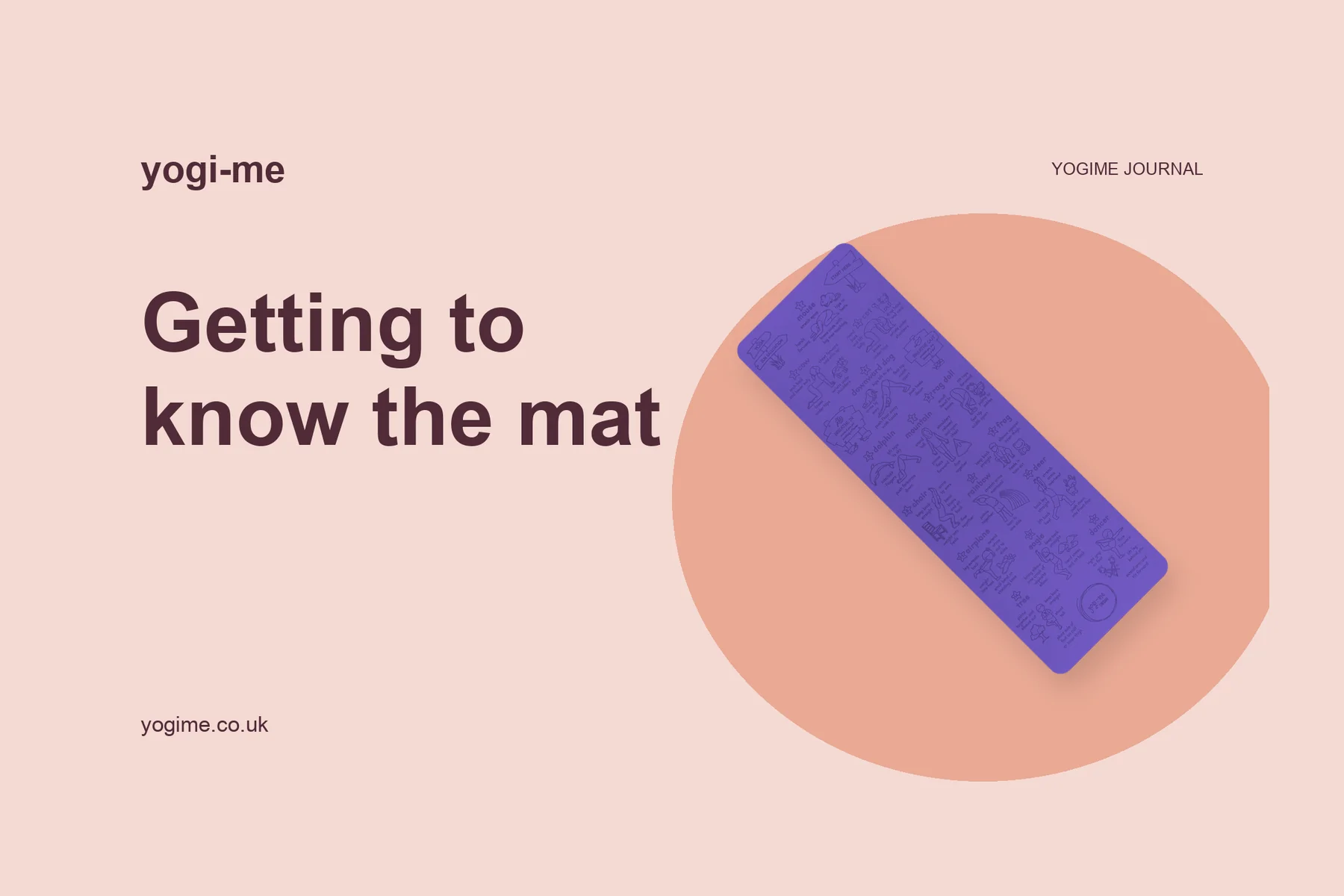
Five of the seven are on our Sun Salutation mat, the standing design: mountain, tree, airplane, eagle and dancer. Flamingo and the eyes-closed tree are steps we've added between them, and they aren't on the mat.
What are the easiest balance yoga poses for kids?
The easiest balance yoga poses for kids keep both feet down, then lift one foot only a little. Mountain is the first rung, then flamingo, then tree with a toe still touching the floor. Airplane, eagle and dancer come next, and eyes-closed tree is the top. Each rung below adds one new challenge.
1. Mountain
Two feet down, perfectly still. On the Sun Salutation mat. Say: "Feet together, arms by your sides, grow tall and don't move a muscle while I count to five." Staying still is the first balance skill, and harder than it looks. Good from age 3.
2. Flamingo
One foot just off the floor. Not on the mat. Say: "Hands on your hips, lift one foot a tiny bit, like a flamingo standing in a pond." The lifted foot can drop and lift again as often as it likes. Good from age 3, and the step that makes tree feel possible.
3. Tree
One foot resting on the other leg. Pose 14 on the Sun Salutation mat. Say: "Rest the sole of your foot against your ankle with your toes on the floor, then slide it up to your calf if you can. Palms together." Keep the foot off the knee. A toe on the floor is still tree. Toe down from about 4, full tree from about 5.
4. Airplane (aeroplane)
Tipping forward on one leg, arms out like wings. On the Sun Salutation mat, which spells it the American way. Say: "Soft knee on your standing leg, stretch the other leg out behind you, arms wide, and fly." Hands can rest on a chair back at first. From about 5.
5. Eagle
Knees bent, arms wrapped, sitting back a little. Pose 13 on the Sun Salutation mat. Say: "Bend your knees, hug yourself tight, then hook one elbow into the other if you can." Wrapping one leg over the other is the hardest part and can wait until about 6. Arms only is still eagle. From about 5.
6. Dancer
One foot held behind you, tipping gently forward. Pose 15 on the Sun Salutation mat, and the hardest balance on it. Say: "Hold your ankle behind you, reach your other arm forward and lean a little, like a dancer." Hold gently, never pull hard. Stand near a wall. From about 6.
7. Eyes-closed tree
Tree again, with the eyes shut. Not a separate pose on the mat. Say: "Find your tree, look at one spot, then close your eyes and count three breaths." Expect a wobble straight away, because your eyes help you balance. Ages 6 to 8 only, with a grown-up beside them.
What age can a child stand on one leg?
The Department for Education's Development Matters guidance lists standing on one leg and holding a pose among the things 3 and 4-year-olds will be learning, so wobbling at that age is expected. It gives no number of seconds, and neither do we. Every child gets there at their own pace.
As a rough guide to the ladder, and our suggestion rather than a milestone:
- Ages 3 to 4: mountain, flamingo and tree with a toe on the floor.
- Age 5: full tree, airplane and eagle with the arms only.
- Ages 6 to 8: the full eagle, dancer and the eyes-closed tree.
The national curriculum for PE in England asks key stage 1 pupils (ages 5 to 7) to develop balance, agility and co-ordination, so these are skills school is working on too.
Which balance poses go well together?
Pick two or three rungs next to each other, hold each for three breaths on each leg, and finish standing still. A balance session for a young child takes two to five minutes, and that's enough. To wind down afterwards, move to the floor for some seated yoga poses for kids.
Three balance poses to try:
- Two minutes before school (2 minutes): mountain (30 seconds), flamingo on each leg (30 seconds), tree on each leg (1 minute).
- A rainy afternoon (5 minutes): mountain (30 seconds), tree on each leg (1 minute), airplane on each leg (1 minute), eagle on each side (1 minute 30 seconds), then lie down and rest (1 minute).
- Two trees: you and your child side by side, inside hands joined, each standing on the outside leg. It's the easiest way to do balance poses with two people, and our yoga poses for two has more like it.
A few minutes of balances is one small part of an active day, not the whole of it. The NHS asks children aged 5 to 18 to do a variety of types and intensities of physical activity across the week to develop movement skills, muscles and bones.
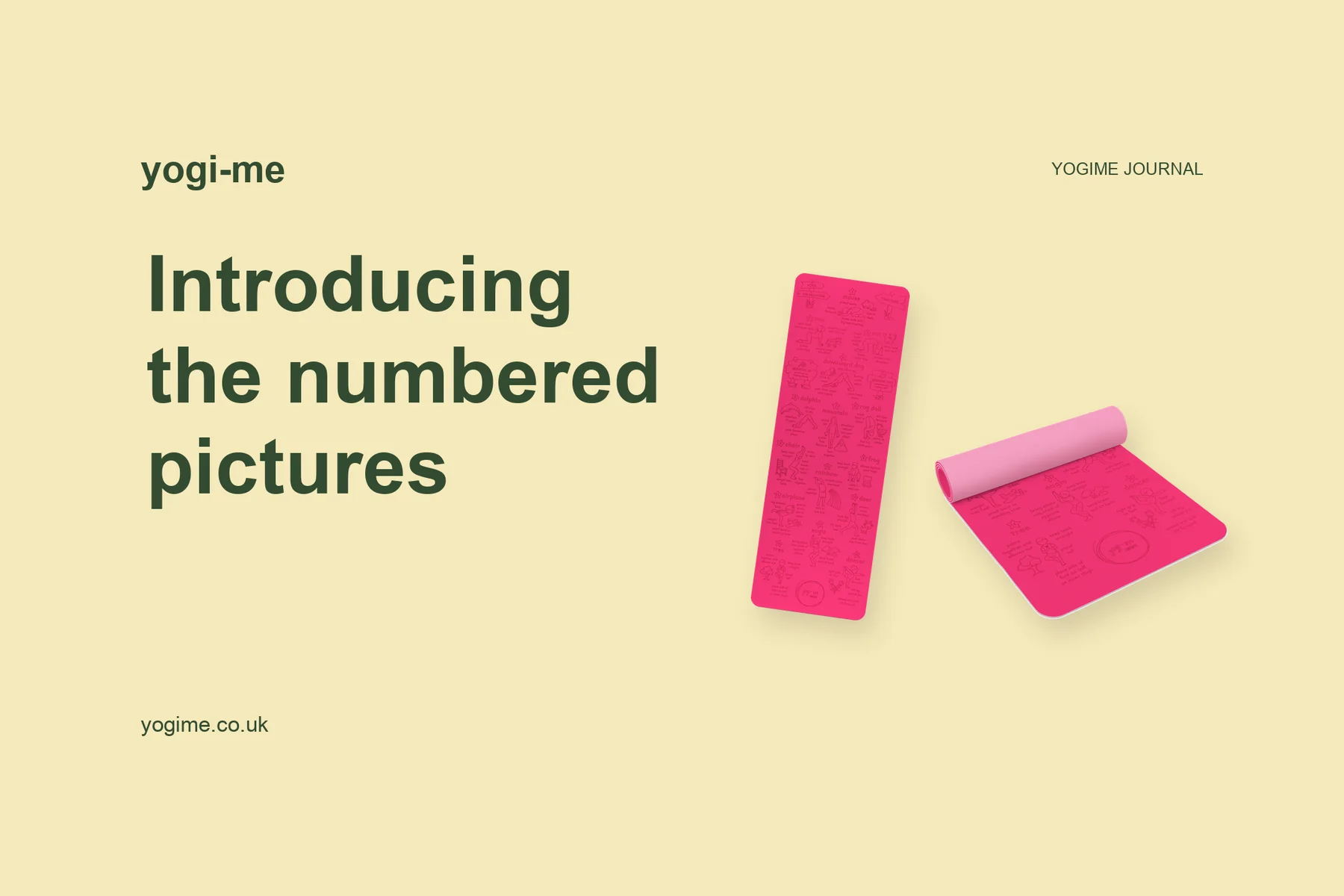
Once they've climbed it with you, they can lead the climb themselves. Our mats have 15 numbered poses laser-engraved into the surface, and the Sun Salutation design carries five rungs of this ladder, with eagle, tree and dancer at 13, 14 and 15. It's full length, at 183 x 61 cm, so a grandparent can be the second tree. Each mat is £34.99 with free UK delivery: see the Yogi-Me range.
What balance games can kids play?
Good balance games for kids turn holding still into a challenge with someone else involved. These three use the poses above and need no equipment.
- Tree in the wind. You're the wind. Blow gently while the tree tries to stay rooted, then swap.
- Mirror me. Copy each other's one-legged shape, then swap leader. The leader can only choose rungs the follower has already done.
- Climb the ladder. Roll a die and go up that many rungs, holding each for one breath, but only as high as the rungs your child has already done with you. Wobble off and you start again from mountain.
For freeze games and more, see our yoga games for kids.
Why do children keep toppling out of balances?
Because they're still learning, and falling out is part of the practice. Most children fall out, laugh and climb back in, which is exactly right. If your child gets cross, go back down a rung to one they can hold and finish there, so the last balance of the day is a good one.
If they only want to do dancer, let them, next to a wall. If you want more ways to work on steadiness away from yoga, our core strength and balance activities include games like a masking-tape tightrope.
If you're worried about how your child moves or balances compared with other children their age, have a word with your health visitor or GP.
Frequently asked questions
What are the names of yoga balance poses for kids?
The common yoga balance poses for kids are tree, airplane (aeroplane), eagle, dancer and flamingo. Adult classes add harder ones, such as warrior 3 and half moon. Mountain, standing perfectly still on two feet, is usually where children start. Tree, airplane, eagle and dancer are all on our Sun Salutation mat; flamingo is a simpler step we add before tree.
Can kids do balance poses with a partner or a grandparent?
Yes. The simplest balance pose for two is a pair of trees side by side: hold inside hands and each stand on your outside leg, so you hold each other steady. Facing each other in flamingo and holding both hands works too. Go at the child's pace, and swap legs halfway through.
Should children try balance poses with their eyes closed?
Only once tree feels easy with the eyes open, which for most children means about six or older. Have a grown-up right beside them and a wall within reach, and keep it to three breaths. For younger children, a softer version is to look down at the floor rather than closing the eyes.
How long should a child hold a balance pose?
Three slow breaths is a good target for most children aged 3 to 8, which is only a few seconds. Count them out loud together. Holding longer isn't the goal: stepping out and back in again is useful practice too. Swap legs each time so both sides get a turn.