guides
Scavenger Hunt Ideas for Kids: 8 Ready Lists
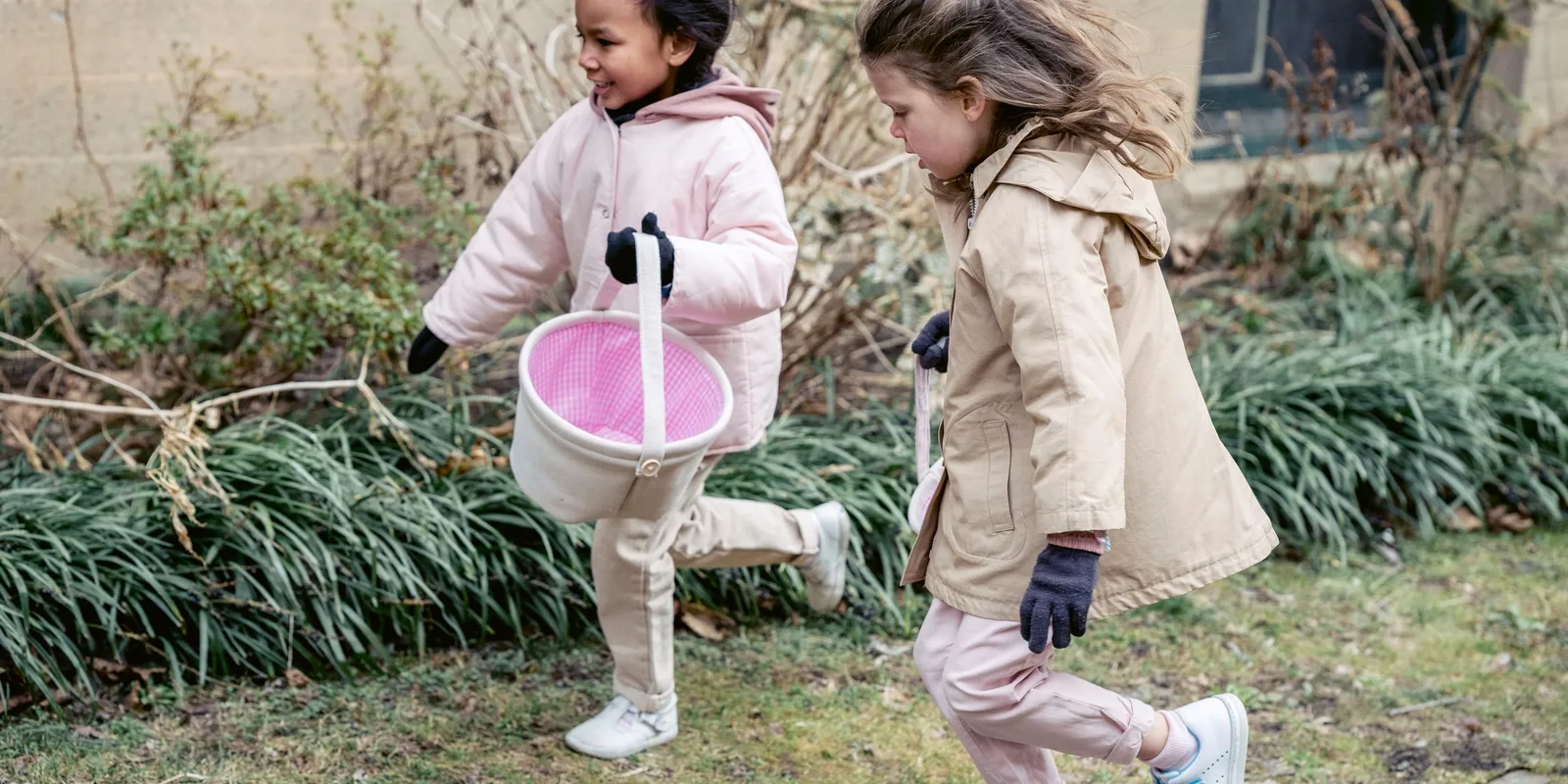
Scavenger hunt ideas for kids aged 3 to 8: eight ready lists for autumn, the woods, the garden and a wet day indoors, with picture hunts for non-readers.
The easiest scavenger hunt ideas are lists matched to where you'll be: an autumn park, a wood, the garden, the walk to school, or the house on a wet day. Give each child eight to ten things to find, draw pictures instead of words for children who can't read yet, and agree before you start whether finds get collected or just spotted.
A scavenger hunt is a list of things to find, in any order, rather than a trail of clues. That makes it the most forgiving game there is: a pre-schooler and a Year 3 child can play the same list and both win.
Below are eight ready lists, by season and by place, each with the one rule that stops it going wrong.
Before you hand out the first list
Every list here works for ages 3 to 8. For children who can't read yet, draw each item or stick on a picture cut from a magazine, so the list becomes a picture hunt.
You need a pencil, something stiff to lean on (the back of a cereal box is fine) and, for the garden list, an egg box to collect in.
Decide the rule first. The Countryside Code, which covers parks as well as countryside, asks visitors to leave rocks, plants and trees as they find them. So the outdoor lists below are spotting lists: tick it, don't take it. The garden is the one place finds go in the box.
Eight scavenger hunt lists, ready to use
1. Autumn park hunt
For a park between September and November. Find: a conker, an acorn, a sycamore "helicopter", a red leaf, a yellow leaf, a leaf bigger than your hand, a pine cone, a feather, a squirrel, a puddle. Tick each one rather than pocketing it, and keep a tally of the most conkers anyone can see from one spot. When the wind gets up, watch for helicopters spinning down and count who spots the most. Good from age 3 as a picture list.
2. Woodland walk hunt
For a wood or a country park with paths. Find: moss on a tree, a fungus, a hole in a tree trunk, a fallen log, ivy climbing something, a spider's web, a footprint that isn't a person's, a stick shaped like a letter, bird song, something taller than a grown-up. The Countryside Code says to stay on marked paths even when they're muddy, and to take your litter home. Our house rule for fungi is look, don't touch. Best for ages 5 to 8; under-fives can hunt half the list.
3. Back garden hunt
For your own garden or yard, and the one list where finds get collected. Find: something smooth, something rough, something that smells nice, a seed, an empty snail shell, a stone bigger than your thumb, a fallen petal, something the wind moves, a worm, a creature with eight legs. Use an egg box with a find in each hollow. The worm and the spider are look-and-put-back finds, which children tend to be very proud of. Good from age 3; nothing here needs reading.
4. Winter walk hunt
For a cold morning or a walk home at dusk. Find: your own breath in the air, frost on a leaf or a car roof, a bare tree, a leaf that stayed green, holly with berries, a robin, a crunchy or frozen puddle, a footprint in frost or mud, a bird's nest in bare branches, a lit window. Nests are much easier to see once the leaves have gone, which makes this one feel like detective work. Holly is look-don't-pick, like everything outside. Good for ages 4 to 8.
5. Spring and summer hunt
For a park or a walk past fields between March and August. Find: a bud about to open, blossom, a daisy, a dandelion clock, a bee, a butterfly, a bird carrying something in its beak, your shadow, a cloud shaped like an animal, a lamb or a calf. If you spot farm animals, the Countryside Code says to give them plenty of space and not to feed them. Watch bees from a polite distance, too. Good from age 3; the dandelion clock is the one they'll fight over.
6. Wet-day indoor hunt that ends on the mat
For a rainy afternoon in the house. Find: a spoon, something soft, an odd sock, something round, something that comes in a pair, something older than you, a book with an animal on the cover, something beginning with your first letter, a cushion, then the last slip, hidden by the mat. That slip just says 14. On a Sun Salutation mat, 14 is tree; on Freedom Flow, it's rabbit. They find the number and do the pose. Good for ages 3 to 8.
7. Colour hunt for non-readers
For anywhere at all, and the best first hunt for a three-year-old. Find: something red, orange, yellow, green, blue, purple, pink, brown, black and white. Make the list from ten coloured squares, felt-tip blobs or strips cut from a paint chart, so there are no words on it. Outdoors they point and you tick; in the garden they can collect a match for each colour. Older siblings can be set two shades of the same colour, which is harder than it sounds.
8. Walk-to-school or high street hunt
For a route you walk anyway. Find: a post box, the number 7 on a door, a bus, a dog on a lead, a cat in a window, a letter from your name on a sign, a crane or some scaffolding, a bike, a green door, a zebra crossing. Our house rule is that the hunt stops at every kerb and nobody crosses for a find. The same list works all week, and the fun is in seeing who spots the cat first. Good for ages 4 to 8.
Writing clues they can actually follow
If you'd rather run a clue trail than a list, match the clues to who's reading them.
- Ages 3 and 4: picture clues. A drawing of the fridge, the bath or the shoe rack, with the next clue hidden there.
- Ages 5 and 6: one-line questions. "Where do cold things live?" (the fridge). "Where do muddy boots wait?" (by the door).
- Ages 7 and 8: short rhymes. "I'm full of stories but I never speak" leads to the bookshelf.
Keep a trail to six or seven clues. To make a hunt more interesting without making it longer, add a twist: one mystery find that isn't on the list, a sand timer per team, or a swap where the children hide things and you do the hunting.
Turning one list into an afternoon
The mixed-age walk. Give the older child the woodland list and the younger one the colour hunt. Same path, different difficulty, nobody waits.
Out and back. The walk-to-school list on the way to the park, the autumn park list once you're there, and the garden list when you get home with ten minutes to fill before tea.
The wet Saturday. The indoor hunt, finishing on number 14, then two or three more poses while everyone's already on the floor. Our guide to rainy day activities for kids has more for the afternoon after.
It all counts as active play. The NHS asks 5 to 18 year-olds to average an hour or more a day of moderate to vigorous activity over the week, and walking and running about in the playground are among its examples. For toddlers and pre-schoolers, the UK Chief Medical Officers' guidelines say at least 180 minutes a day for ages 1 to 4, spread through the day and including outdoor play.
For the hunt that ends indoors, our screen-free yoga mats have 15 laser-engraved, numbered poses, so a number on a slip is a clue they can match to the mat, with a little help for the youngest. Ages 3 to 8, £34.99 with free UK delivery.
When the hunt falls flat
Some children won't play the moment it looks like a task. Usually the list is too long. Cut it to five and stop while they still want more.
If siblings are racing and the younger one is losing, change the game from who finds most to one shared list where every find counts for the team.
Some children dislike being watched while they search. Give them the list and walk a few steps behind, or let them be the one who hides things for you.
And if the hunt dies after three items because the puddle turned out to be the best thing on the list, that's fine. The puddle was the point.
For more ideas in the same spirit, see our big list of screen-free things to do with 3 to 8 year-olds and these autumn activities for the early years.
Frequently asked questions
What are good items for a scavenger hunt?
Things that are definitely there, plus one or two that take looking for. For a nature hunt that means leaves of different colours, a feather, moss, a bird and something smaller than your fingernail. Indoors, go for textures and shapes: something soft, something round, an odd sock. Eight to ten items is plenty for children aged 3 to 8.
What are some easy clues for a scavenger hunt?
For under-fives, use a picture of the hiding place instead of words: a drawing of the fridge, the bath or the shoe rack. From about five, try one-line questions such as 'Where do cold things live?' for the fridge. Seven and eight-year-olds can manage short rhymes. Read clues aloud for anyone still learning to read.
How do you make a scavenger hunt more interesting?
Add a twist rather than more items. Hide one mystery find that isn't on the list, give a team a sand timer, swap lists between siblings halfway, or let the children hide things for you to find. Ending on something to do, rather than a prize to eat, keeps the hunt itself as the fun part.
What is the difference between a scavenger hunt and a treasure hunt?
A scavenger hunt is a list of things to find, in any order. A treasure hunt is a chain of clues, each leading to the next, with something at the end. Lists suit walks and mixed ages, because everyone can tick at their own pace. Clue chains suit indoors, where you control where everything is hidden.